Introduction
The living room is where a home reveals its truest character.
It is the room that holds the most daily life — the quiet mornings with coffee, the long evenings with books, the conversations that stretch past midnight, the ordinary moments that somehow become the ones most deeply remembered. And because the living room holds so much of life within it, the quality of its design, its warmth, its light, and its thoughtful consideration has a direct and daily effect on the wellbeing of everyone who inhabits it.
The most stunning living decor ideas of 2025 are those that understand this completely — that a beautifully designed living room is not an aesthetic achievement alone but a genuine contribution to the quality of daily life. They are rooted in warmth, natural materials, considered light, and the kind of deliberate restraint that creates spaces of enduring beauty rather than momentary visual interest.
Whether you are redesigning your living room entirely or looking for thoughtful ways to deepen and refine what you already have, these fourteen living decor ideas will give you the inspiration, the practical guidance, and the aesthetic direction to create a living space that is genuinely, lastingly beautiful.
1. Anchor the Room with a Warm Neutral Palette
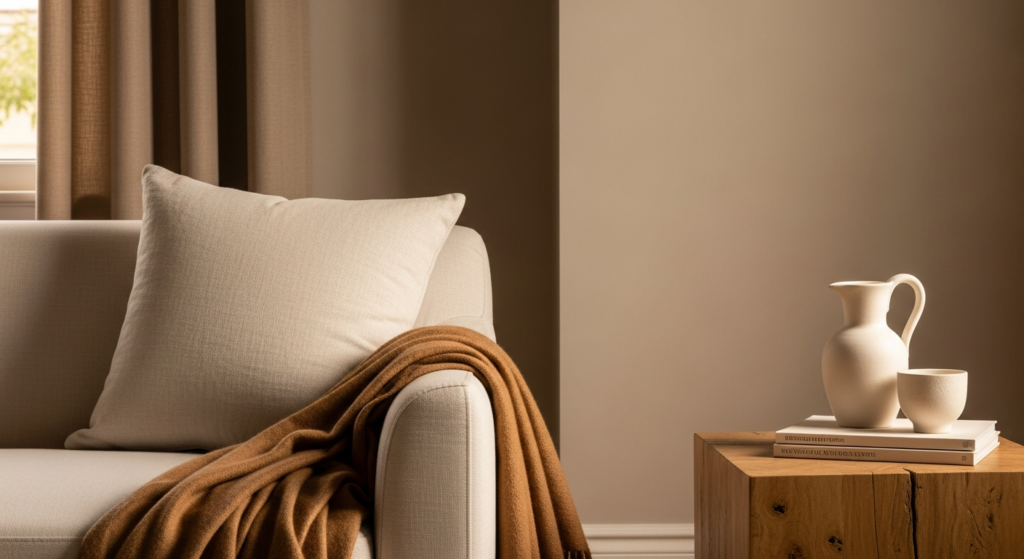
Every stunning living room begins with its colour palette — and the most universally successful and most enduringly beautiful living decor palettes are those built on warm, considered neutrals that create an atmosphere of genuine calm, warmth, and invitation. Warm whites, soft ivories, creamy greiges, sandy beiges, and warm sage tones create living rooms that feel expansive, welcoming, and deeply comfortable in equal measure.
Styling Tip: Choose one dominant wall colour as the foundation and build the palette in layers through textiles, furniture, and accessories. A warm greige wall with ivory linen upholstery, camel leather accessories, and natural timber furniture creates a tonal palette of rich, warm depth that feels cohesive without appearing flat or monotonous. Always test wall colours in the specific light conditions of your living room — northern light reads colours differently than southern, and evening artificial light shifts every tone significantly from its daytime appearance.
The warm neutral palette is the most forgiving and most versatile of all living decor colour approaches — it works with every furniture style, every natural material, and every seasonal textile change without requiring a complete re-evaluation of the overall design.
2. Invest in a Quality Statement Sofa
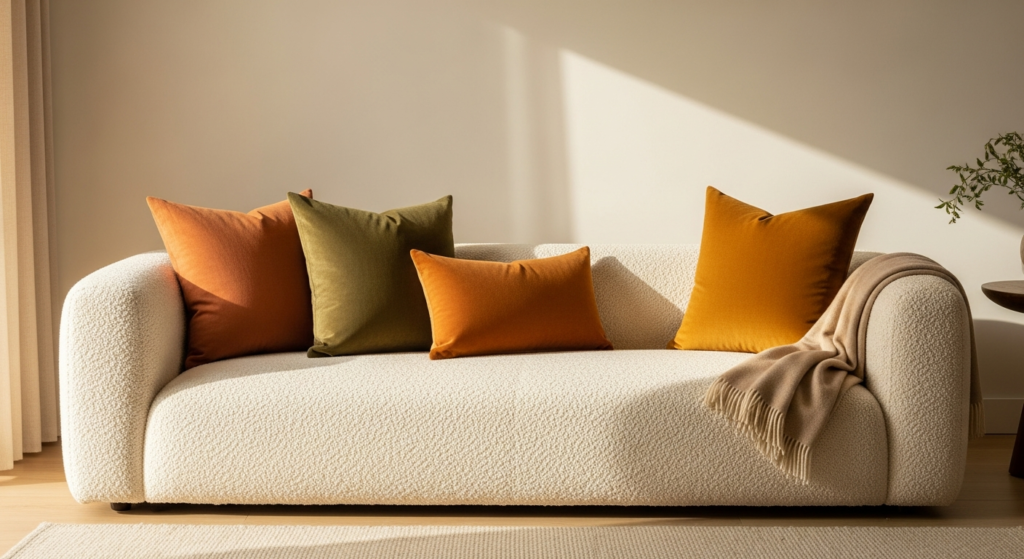
The sofa is the most important and most design-defining single piece of furniture in any living room — it anchors the entire space, establishes the upholstery palette, and communicates the overall aesthetic tone of the room’s design with immediate clarity. Investing in a genuinely quality statement sofa is the single highest-return living decor decision available.
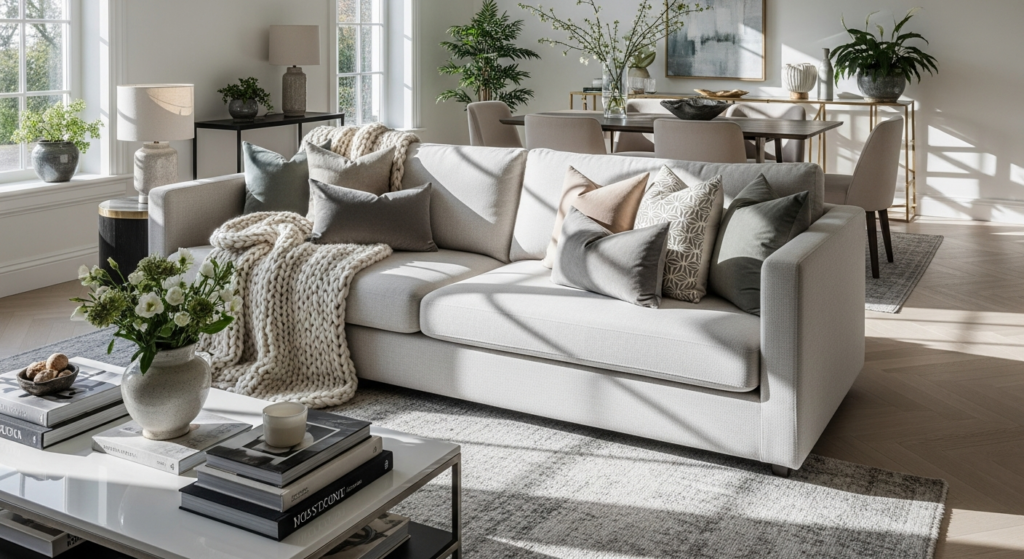
Styling Tip: Choose a sofa in a timeless silhouette — clean-lined, low-profile, or gently curved — in a quality natural fabric that ages beautifully with daily use. Linen, bouclé, velvet in muted tones, and performance fabric in warm neutrals are the most elegant, most durable, and most broadly flattering upholstery choices for a statement living room sofa. The sofa should be generously proportioned relative to the room — slightly larger than seems strictly necessary creates a sense of luxury and genuine comfort that an undersized sofa in the same quality fabric cannot achieve.
Style with three to five cushions in complementary textures — linen, velvet, knit — and a single quality throw draped casually over one arm. The cushion arrangement should feel instinctive rather than symmetrically perfect — genuine ease is always more beautiful than forced order.
3. Layer Natural Textures for Depth and Warmth
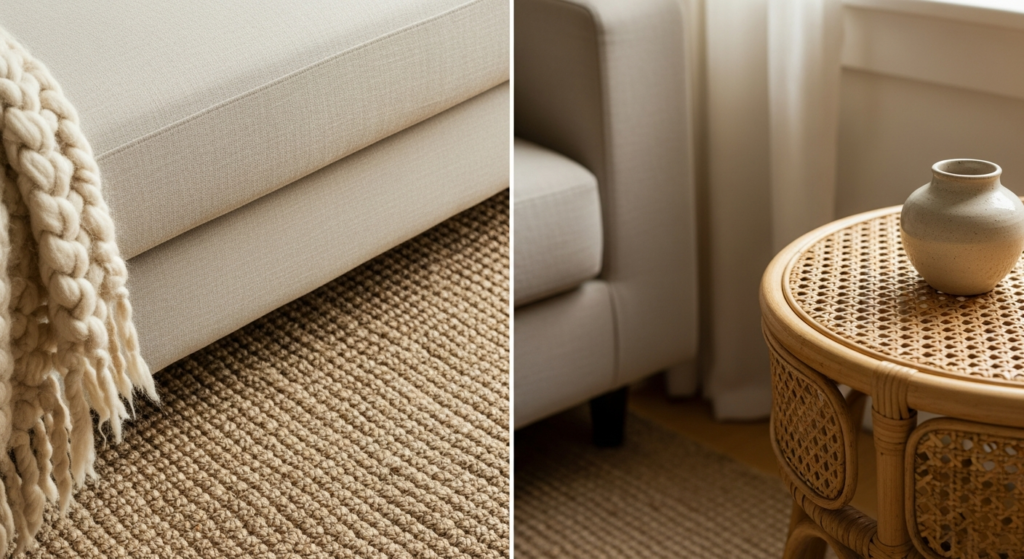
The most visually rich and most genuinely beautiful living decor is built not on complexity of colour but on the layering of natural textures — the organic warmth of materials that come directly from the natural world and carry its character, its irregularity, and its enduring beauty in every surface and every fibre.
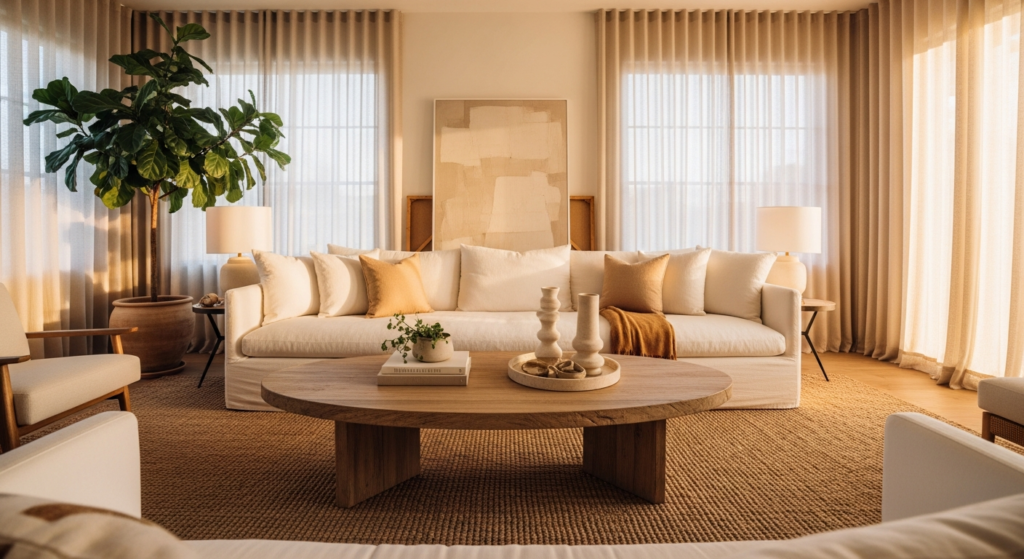
Styling Tip: Aim to incorporate at minimum five distinct natural textures in the living room. A linen sofa, a jute area rug, a rattan side table, a chunky wool throw, a raw timber coffee table, and ceramic or stone decorative objects create a beautifully layered material story with real depth and warmth. The palette can remain entirely neutral while the textures create all the visual interest and the tactile richness that makes a living room feel genuinely inhabited and genuinely luxurious.
Natural textures also improve with age and use — linen softens, timber deepens, rattan develops character — making them the most sustainable and most genuinely long-term investment in the beauty and warmth of any living space.
4. Design a Layered Lighting Scheme
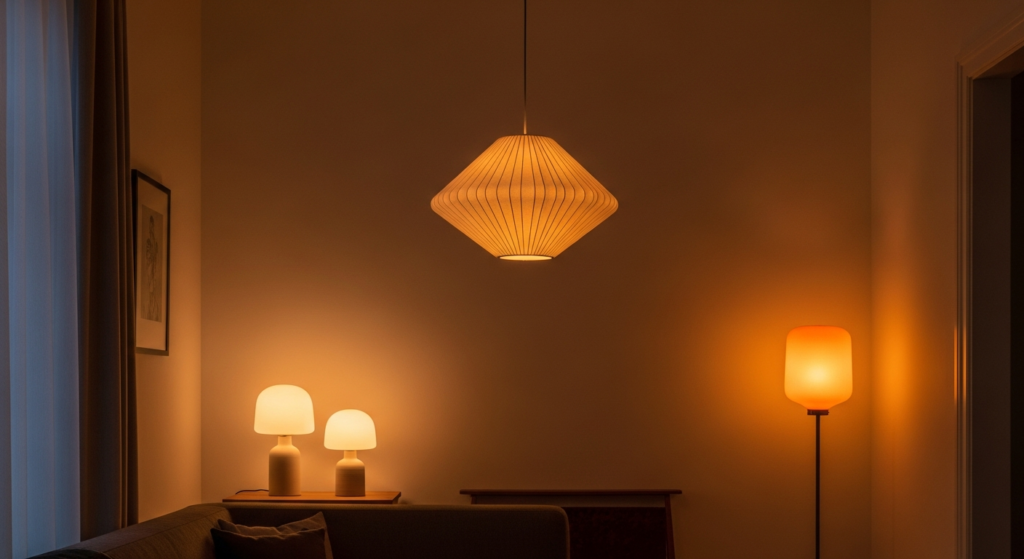
Lighting is the most transformative and most frequently underestimated element of living decor — the single design decision that most dramatically shapes the room’s mood, warmth, and livability across every hour of the day and evening. A beautifully lit living room requires deliberate design across multiple light sources, each serving a distinct purpose within the overall atmospheric composition.
Styling Tip: Layer three types of lighting in the living room for the most beautiful and most functional result. Ambient lighting from a central ceiling source — a quality pendant or a warm semi-flush fitting — provides general illumination. Task lighting from table lamps positioned beside seating areas provides comfortable reading light and intimate evening warmth. Accent lighting from a floor lamp in a corner or picture lighting above artwork creates depth, atmosphere, and the warmth of a space with multiple light sources rather than a single point of illumination.
Install dimmer switches on every lighting circuit in the living room — the ability to reduce all sources simultaneously to a warm, low glow in the evening is one of the most significant and most daily-impactful living decor investments available.
5. Choose a Large Area Rug That Grounds the Space
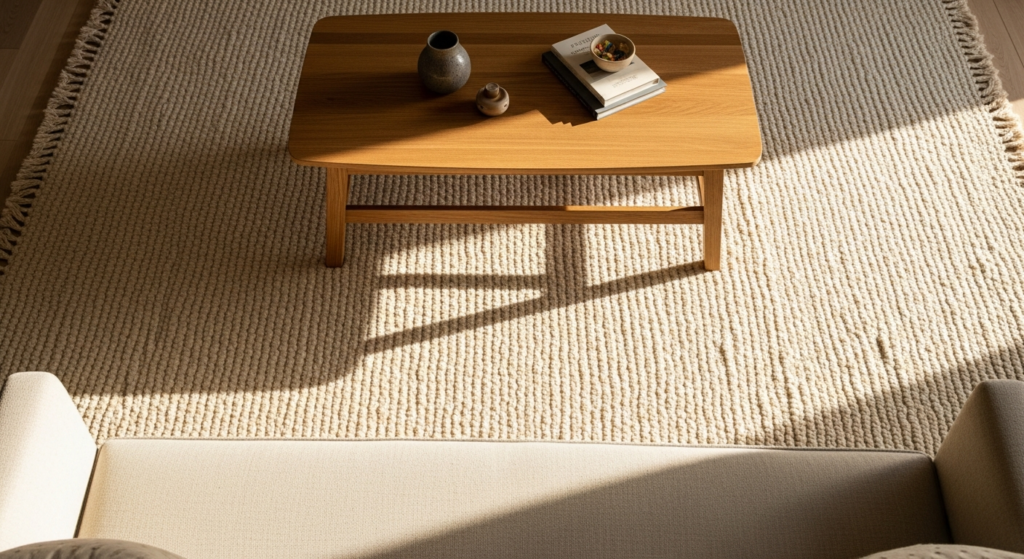
A generously proportioned area rug is one of the most immediately transformative living decor additions available — it defines the seating zone, adds warmth underfoot, introduces texture and sometimes colour, and draws the entire furniture arrangement together into a cohesive, intentional composition that reads as designed rather than assembled.
Styling Tip: The single most common area rug mistake in living decor is choosing a rug that is too small. In a living room, all four legs of the sofa should ideally sit on the rug — or at minimum the front two legs of every seating piece in the arrangement. A rug that is too small makes the furniture appear to float disconnectedly above it rather than sitting grounded within the designed space. Choose natural fibre rugs — wool, jute, or a wool-jute blend — in warm neutrals or subtle organic patterns for the most timeless and most broadly complementary result.
A quality area rug also absorbs sound — making the living room feel quieter, warmer, and more acoustically intimate — and protects the flooring beneath it, combining genuine aesthetic beauty with significant functional value.
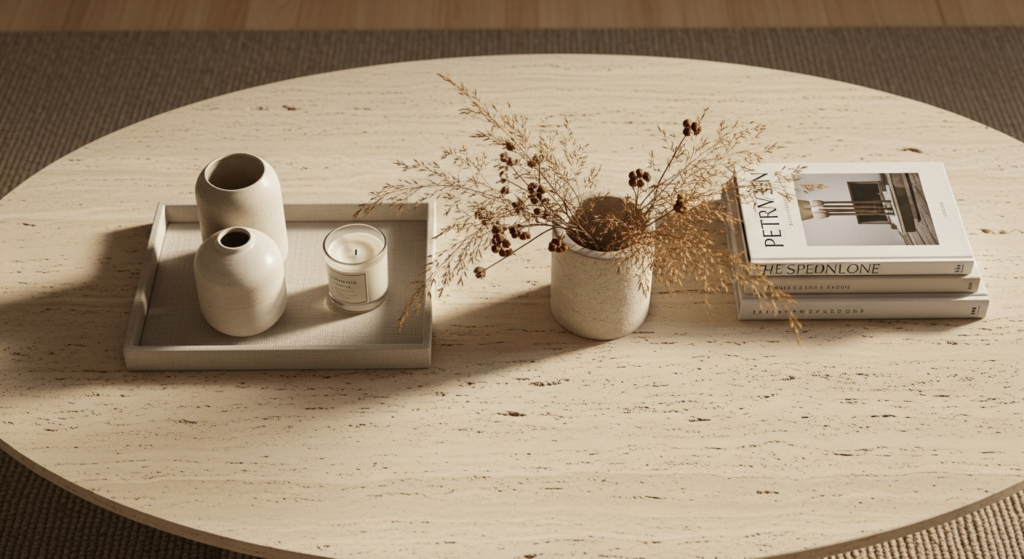
6. Create a Beautifully Curated Coffee Table Styling
The coffee table is the visual and functional centre of the living room — the surface around which daily life most naturally organises itself and from which the styling of the room radiates outward. A beautifully styled coffee table is one of the most immediately impactful living decor opportunities available.
Styling Tip: Style the coffee table with a maximum of five objects — a single tray containing two or three smaller items, a low ceramic or glass vase with a botanical element, a small stack of design books with beautiful spines facing outward, and one sculptural or personal object of genuine interest. The negative space on the coffee table — the visible surface left deliberately unoccupied — is as important as the objects themselves. An over-styled coffee table loses the editorial quality that makes truly beautiful living decor so compelling and so aspirational.
Choose a coffee table in a natural material — raw timber, travertine, rattan, or stone — that complements the room’s texture palette. The material of the coffee table is the most visible natural material surface in the living room and deserves the same level of consideration as any other design element.
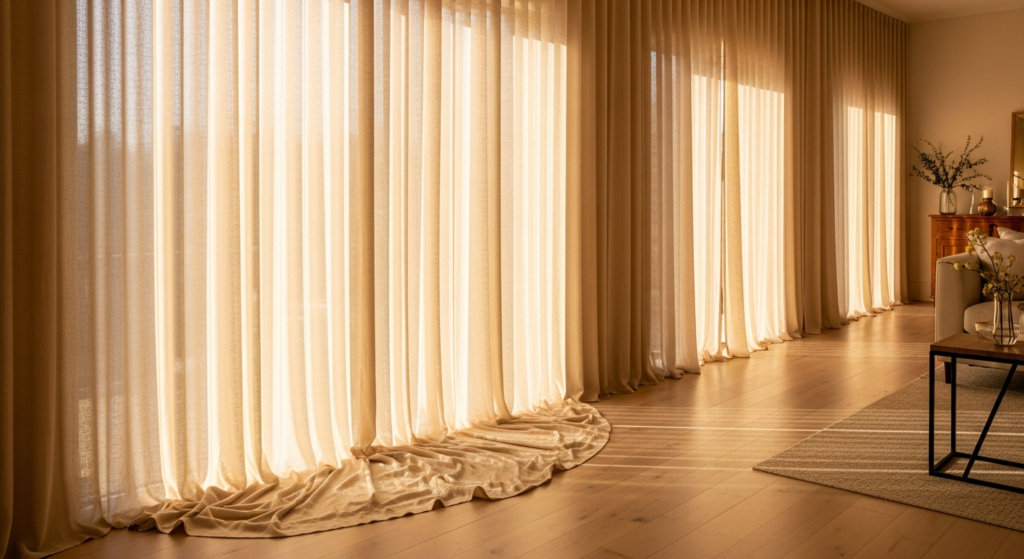
7. Hang Floor-to-Ceiling Curtains for Scale and Softness
Floor-to-ceiling curtains — mounted as close to the ceiling as possible and falling in unbroken, generous lengths to the floor — are one of the most transformative and most immediately luxurious living decor additions available. They add scale, softness, warmth, and a quality of considered architectural intention that is visible and felt from the moment of entry.
Styling Tip: Choose curtain fabric in a natural fibre — linen, cotton, or a linen-cotton blend — in a warm neutral that complements the room’s primary palette. Mount the curtain track or pole ten to fifteen centimetres below the ceiling rather than directly above the window — this visual trick creates the impression of significantly greater ceiling height and more generous window proportion simultaneously. Allow ten to fifteen centimetres of fabric to pool gently on the floor for the most opulent and most editorial result. Blackout lining within beautiful natural fabric panels allows both aesthetic beauty and functional darkness when required.
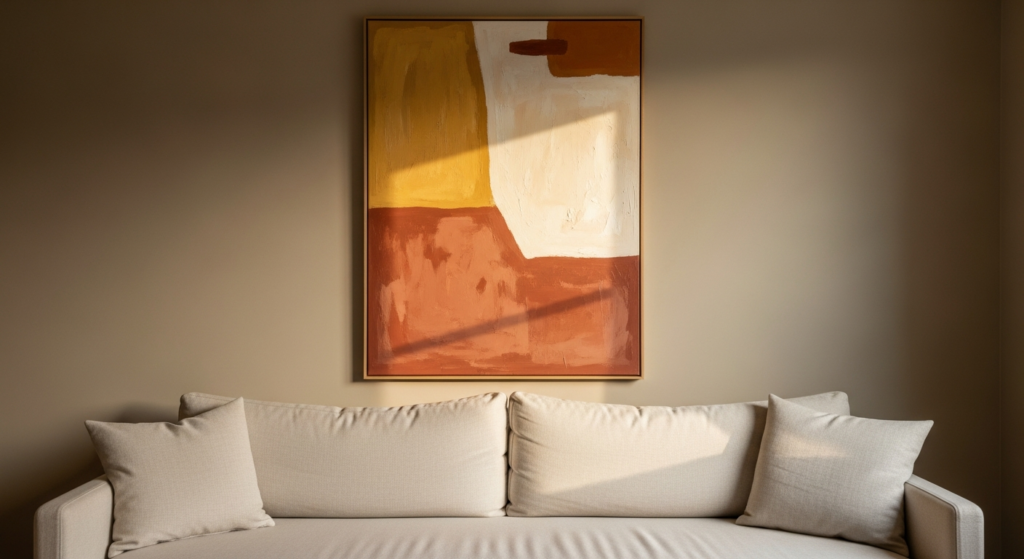
8. Use Artwork to Create an Emotional Focal Point
A carefully chosen artwork in the living room creates what no other design element can — an immediate emotional anchor that communicates the personal values, aesthetic sensibilities, and genuine taste of the people who live within the space. Artwork is the element of living decor that most directly and most powerfully transforms a beautifully designed room into a genuinely personal sanctuary.
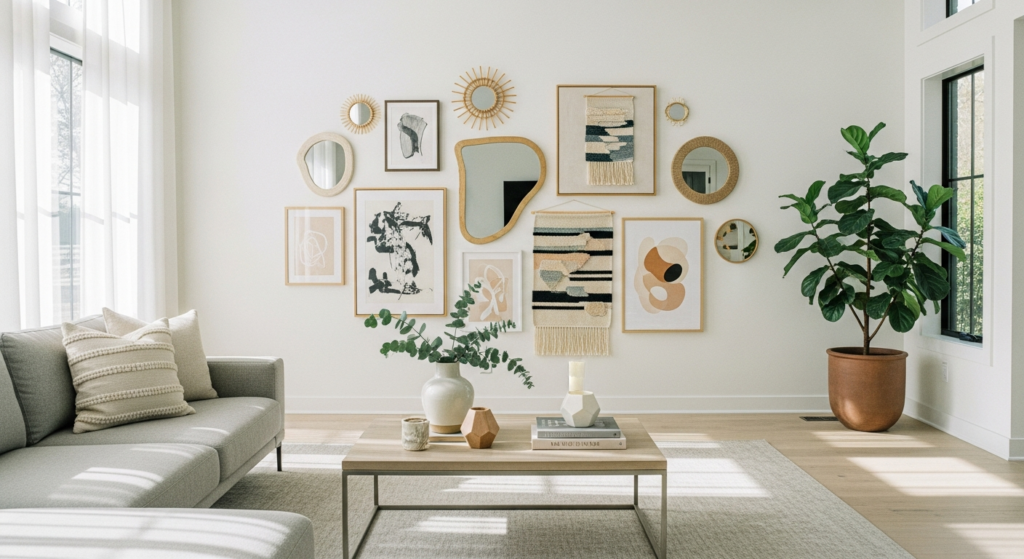
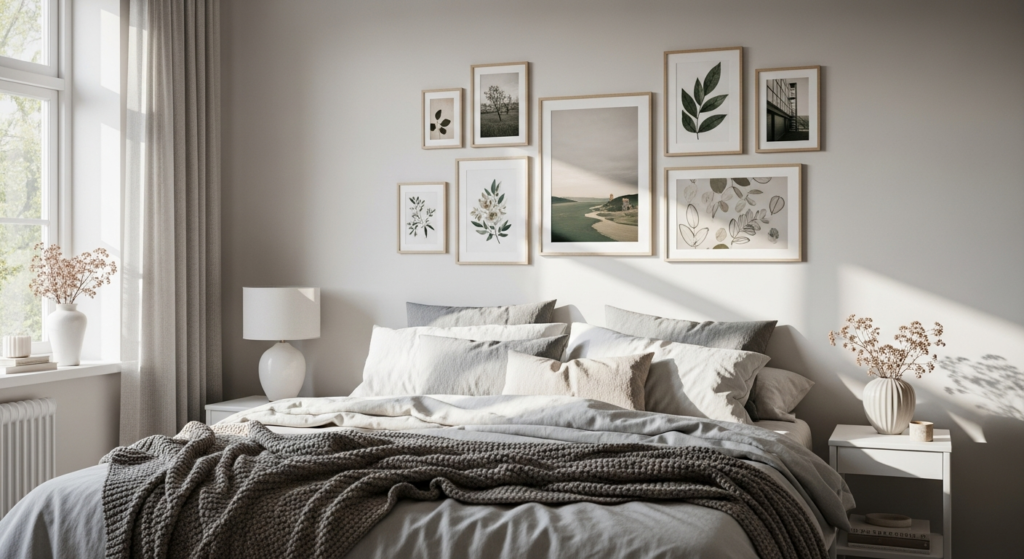
Styling Tip: Choose living room artwork that carries genuine personal resonance rather than simply filling a visual gap. A single large-scale artwork above the sofa — in a scale that fills at least two thirds of the sofa’s width — creates the most powerful and most architecturally resolved focal point. Hang at eye level — approximately 145 to 150 centimetres from floor to the centre of the artwork. Consider leaning a large artwork against the wall rather than hanging it for a more relaxed, contemporary aesthetic that photographs with a particularly editorial quality.
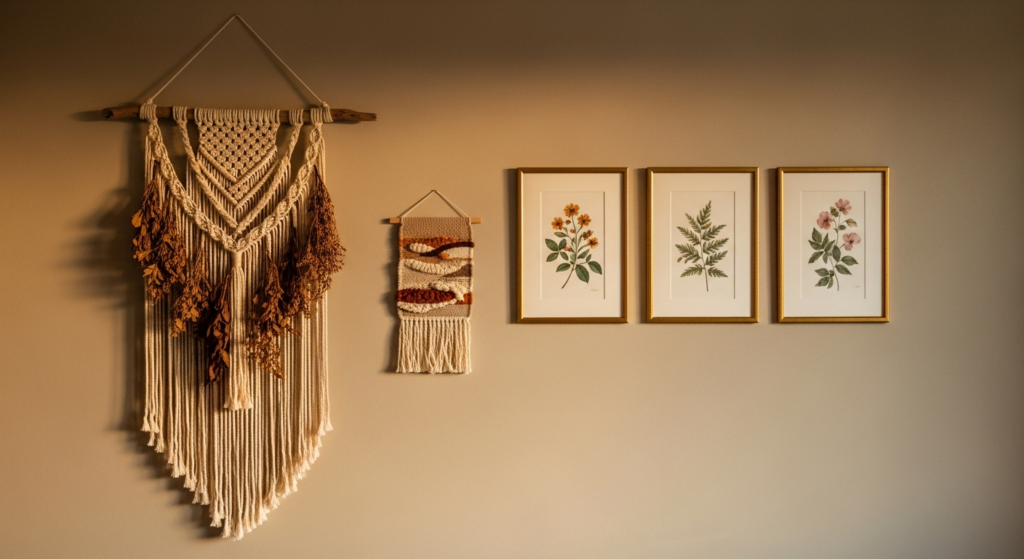
Abstract work in warm, muted tones; atmospheric photography with personal meaning; fine art prints in quality frames — all create living room focal points of genuine beauty and genuine personal significance.
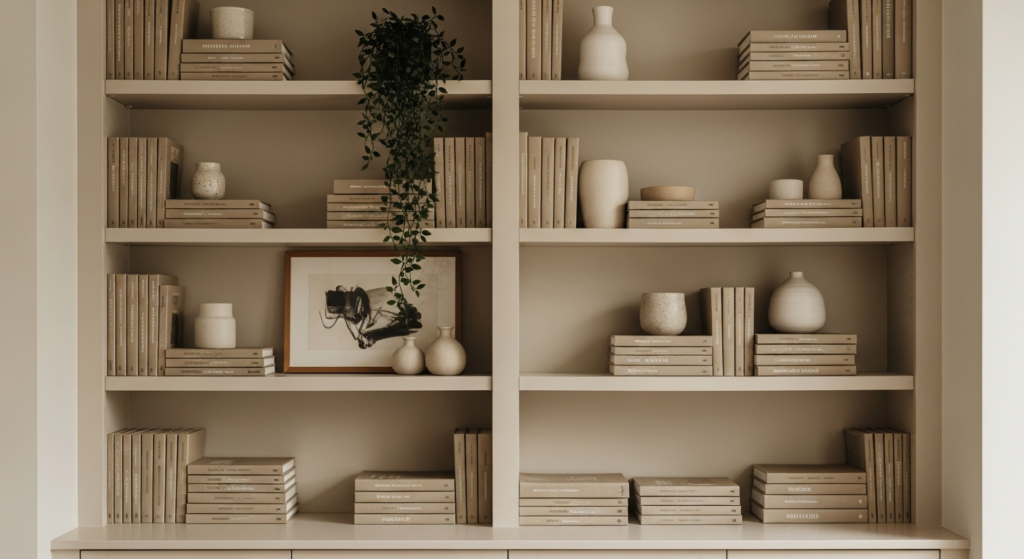
9. Incorporate Thoughtful Built-In or Open Shelving
Shelving in the living room — whether built-in cabinetry, open floating shelves, or a quality freestanding bookcase — provides both essential storage and one of the most expressive styling opportunities in the entire room. A beautifully curated shelf arrangement transforms a functional storage requirement into a genuine design feature of real visual richness.
Styling Tip: Style open shelving using the sixty-forty principle — approximately sixty percent filled with considered objects and forty percent deliberately left empty as breathing space. Mix books — arranged both vertically and horizontally in complementary tonal groups — with ceramic vessels, small sculptural objects, a single trailing plant, a leaned print or framed photograph, and one or two personal objects of genuine meaning. Keep the object palette tonal — warm neutrals, terracotta, sage, and natural wood tones — for the most cohesive and most beautiful overall result.
Built-in shelving painted in the same tone as the surrounding walls creates the most seamless and most architecturally resolved living room storage — it recedes into the space rather than asserting itself, allowing the curated objects upon it to read as deliberate styling rather than accumulated clutter.
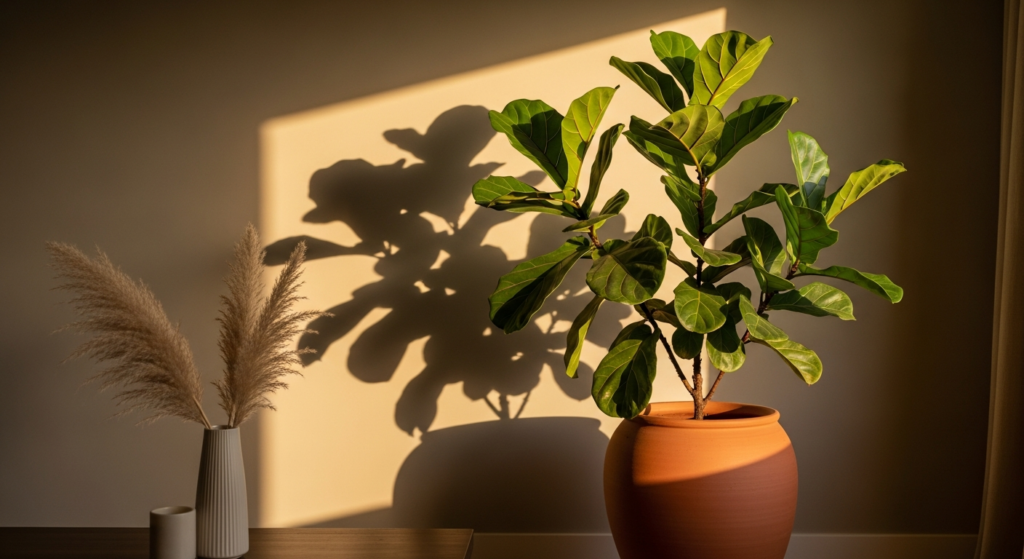
10. Bring Nature Inside with Plants and Botanicals
Living plants and botanical elements in the living room bring a quality that no designed or manufactured object can replicate — the presence of life, organic movement, and a connection to the natural world that has a measurable, positive effect on the wellbeing and the atmospheric quality of the spaces they inhabit.
Styling Tip: Choose plants with strong architectural presence for the greatest living decor impact — a large fiddle leaf fig or olive tree in a corner, a sculptural monstera on a pedestal, or a cluster of varying-height plants arranged as a single organic grouping create the most visually powerful and the most genuinely beautiful botanical living decor moments. Use quality ceramic, stone, or terracotta pots in complementary neutral tones — the vessel is as much a part of the living room’s aesthetic as the plant itself.
Dried botanicals — pampas grass, eucalyptus branches, cotton stems, and dried wildflowers — in quality vases provide year-round organic beauty with zero maintenance requirement, making them the most consistently beautiful and most practically accessible botanical living decor option available.
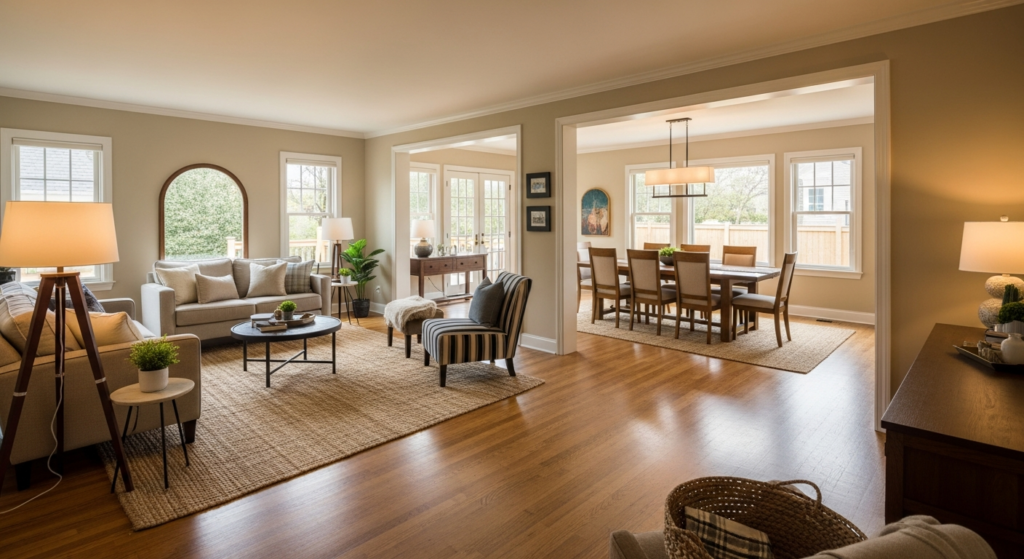
11. Define Zones in an Open-Plan Living Space
In open-plan living spaces — where the living area flows without physical division into dining, kitchen, or other functional zones — the design challenge of creating distinct, purposeful spaces within a single continuous environment is one of the most important and most rewarding living decor opportunities available.
Styling Tip: Use rugs, furniture arrangement, and lighting to create clearly defined living zones within an open-plan space. The sofa’s orientation — facing away from the dining area and toward the television or fireplace — creates an implicit boundary without requiring a physical partition. A distinct area rug beneath the seating arrangement reinforces this boundary with a clear material definition. A floor lamp or pendant light positioned specifically above the seating zone creates a pool of warm light that further differentiates the living area from the adjacent spaces.
Consistency of palette across zones while varying the texture and material density within each zone creates the most cohesive and most sophisticated open-plan living decor result — the spaces feel individually considered while maintaining a visual unity that makes the overall plan feel designed rather than divided.
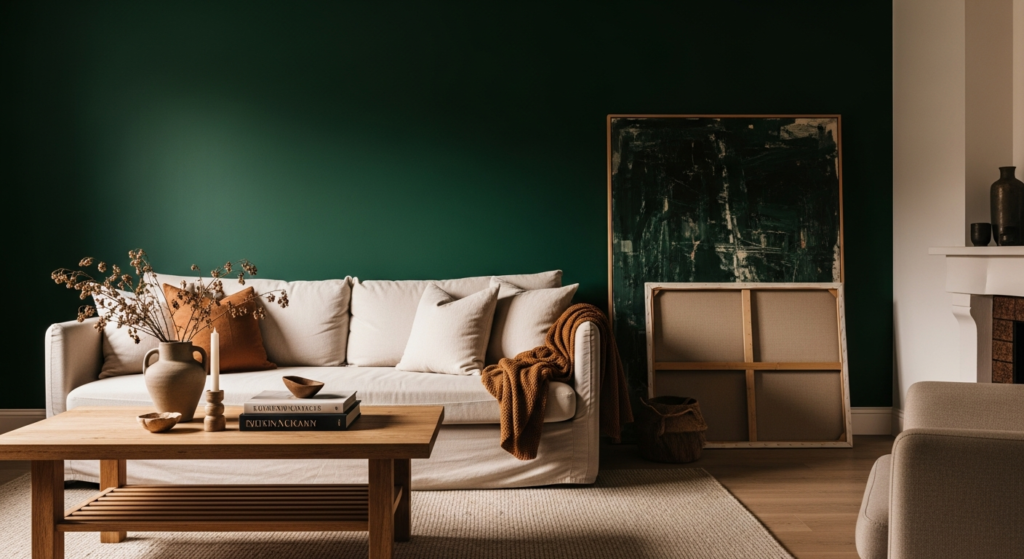
12. Add a Statement Accent Wall for Depth and Character
A carefully chosen accent wall — in a bold paint colour, a beautifully patterned wallpaper, a textured lime plaster, or a natural stone or timber cladding — adds immediate depth, character, and personality to a living room that might otherwise feel visually undifferentiated and aesthetically neutral.
Styling Tip: Choose the wall that naturally anchors the room’s primary seating view — usually the wall behind the sofa or the wall that the sofa faces — as the location for the accent wall. This ensures the statement wall is experienced as the focal backdrop of the room’s most used and most photographed perspective. Warm, rich tones — deep forest green, terracotta, warm navy, or warm burgundy — create the most dramatic and most atmospheric accent wall results. A textured lime plaster or natural clay finish creates depth and warmth without the pattern commitment of wallpaper, providing a beautifully organic alternative to a flat paint finish.
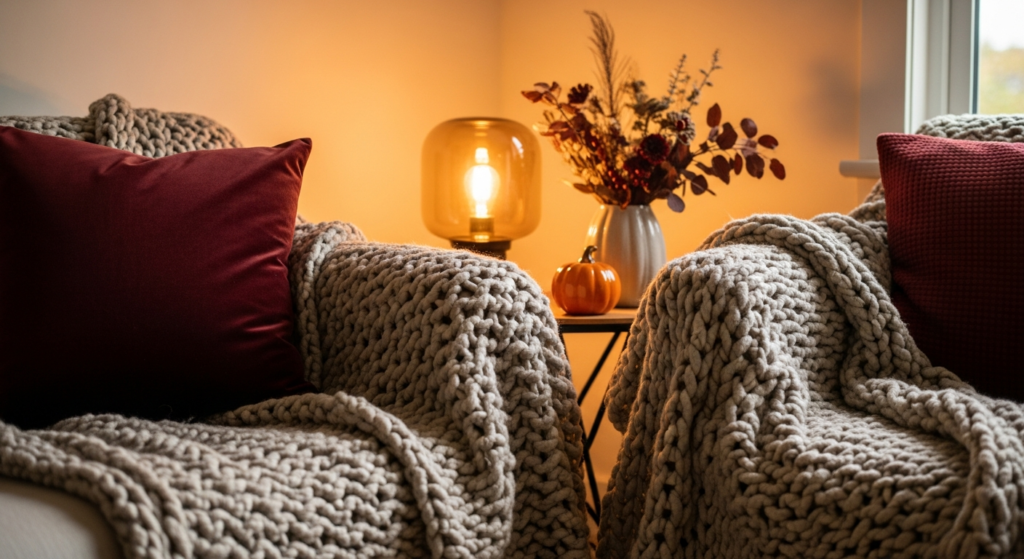
13. Style the Living Room for Seasonal Change
One of the most sophisticated and most pleasure-delivering aspects of living decor is the practice of updating the room with the changing seasons — introducing textiles, colours, botanical elements, and atmospheric adjustments that connect the living space to the natural rhythms of the year and keep the room feeling genuinely alive and genuinely responsive to the world beyond its windows.
Styling Tip: Seasonal living decor updates do not require significant investment or structural change — they require only the willingness to rotate cushion covers and throws, introduce seasonal botanical elements, adjust the lighting temperature and intensity, and allow the room’s palette to deepen in the cooler months and lighten in the warmer ones. Rich burgundy and camel throws for autumn; cream linen and dried lavender for summer; deep forest green and warm wool for winter; blush and soft sage for spring. The seasonal responsiveness of a living room makes it feel genuinely cared for and genuinely beautiful across every month of the year.
14. Edit the Living Room with Consistent Intention
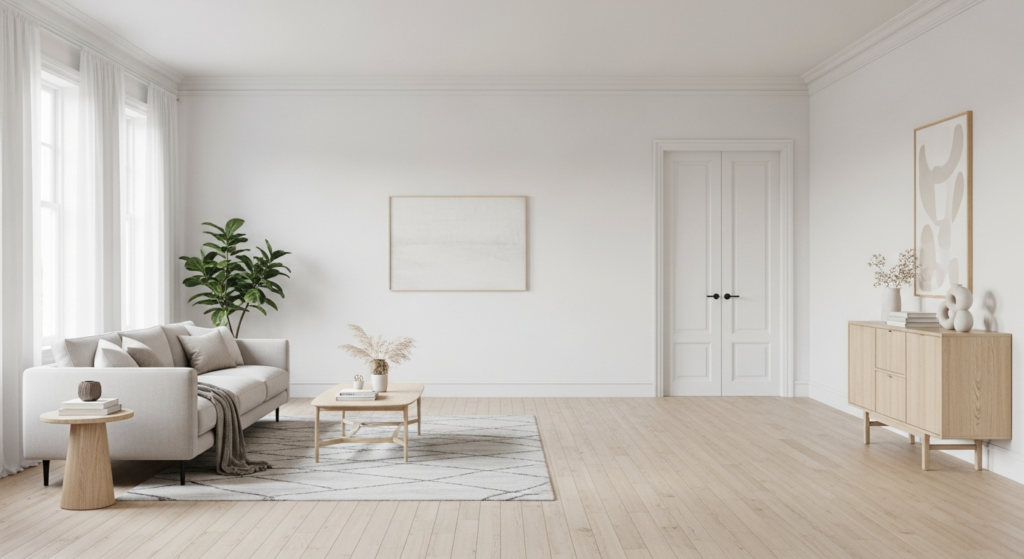
The final and most fundamental living decor principle is the one that underpins every other — the ongoing, disciplined practice of editing the living room with consistent intention, removing what no longer serves the space, and maintaining the visual breathing room that allows every beautiful element within it to be fully seen, fully appreciated, and fully enjoyed.
Styling Tip: Implement a seasonal editing practice — walk through the living room at least once every three months and remove anything that has accumulated without deliberate purpose. Temporary objects that have become permanent fixtures, duplicated decorative objects, furniture pieces that interrupt rather than support the room’s flow — all of these diminish the quality of the space without contributing to it. The living room that has been consistently, lovingly edited over time always feels more beautiful, more considered, and more genuinely luxurious than one that has been continuously added to without the equal and opposite practice of thoughtful removal.
Empty space in a living room — generous floor clearance, visible wall space, uncluttered surfaces — is not the absence of design. It is the most sophisticated design choice available, and the one that makes every other beautiful element in the room most powerfully and most clearly felt.
Conclusion
The most stunning living decor is not the result of unlimited budget or access to extraordinary spaces — it is the result of clear aesthetic intention, genuine material quality, and the disciplined, patient practice of designing with care over time. A warm neutral palette, a quality sofa, layered natural textures, considered lighting, generous rugs, curated shelving, meaningful artwork, seasonal botanical elements, and the consistent practice of editing with love and intention — these are the principles that create living rooms of genuine and lasting beauty.
The fourteen living decor ideas explored here are a framework for that kind of beauty — a starting point for a living room that will grow more beautiful, more personal, and more genuinely yours with every year it is thoughtfully, lovingly lived in.
FAQs
Q1: What are the most impactful living decor ideas for 2025? The most impactful living decor ideas for 2025 include building a warm neutral colour palette as the design foundation, investing in a quality statement sofa in a natural fabric, layering at least five distinct natural textures throughout the space, designing a three-layer lighting scheme with dimmer switches, choosing a generously sized natural fibre area rug, and maintaining consistent editorial discipline to keep the room beautifully uncluttered. These elements work together to create living rooms of genuine, enduring beauty and daily livability.
Q2: How do I make my living room look more expensive with decor? The most effective strategies for making a living room look more expensive through decor include investing in quality natural fabrics for upholstery and cushions, hanging floor-to-ceiling curtains in a natural fibre, choosing a large area rug that properly grounds the furniture arrangement, adding a single large-scale artwork above the sofa, using warm-toned lighting with dimmer switches, layering natural materials throughout, and maintaining editorial discipline over clutter. Quality of execution — precise arrangements, clean surfaces, considered negative space — communicates luxury more powerfully than any individual expensive purchase.
Q3: What colours work best for living room decor? Warm neutrals are the most universally successful living room decor colour choices — warm white, soft ivory, warm greige, sandy beige, and warm sage create living rooms that feel both expansive and genuinely welcoming. These tones work with every natural material, every lighting condition, and every personal accessory style, making them the most reliable long-term living decor palette choice. Accent colours — deep forest green, rich terracotta, warm navy, and dusty rose — can be introduced through textiles, cushions, and a single accent wall for seasonal warmth and visual depth.
Q4: How do I style an open-plan living room? The most effective open-plan living room styling approach uses area rugs, furniture orientation, and lighting to create clearly defined living zones within the continuous space. Position the sofa to face the living area’s focal point rather than the adjacent spaces, place a generous area rug beneath all seating pieces to define the zone, and use a floor lamp or pendant light specifically positioned above the living area to create a warm pool of light that differentiates it from the surrounding spaces. Maintaining a consistent palette across all zones while varying texture density within each creates a cohesive but differentiated open-plan result.
Q5: How do I keep my living room looking beautiful over time? The most important ongoing living decor practice is consistent, disciplined editing — removing objects that accumulate without deliberate purpose, rotating textiles and botanical elements seasonally, maintaining all surfaces with the same editorial attention they received when first styled, and resisting the temptation to continuously add without the equal and opposite practice of removal. A living room that is regularly, lovingly edited maintains its beauty and its visual breathing room over time in a way that continuously accumulated spaces never achieve. Quality of maintenance is ultimately as important as quality of initial design in the long-term beauty of any living space.