Introduction
There is something a purchased print can never fully provide — the unmistakable quality of a human hand. Handmade wall art carries a warmth, a presence, and a genuinely personal character that manufactured decoration simply cannot replicate. It communicates not just aesthetic choice but creative investment — the time, the skill, and the specific vision of someone who decided that a particular wall in a particular room deserved something made rather than simply bought. In the most beautiful homes, it is almost always the handmade element that draws the eye, holds the attention, and creates the most lasting and the most deeply memorable impression.
In 2025, handmade wall art crafts have reached a level of sophistication and aesthetic ambition that places them firmly within the vocabulary of premium interior design. The most admired handmade wall pieces are not simply crafts — they are considered art objects that hold their own alongside gallery prints and professional artwork, bringing to the home the rarest and the most valuable quality any interior element can possess: genuine, irreplaceable individuality.
These thirteen handmade wall art crafts ideas represent the most beautiful, the most technically achievable, and the most broadly inspiring approaches to creating art for your walls with your own hands — each one explored with the depth, the practical detail, and the interior design context that genuinely beautiful home inspiration always deserves.
1. Macramé Wall Hanging with Botanical Fringe
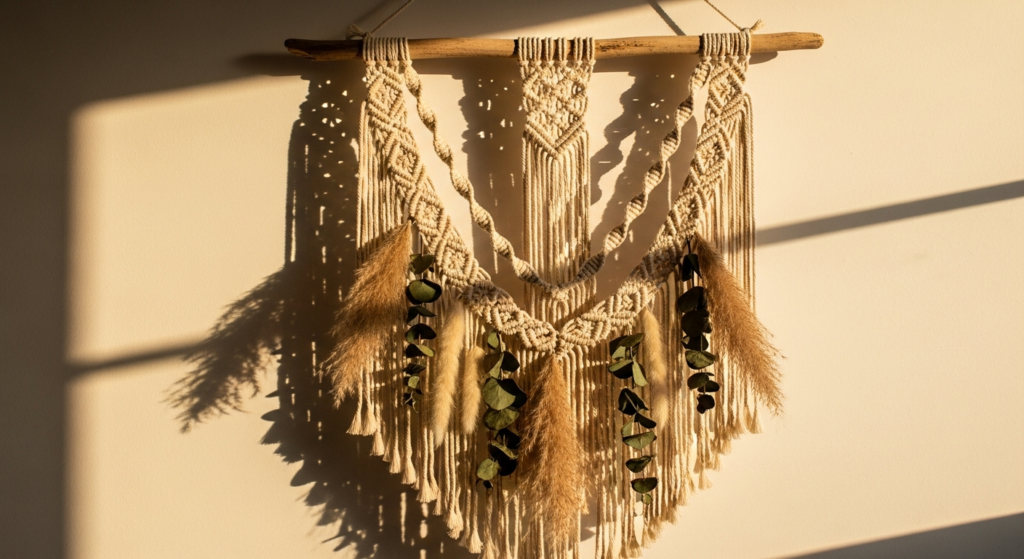
A beautifully knotted macramé wall hanging — incorporating natural botanicals, dried flowers, or feathers within the knotted structure — is the most warmly organic and the most widely admired handmade wall art craft currently inspiring home interiors. Quality macramé carries a texture, a dimensional depth, and an organic warmth that transforms any wall it inhabits into a genuinely living design feature.
Styling Tip: Choose a quality natural cotton rope or jute cord — never synthetic alternatives — in a weight appropriate to the design’s scale. For a wall hanging intended as a significant design feature, use a rope of at least 5mm diameter for generous, visible knot definition. Incorporate dried pampas grass, preserved eucalyptus, dried lavender, or natural feathers within the lower fringe of the hanging for added warmth and organic texture variation. Mount on a quality natural timber dowel or a length of driftwood — the mounting piece is as much a part of the aesthetic as the knotted work itself.
Macramé wall hangings create the most beautiful shadow play in rooms with warm, directional natural window light — the depth of the knotted structure creates soft, organic shadows that add an additional layer of dimensional beauty to the piece throughout the day.
2. Abstract Acrylic Pour Painting on Canvas
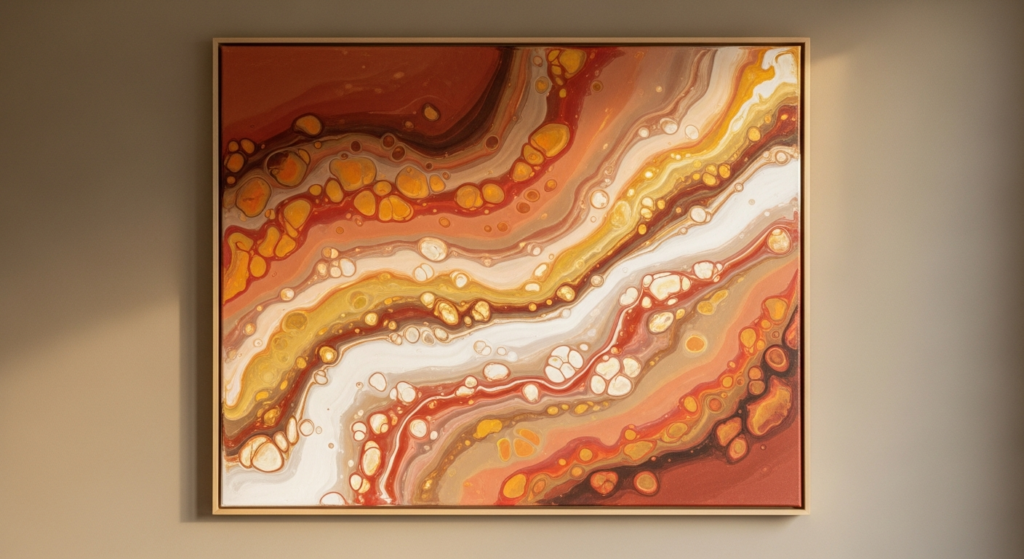
Abstract acrylic pour painting — where fluid acrylic in multiple colours is poured, tilted, and manipulated across a canvas to create organic, unpredictable patterns of extraordinary colour and movement — is the handmade wall art craft that delivers the most reliably striking and the most genuinely beautiful results for the least technical skill investment. Each pour is inherently unique — a result that cannot be exactly reproduced even by the most experienced artist.
Styling Tip: Choose a colour palette of three to five colours within the same tonal family for the most cohesive and the most beautiful pour painting result — all warm earth tones, all cool blue-grey tones, or a rich jewel-tone palette of deep teal, burgundy, and gold. Always include white or a very pale tone as one component — it creates the swirling, marbled quality that makes pour paintings most visually striking. Choose a canvas size that is generous relative to the wall space it will occupy — pour paintings gain significant visual power from scale. Allow a minimum of forty-eight hours of full drying time before hanging.
Frame with a simple floating frame in natural timber or warm gold for the most elevated and the most gallery-quality finished presentation.
3. Woven Textile Wall Art
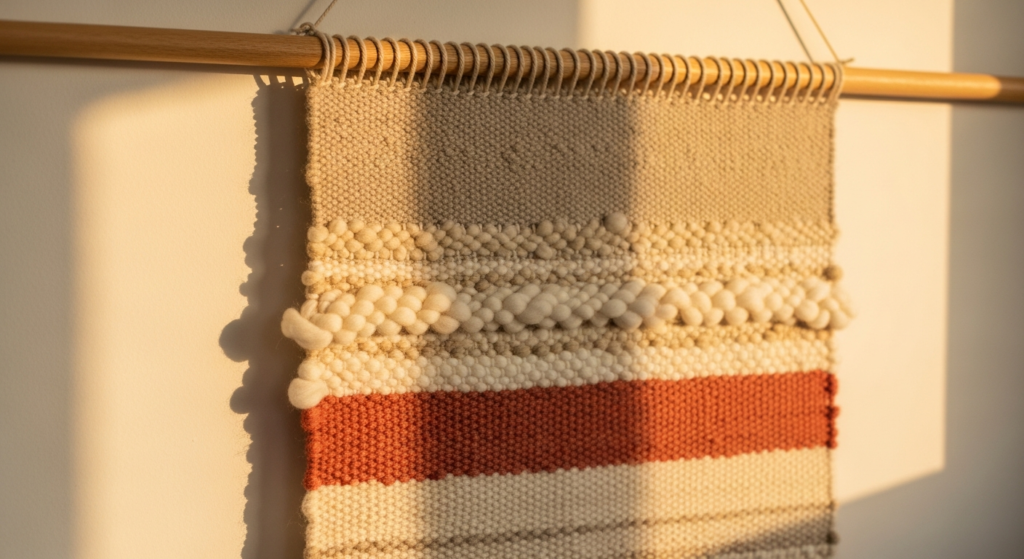
A handwoven textile wall piece — created on a simple frame loom using natural fibres in varying textures, colours, and weaving techniques — is the handmade wall art craft that most directly references the ancient tradition of textile art while feeling entirely contemporary and entirely at home in the most sophisticated modern interior. The tactile richness of woven textile wall art creates a warmth and a material depth that no two-dimensional artwork can achieve.
Styling Tip: Build the woven textile piece in a colour palette that complements the room’s existing textile and material story — linen, cotton, and natural wool in warm neutrals create the most universally beautiful and the most broadly integrable woven wall art. Introduce one contrasting tone — a warm terracotta, a soft sage, or a rich caramel — as a design accent within the neutral weave for visual interest without complexity. Add textural variation through different fibre thicknesses, different weave densities, and the addition of natural materials — jute, rattan strips, or natural feathers — within the woven structure.
Mount on a quality timber dowel or a natural branch for the most organic and the most authentically artisanal finished presentation. The natural hanging method communicates the handmade quality of the piece most honestly and most beautifully.
4. Hand-Painted Botanical Watercolour Series
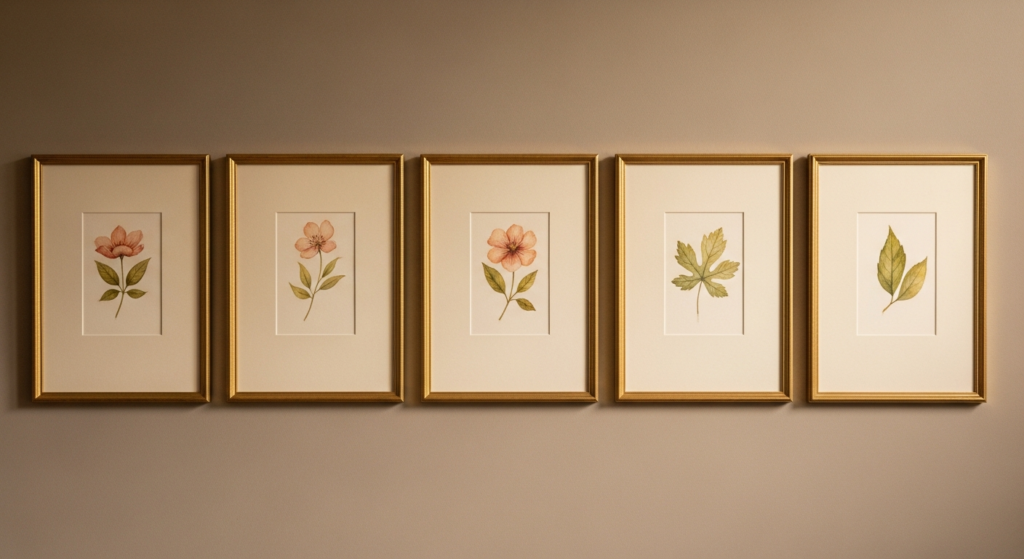
A series of hand-painted botanical watercolours — individually framed and hung as a cohesive group — creates one of the most refined, the most classically beautiful, and the most broadly interior-compatible handmade wall art arrangements available. When the series is consistent in palette, scale, and framing, it achieves a gallery-quality result of genuine elegance.
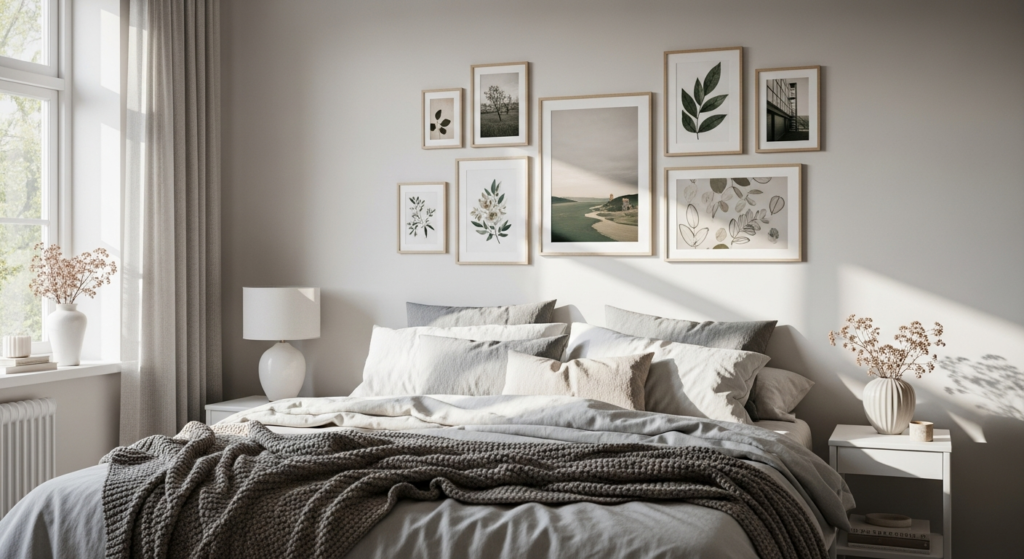
Styling Tip: Paint a series of five to seven botanical studies — individual flowers, leaves, or plant forms — on quality cold-press watercolour paper in a controlled, consistent colour palette. The consistency of palette across the series is what creates the gallery-quality cohesion — each piece can depict a different botanical subject while remaining visually unified through shared colour choices. Frame each piece identically — the same frame style, the same mat border width, the same presentation approach — for the most professional and the most elegant series presentation. Hang in a clean horizontal or grid arrangement with consistent spacing between frames.
Botanical watercolour series look most beautiful in rooms with gentle, diffused natural light — the transparent, layered quality of watercolour paint is most clearly visible and most beautifully dimensional in soft natural light conditions.
5. Leather and Stitching Wall Panel
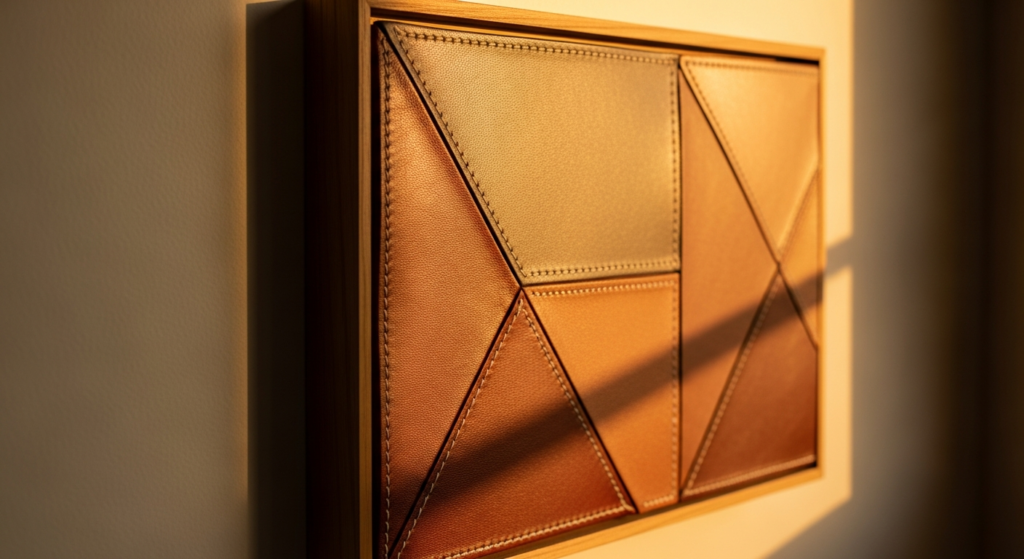
A handmade leather wall panel — where pieces of quality leather in complementary tones are assembled and stitched into a geometric or abstract composition mounted on a backing board — creates one of the most sophisticated, the most tactile, and the most genuinely unique handmade wall art pieces available. Leather wall art communicates luxury, craft, and a considered material sensibility that no other medium quite replicates.
Styling Tip: Choose leather pieces in complementary warm earth tones — tan, cognac, warm brown, camel, and cream — for the most universally beautiful leather wall panel composition. Use a quality linen thread for visible stitching details — the hand-stitched line creates a beautiful artisanal quality that adds to rather than detracts from the overall luxury of the piece. Mount the finished leather composition on a quality stretched canvas or a slim timber panel using a strong adhesive, and present in a minimal floating frame that allows the material quality of the leather to be the complete visual focus.
Leather wall panels create the most beautiful texture play in rooms with warm, directional light — the subtle sheen and the gentle grain of natural leather responds to light in a constantly shifting, deeply beautiful way.
6. Dried Flower and Botanical Frame Art
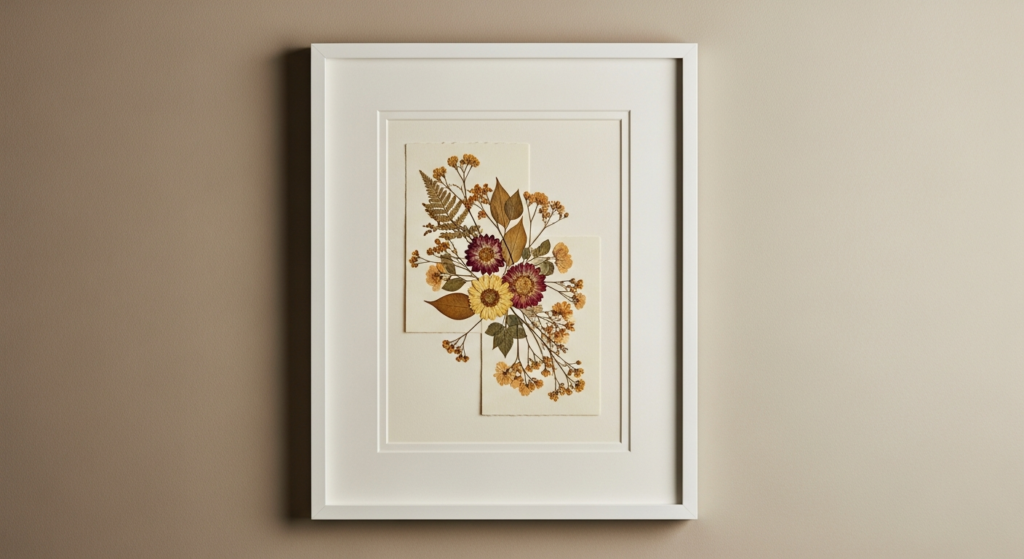
A beautifully arranged composition of pressed and dried flowers, botanical specimens, and natural plant material — mounted and framed in a quality deep frame — creates one of the most romantically beautiful and the most naturally organic handmade wall art pieces possible. Each piece is a preserved moment of natural beauty, displayed with the same care and the same reverence as any fine art object.
Styling Tip: Press and dry flowers at the peak of their bloom — the colour, the form, and the overall beauty of the finished piece is directly determined by the quality of the botanical material used. Use a quality herbarium press or heavy books lined with absorbent paper for a minimum of two to three weeks to achieve the flattest, the most complete, and the most beautifully preserved results. Arrange the pressed botanicals on a quality archival backing paper in a composition that feels organic rather than symmetrically rigid — asymmetric, naturalistic arrangements feel most genuinely beautiful and most authentically like found natural art. Frame under UV-protective glass to prevent fading.
Dried botanical frame art looks most beautiful in rooms with warm, natural light — avoid direct sunlight which will fade the delicate dried material even through standard glass.
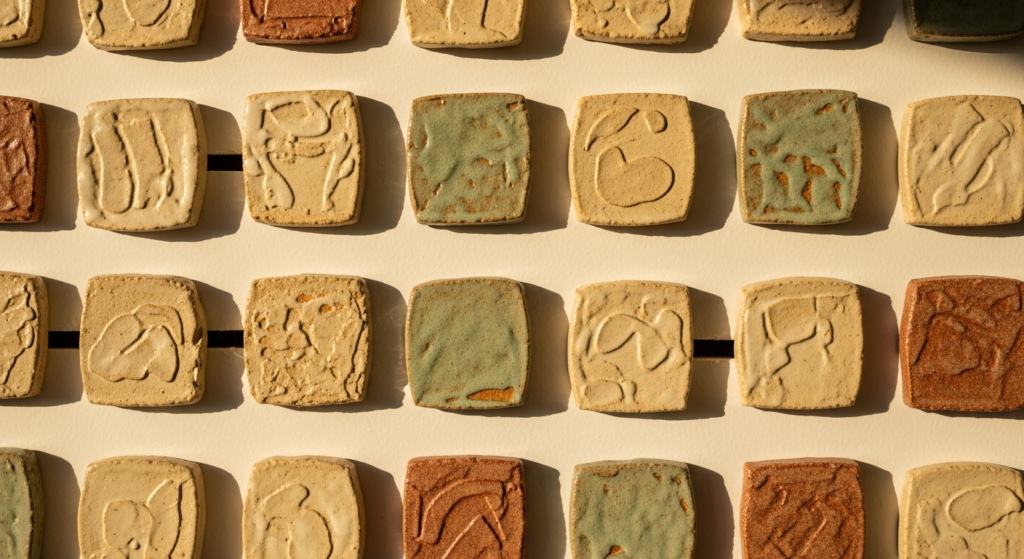
7. Hand-Built Ceramic Wall Tiles
Hand-built ceramic wall tiles — individually formed, textured, and glazed, then mounted in a geometric composition on the wall — create one of the most architecturally sophisticated and the most genuinely artisanal handmade wall art features available for the home. Each tile carries the fingerprint, literally and aesthetically, of the hand that made it.
Styling Tip: Create ceramic wall tiles in consistent size and basic form but with deliberate variation in surface texture and glaze application — the slight irregularity of hand-built ceramic is its most beautiful quality, not a flaw to be corrected. Choose glazes in a warm, controlled palette — cream, warm white, soft sage, warm terracotta, and warm camel — for the most cohesive and the most beautifully integrated ceramic tile wall art composition. Mount in a grid or stacked arrangement with small, consistent gaps between tiles — the wall surface visible between tiles becomes part of the composition and should be considered in the overall design.
Ceramic tile wall art creates extraordinary texture play under directional warm light — the slight irregularities of each glaze surface create a constantly shifting, deeply beautiful light response that no flat artwork can replicate.
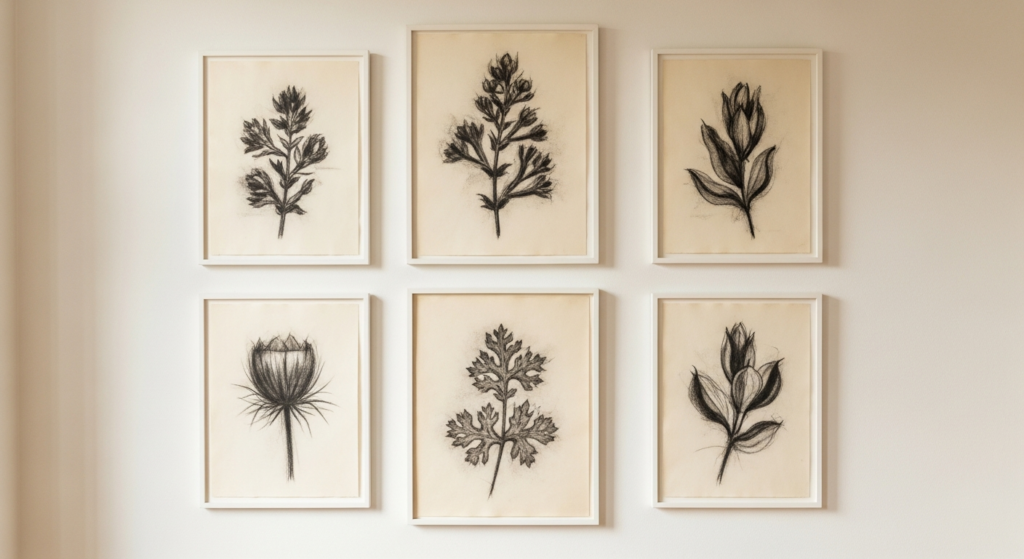
8. Charcoal and Ink Drawing Framed Series
A series of original charcoal or ink drawings — botanical studies, abstract mark-making, architectural sketches, or figure studies — framed identically and hung as a cohesive wall arrangement creates the most intellectually considered and the most genuinely fine-art-adjacent handmade wall art approach available to the home decorator. Original drawing communicates a specific, irreplaceable artistic intelligence that reproduction prints cannot approach.
Styling Tip: Work on quality smooth white or cream cartridge paper — at minimum 160 gsm — using quality charcoal or professional drawing ink for the most refined and the most durable finished results. Develop a consistent mark-making language across the series — similar line weight, similar compositional approach, similar relationship between positive and negative space — so that each individual drawing feels like part of the same coherent artistic vision. Frame with wide, quality white or cream mat boards and simple, clean timber or black frames for the most gallery-quality presentation.
Original drawing series look most beautiful on walls with clean, even natural light — the subtle tonal range of charcoal and ink is most clearly readable and most beautifully dimensional in gentle, diffused natural light conditions.
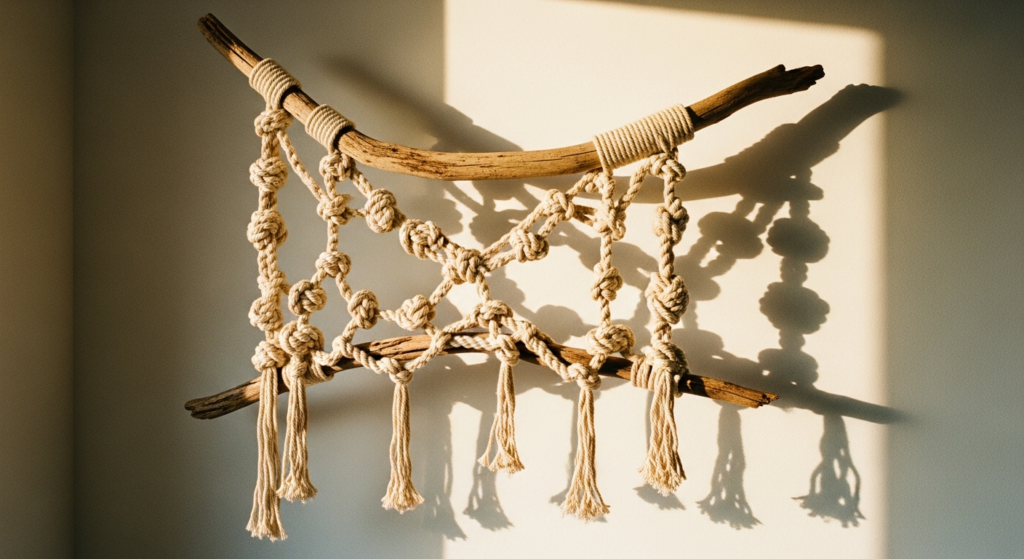
9. Rope and Driftwood Sculptural Wall Installation
A sculptural wall installation combining natural rope knotting with driftwood — where sections of rope are tied, looped, and knotted between two or more pieces of natural driftwood or timber to create a three-dimensional wall piece — creates one of the most organically beautiful and the most deeply natural handmade wall art installations available. It brings the quality of coastal nature and artisan craft simultaneously into the interior environment.
Styling Tip: Collect or source driftwood pieces with genuine natural character — interesting forms, smooth weathered surfaces, and warm grey-brown tones that complement the natural rope colour. Use quality jute, cotton, or linen rope in a weight that is substantial enough to hold its form within the knotting structure. Vary the density of the knotting across the installation — tighter, more complex knot sections alternating with longer, simpler rope spans — for the most visually interesting and the most organically natural result.
Rope and driftwood wall installations create the most beautiful organic shadows in rooms with warm, directional natural light — mount near a window or beside a wall lamp where the three-dimensional quality of the installation creates constantly changing shadow patterns throughout the day.
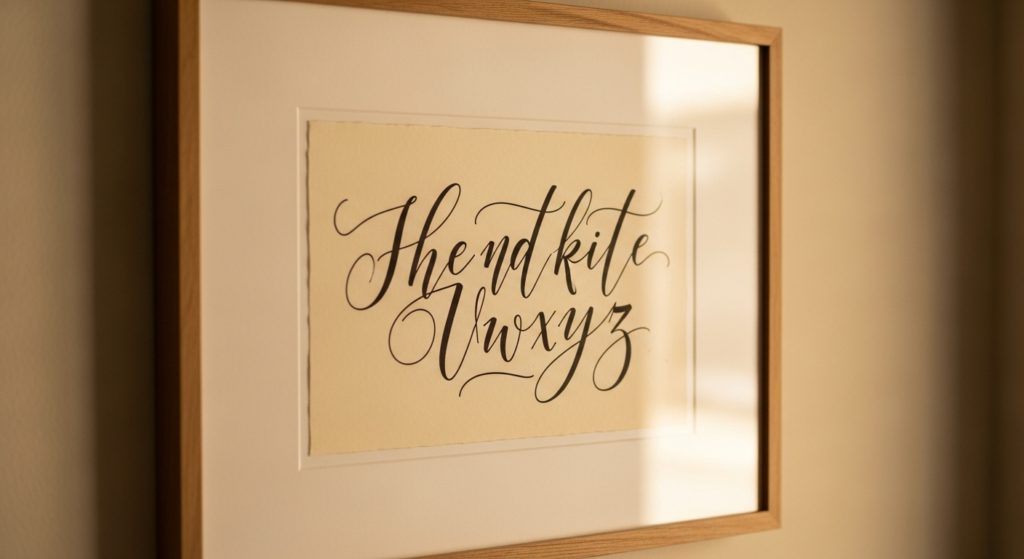
10. Hand-Lettered Calligraphy Art
A large-scale hand-lettered calligraphy piece — a meaningful word, phrase, or text rendered in a considered, elegant hand on quality paper or board — creates one of the most personally meaningful and the most broadly beautiful handmade wall art pieces for the home. The quality of genuine hand lettering carries a warmth, a humanity, and a personality that digital typography cannot replicate.
Styling Tip: Choose a text with genuine personal resonance rather than generic inspiration — a line from a loved poem, a phrase in a meaningful language, a single word that carries specific personal significance. Use quality calligraphy ink and a quality nib pen or broad-edge brush on smooth hot-press watercolour paper or quality cartridge paper for the most refined result. Practice the composition on standard paper before committing to the final surface — the spacing, the scale, and the balance of the lettered text within the composition are as important as the quality of the individual letterforms. Frame in a generous, simple frame with a quality mat board border.
Hand-lettered calligraphy wall art creates the most beautiful intimate atmosphere in living rooms and bedrooms — rooms where its personal, human quality is most felt and most appreciated in daily life.
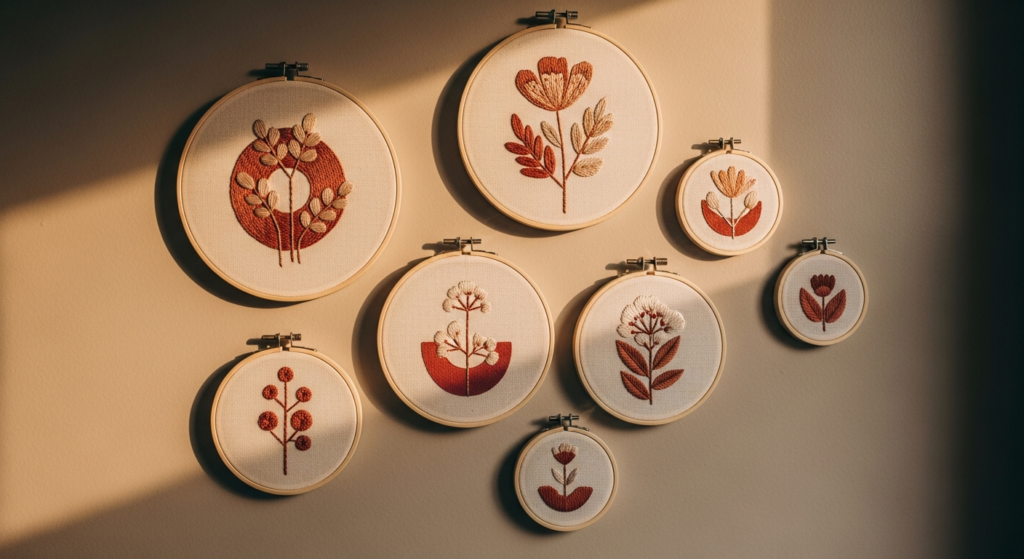
11. Embroidery Hoop Wall Art Gallery
A gallery arrangement of multiple embroidery hoops — each containing a different hand-stitched design in a complementary colour palette — creates one of the most charmingly personal and the most visually rich handmade wall art installations available. When displayed as a cohesive gallery, embroidery hoop art communicates genuine craft skill and a deeply personal creative vision.
Styling Tip: Choose a consistent colour palette across all hoops in the gallery arrangement — warm neutrals with one or two terracotta or sage accents create the most cohesive and the most broadly integrable embroidery hoop wall arrangement. Select hoop sizes that vary across the arrangement — mixing large, medium, and small hoops creates the most organic and the most visually interesting composition. Choose embroidery designs that share a visual language — all botanical subjects, all abstract geometric patterns, or all simple organic shapes — for the strongest compositional coherence. Mount the hoops directly on the wall using small Command strips or a single slim nail per hoop.
Embroidery hoop wall art galleries look most beautiful in warm interior spaces — bedrooms, reading corners, and home offices where their intimate, handcrafted quality is most naturally at home and most personally meaningful.
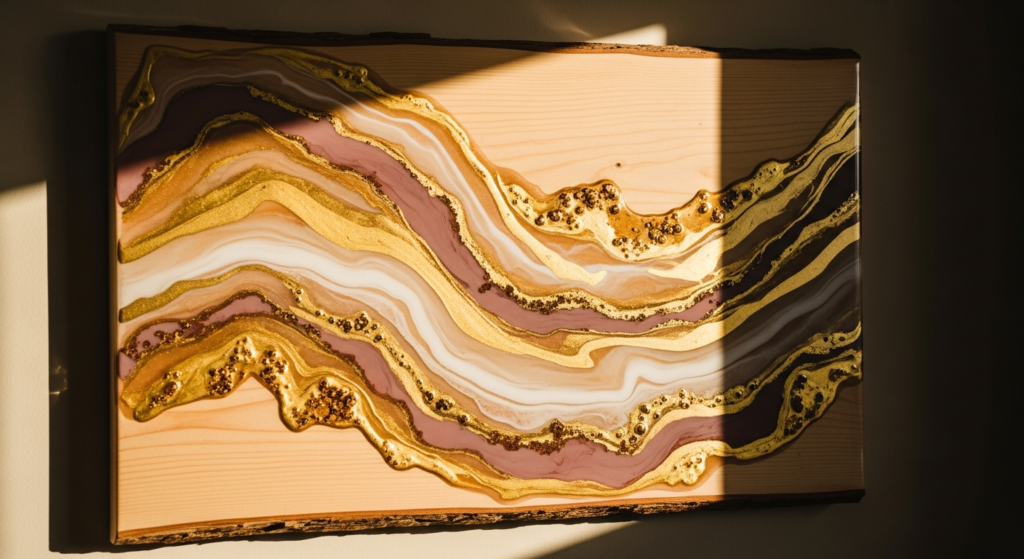
12. Resin Art on Wood Panel
Handmade resin art — where coloured resin is poured, swirled, and manipulated on a quality wood panel to create fluid, layered compositions of extraordinary depth and luminosity — creates one of the most visually striking and the most contemporary handmade wall art pieces available. The depth and the glass-like surface quality of well-executed resin art creates a wall piece that appears to contain genuine light within its surface.
Styling Tip: Use a quality casting resin with a long pot life — this allows more time for colour manipulation and surface design before the material begins to cure. Choose pigments in a warm, considered palette — gold, warm ivory, dusty rose, and warm caramel create the most beautiful and the most broadly integrable warm-tone resin art; deep navy, forest green, and gold create the most dramatically striking jewel-tone compositions. Pour on a quality birch plywood or MDF panel sealed with an appropriate primer to prevent the resin from being absorbed into the wood surface.
Resin art on wood panels creates extraordinary visual effects under directional light — the glass-like surface reflects and refracts light at different angles throughout the day, creating a living, dynamic quality that distinguishes resin wall art from any other handmade medium.
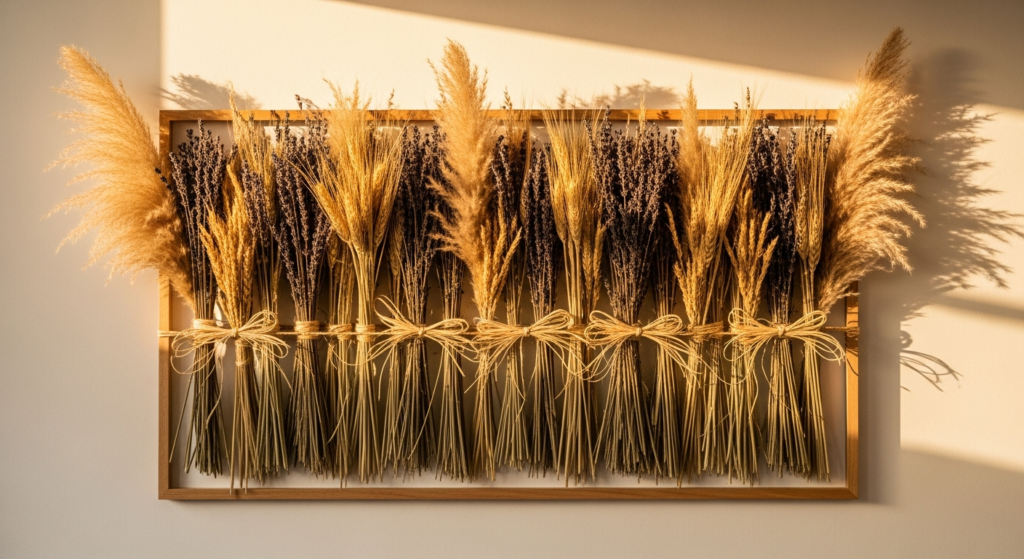
13. Hand-Tied Grass and Natural Material Wall Panel
A handmade wall panel of tied, bundled, and arranged natural grasses, dried botanicals, and organic materials — assembled on a backing board or wire frame into a flat or lightly three-dimensional composition — creates the most deeply natural and the most organically beautiful handmade wall art piece for interiors that value an authentic connection to the natural world. It is the wall art equivalent of bringing the outside in — permanently, beautifully, and with genuine artisanal craft.
Styling Tip: Source quality dried grasses — pampas grass, dried wheat, dried lavender, dried honesty plant, and natural rushes — in complementary natural tones for the most beautiful and the most cohesive natural material wall panel. Arrange in a composition that acknowledges the natural directional quality of the plant material — most dried grasses have a natural direction that should be honoured rather than forced. Tie with quality natural twine at regular, consistent intervals for the most refined and the most intentionally crafted finished quality. Mount on a quality timber frame or directly on the wall using quality picture hooks through the backing structure.
Natural grass and botanical wall panels look most beautiful in warm, golden natural light — the warm-toned dried material responds to golden light with extraordinary, honey-lit beauty that transforms the simple organic material into something genuinely extraordinary.
Conclusion
Handmade wall art crafts are the interior design choice that adds what no other element of home decoration can fully provide — the specific, irreplaceable warmth of genuine human creative expression. A purchased print can be beautiful. But a handmade wall piece is alive with the decisions, the skill, and the personal vision of the person who made it — and that quality of presence transforms not just the wall it inhabits but the entire room that surrounds it.
The thirteen handmade wall art crafts ideas explored here represent the full range of what creative home decoration can achieve — from the ancient warmth of macramé and woven textiles to the contemporary luminosity of resin art and ceramic tile installations, from the delicate beauty of botanical watercolour series to the bold, fluid drama of acrylic pour painting. Each one is achievable. Each one is beautiful. And each one will bring to your home something that cannot be ordered, cannot be delivered, and cannot be replicated — genuine, handmade, entirely personal art.
FAQs
Q1: What are the most popular handmade wall art crafts for home decoration in 2025? The most popular handmade wall art crafts for home decoration in 2025 include macramé wall hangings with botanical elements, abstract acrylic pour painting on canvas, woven textile wall art, pressed botanical frame arrangements, embroidery hoop gallery walls, resin art on wood panels, and hand-painted botanical watercolour series. These handmade wall art approaches consistently generate the highest engagement and saves on Pinterest and Instagram home decor boards for their combination of genuine artisan quality and beautiful, accessible aesthetics.
Q2: What skill level is required for handmade wall art crafts? Handmade wall art crafts span a broad range of skill requirements. The most accessible for beginners include acrylic pour painting — which requires minimal technical skill but delivers striking results — washi tape and paper collage, pressed botanical framing, and basic macramé knotting using simple knot patterns. Intermediate skills are required for woven textile art, embroidery hoop designs, and hand-lettered calligraphy. Advanced craft skills are needed for hand-built ceramic tiles, leather panel assembly, and complex resin art on wood. Most handmade wall art techniques can be learned through online tutorials and improve significantly with a small amount of deliberate practice.
Q3: How do I incorporate handmade wall art into an already decorated room without it looking out of place? The most effective approach to integrating handmade wall art into an existing interior is to choose pieces whose colour palette directly references colours already present in the room — in textiles, furniture, or architectural elements. A macramé hanging in warm cream and terracotta will integrate most naturally into a room that already uses those tones in cushions, rugs, or walls. Additionally, choosing a handmade piece in a natural material — rope, cotton, dried botanical, natural timber — creates the most universal compatibility with a wide range of interior styles since natural materials share an inherent visual warmth with virtually every contemporary home aesthetic.
Q4: What wall spaces are best suited to handmade wall art crafts? The walls that benefit most from handmade wall art are those that are most frequently viewed and most directly experienced — the wall behind a sofa or bed headboard as the room’s primary focal point, a prominent wall in the entry hallway that creates the home’s first impression, a reading corner or bedroom wall that creates an intimate, personal atmosphere, and a dining room wall that creates a warm backdrop for shared meals and conversation. Handmade wall art’s personal, human quality makes it most valuable in the rooms where genuine human connection and daily personal experience are most present.
Q5: How do I protect and maintain handmade wall art crafts over time? The most important protection for handmade wall art is positioning — keep all pieces away from direct sunlight which fades natural materials, organic dyes, and watercolour paint most rapidly. Dust macramé and textile hangings gently with a soft brush every few months. Protect paper-based artwork — watercolour paintings, drawings, calligraphy — under UV-protective glass and quality archival mat board. Apply a UV-protective varnish to acrylic pour paintings after full curing to protect the colour and the surface quality. Seal ceramic tile wall art with a quality tile sealant annually if in a room with any humidity. With appropriate care, quality handmade wall art will improve in character and in personal significance over the years of daily life it witnesses.