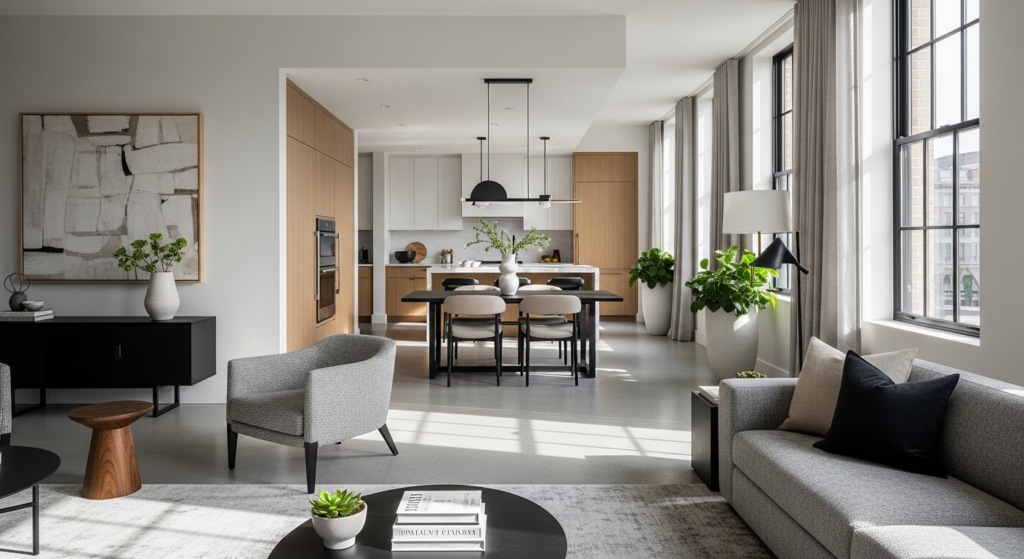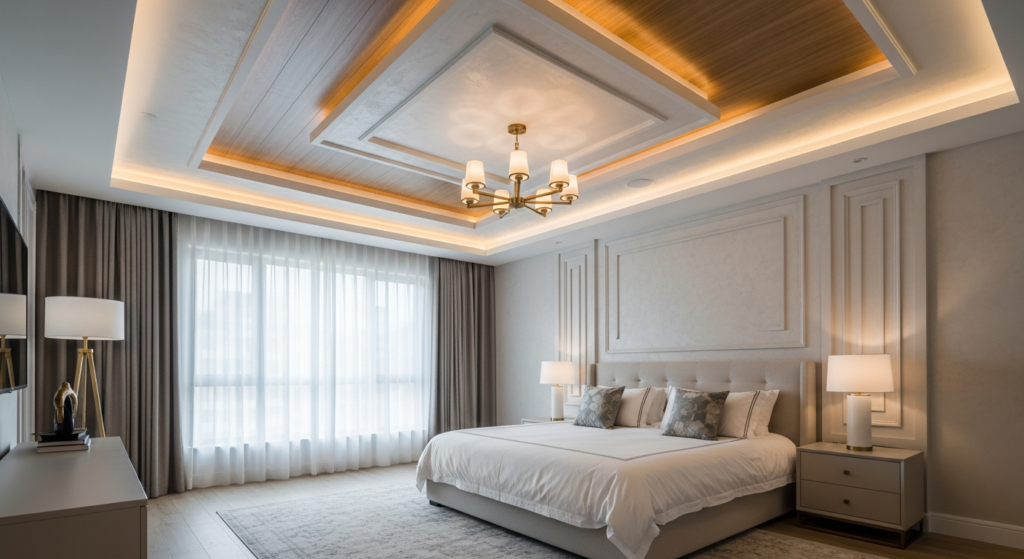
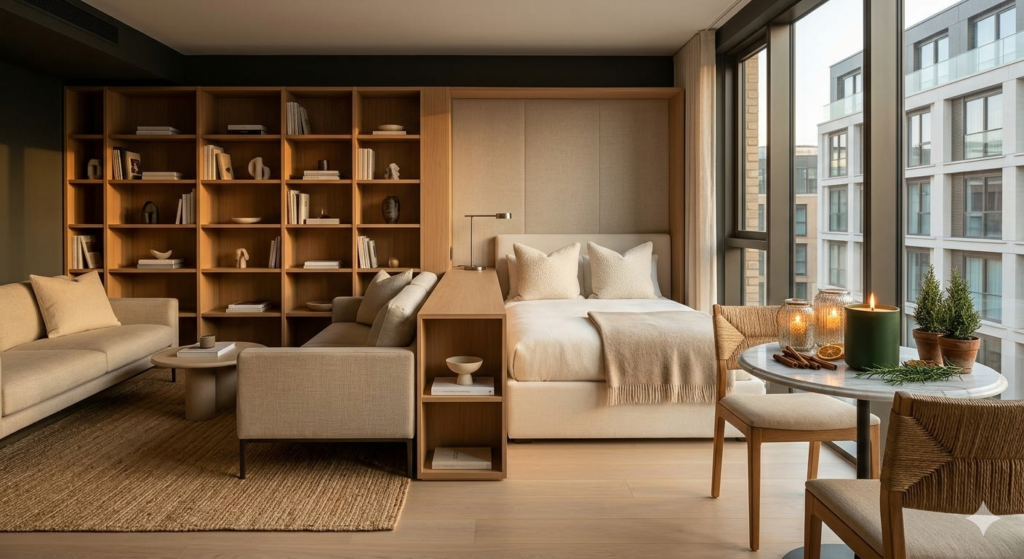
Introduction
The studio apartment presents one of modern interior design’s most compelling puzzles: how to inhabit a single, unified space with the fullness, functionality, and beauty of a home that is several times its size. It asks you to be simultaneously architect, editor, stylist, and spatial strategist — often all at once.
What makes this challenge so interesting is that the studio apartment, more than any other dwelling type, rewards genuine design thinking. In a larger home, mediocre decisions can be absorbed by sheer space. In a studio, every element must earn its place. And when they do — when the furniture is scaled correctly, the light is layered beautifully, and the zones are defined with quiet confidence — the result is something that feels not like a compromise but like a considered, intentional way of living.
The most beautifully decorated studio apartments in the world are not beautiful despite their size. They are beautiful because of the discipline and creativity that size demands. They reward close attention. They prove, with every square foot, that restraint and intention are the foundations of genuine style.
Here are 13 smart, elegant, and enduringly practical ways to decorate a small studio apartment — ideas drawn from the best of contemporary interior design thinking, made entirely actionable for the space you have right now.
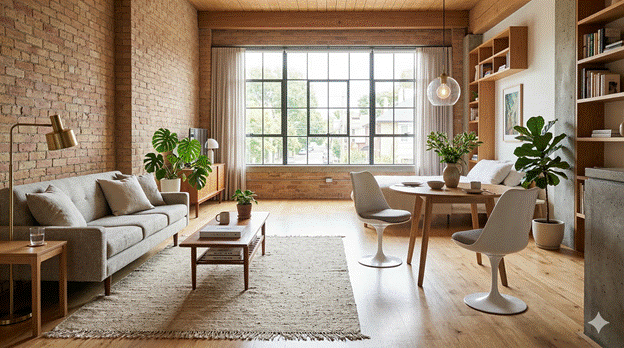
1. Define Zones Without Walls
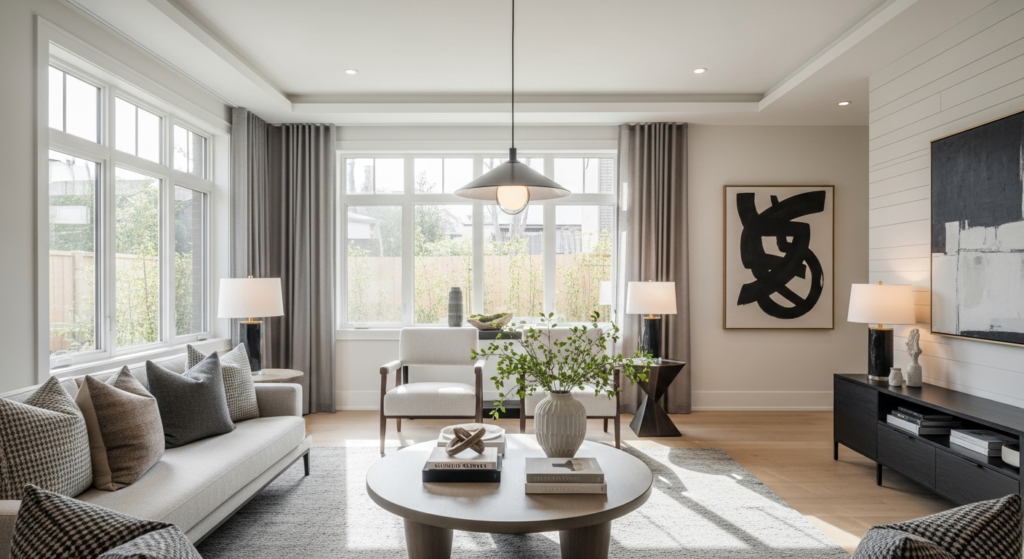
The defining challenge of studio apartment living is the absence of walls to separate functional areas — the sleeping zone, the living zone, the dining zone, and the working zone all inhabit the same open space. The most elegant solution is not to introduce physical dividers that reduce the perceived size of the room, but to define each zone through the deliberate use of rugs, furniture arrangement, lighting, and visual anchors that signal a change of purpose without interrupting the flow of light.
A large area rug anchors the living area. A pendant light hanging over a small dining table defines the dining zone. A low bookcase or open shelving unit positioned perpendicular to the wall creates a gentle boundary between the sleeping and living areas without blocking sightlines or light. Each zone acquires its own identity while the room retains its sense of spatial continuity.
Styling Tip: The rug is your most powerful zoning tool. Choose a rug sized generously enough that all legs of the living room furniture sit on or touch its edge — undersized rugs are the most common mistake in studio decorating and create a floating, disconnected quality that makes the room feel smaller. A large rug in a warm neutral or a quiet pattern grounds the zone immediately and provides the visual foundation on which the entire living area is built.
2. Invest in Multi-Functional Furniture
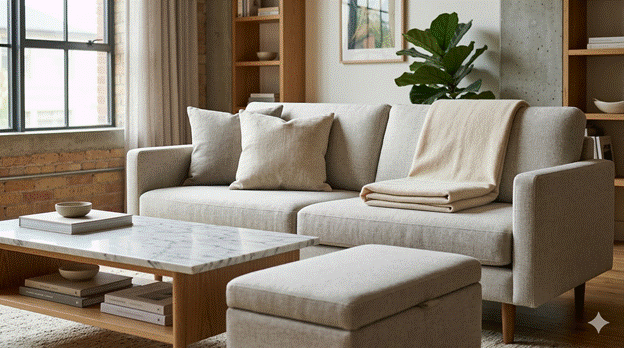
In a studio apartment, furniture that serves only one purpose is a luxury the space cannot afford. Every piece of furniture should be evaluated not only for its aesthetic quality but for the number of functions it can serve simultaneously or sequentially throughout the day. A sofa that converts to a bed, a coffee table with hidden storage drawers, a dining table that folds flat against the wall, an ottoman that opens to store bedding — these are not compromises but solutions of genuine intelligence.
The modern market for multi-functional furniture has never been more sophisticated. Designs that once felt clunky or obviously utilitarian are now available in forms of genuine beauty — slim Scandinavian-influenced sofa beds, architectural storage ottomans upholstered in premium fabrics, wall-mounted fold-down desks in solid oak or painted steel. Quality multi-functional furniture earns its premium price several times over in spatial efficiency and aesthetic contribution.
Styling Tip: When selecting a sofa bed for a studio apartment, prioritise the sofa mode over the bed mode in terms of aesthetics — you will look at it as a sofa every day, whereas the bed configuration is used only occasionally. Choose a design with clean, low-profile arms and legs, which creates a greater feeling of floor space and light beneath the piece. A daybed with a simple bolster arrangement is an even more elegant solution that reads as deliberately designed rather than practically necessitated.
3. Use Mirrors to Expand Visual Space
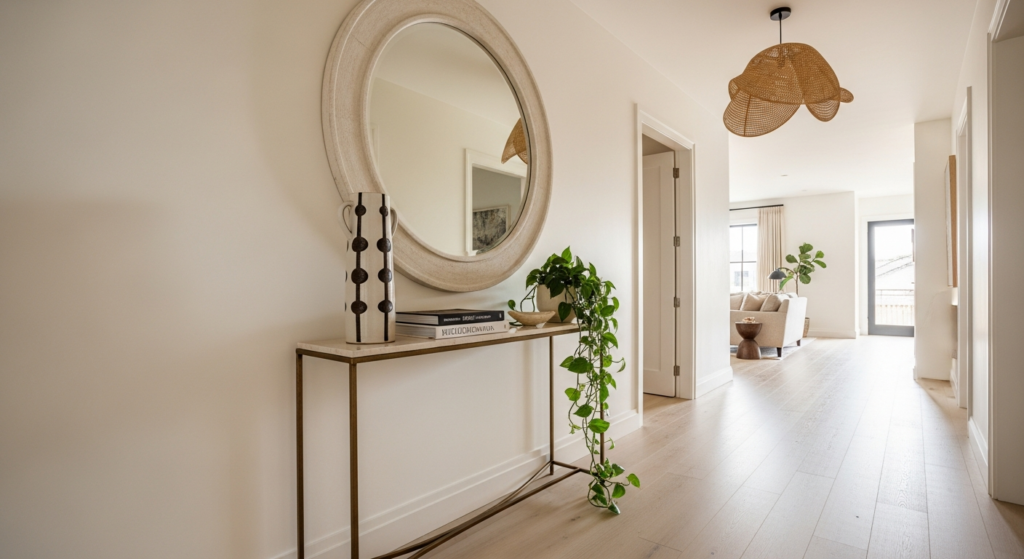
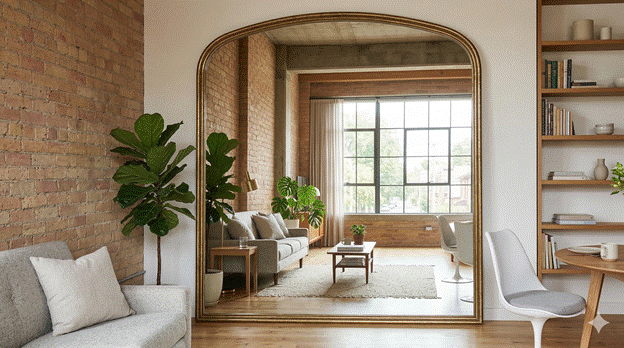
No single decorative element transforms the perceived scale of a small studio apartment more immediately or dramatically than a well-placed mirror. A large mirror reflects natural light, doubles the visual depth of the room, and creates the compelling illusion of a doorway or window opening onto an adjacent space. Its effect is almost architectural in its impact on how the room reads and feels.
For maximum spatial impact, choose the largest mirror the wall can accommodate — a full-length leaning mirror, a large round mirror in an oversized frame, or a rectangular mirror spanning the width of a wall above a console table. Position it opposite or adjacent to the room’s primary natural light source to capture and redirect daylight into every corner of the space. Mirror-fronted wardrobe doors in the sleeping area achieve the same effect on an even grander scale.
Styling Tip: A gallery wall of mirrors in varying shapes and frame finishes — round, oval, arched, and rectangular in a mix of aged brass, matte black, and raw wood — creates a curated, artistic display that functions simultaneously as a decorating statement and a spatial amplifier. This approach is particularly effective on a dark wall or in a hallway alcove where natural light is limited. Each individual mirror is modest in scale; collectively, they create a luminous, visually dynamic surface of considerable impact.
4. Embrace Light Colours on Walls and Ceilings
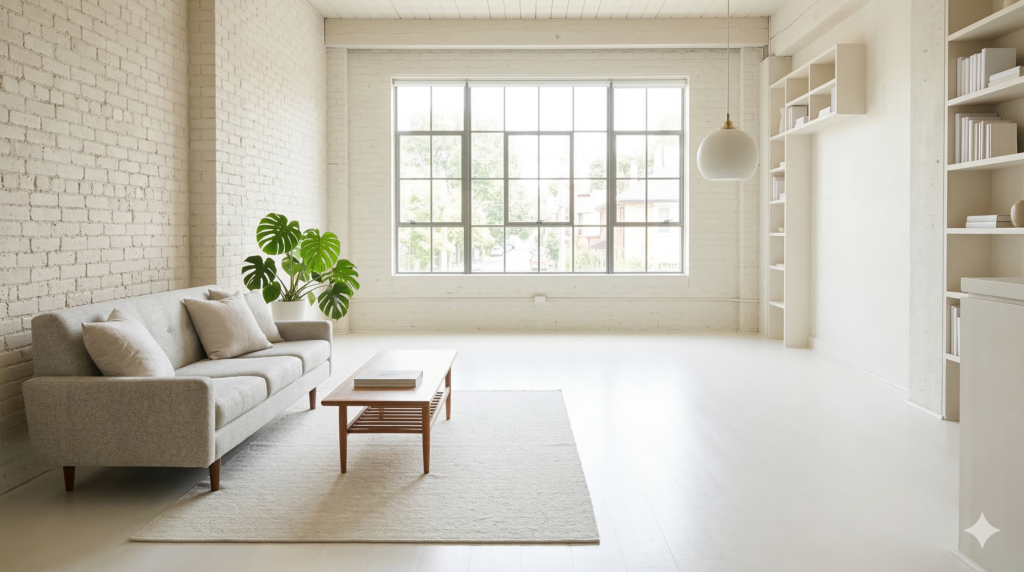
Colour is one of the most accessible and powerful tools in the studio apartment decorator’s kit, and the choice of wall colour in a small space carries consequences that extend far beyond aesthetics alone. Light, warm neutrals — pale chalk white, soft warm ivory, barely-there greige, and pale stone — reflect natural light, push walls visually outward, and create a luminous, airy atmosphere that makes the actual dimensions of a studio feel entirely secondary.
Painting the ceiling the same colour as the walls — or a shade lighter — removes the visual interruption at the cornice line and allows the eye to travel upward without stopping, creating a sense of continuous, enveloping space that adds perceived height as effectively as extra floor area. A monochromatic light palette throughout the studio, carried across walls, ceiling, and even woodwork, creates a seamless spatial envelope that feels far larger than its measurements suggest.
Styling Tip: If an all-light palette feels too stark or visually uninteresting, introduce depth through a single feature wall or alcove painted in a deeper tone — a dusty sage, a warm clay, a muted terracotta, or a sophisticated charcoal. This creates a focal point that adds visual intrigue without compromising the overall sense of space. The contrast between the feature tone and the surrounding light palette gives the room genuine dimension and personality while preserving the airy quality of the light base.
5. Maximise Vertical Storage Space
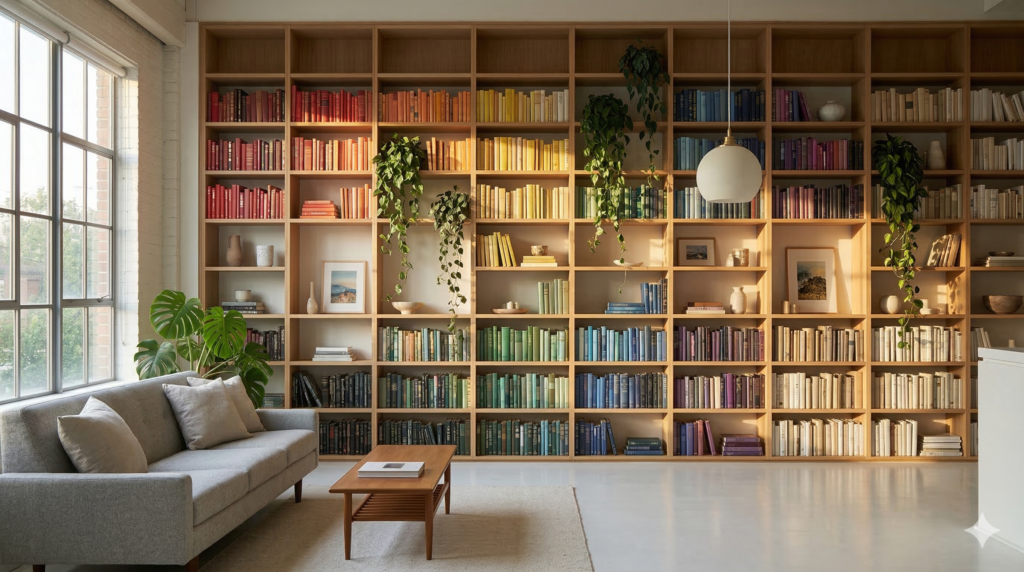
In a studio apartment, the most underutilised dimension is almost always vertical. While floor space is precious and finite, the wall height from floor to ceiling represents an enormous storage and display opportunity that many studio dwellers dramatically underuse. Floor-to-ceiling bookshelves, stacked wall cabinets that reach the ceiling, floating shelf systems that climb from desk height to the roofline — these vertical storage solutions store considerably more than their footprint suggests and create a strong, considered architectural presence.
Vertical storage also draws the eye upward, which is one of the most effective techniques for creating the perception of greater ceiling height and therefore greater overall volume. A wall of beautifully organised books, objects, and plants rising from floor to ceiling is one of the most visually compelling features a studio apartment can possess — functional, beautiful, and spatially sophisticated simultaneously.
Styling Tip: Style your vertical shelving with deliberate intention rather than simply filling it with whatever needs storing. Organise books by colour or size for a curated, editorial quality. Intersperse books with plants, ceramics, small artworks, and intentional negative space — empty shelf space is not wasted space but breathing room that allows the eye to rest and the objects nearby to be seen properly. A consistent colour scheme across shelf objects creates visual coherence across the full height of the installation.
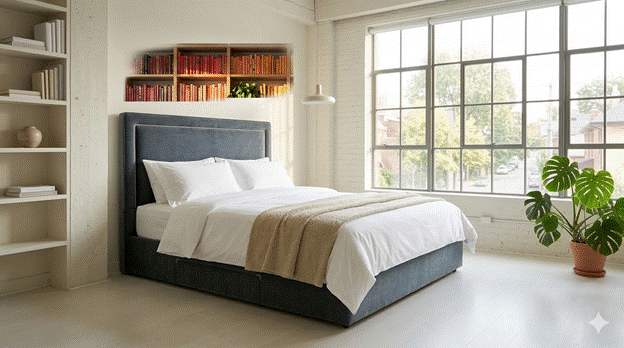
6. Choose a Bed with Built-In Storage
In a studio apartment where the bed is both the primary piece of bedroom furniture and a significant visual presence within the living space, the choice of bed frame represents one of the highest-impact decisions in the entire decorating process. A bed with integrated storage — deep hydraulic drawers beneath the base that lift to reveal substantial storage capacity, or a divan base with pull-out drawers on each side — solves the studio’s perennial storage challenge while maintaining a clean, uncluttered visual profile.
The elimination of under-bed clutter alone transforms the atmosphere of a studio apartment. Without the visual noise of boxes, bags, and accumulated objects visible beneath the bed frame, the entire sleeping zone acquires a hotel-quality clarity and calm that elevates the perceived quality of the whole space.
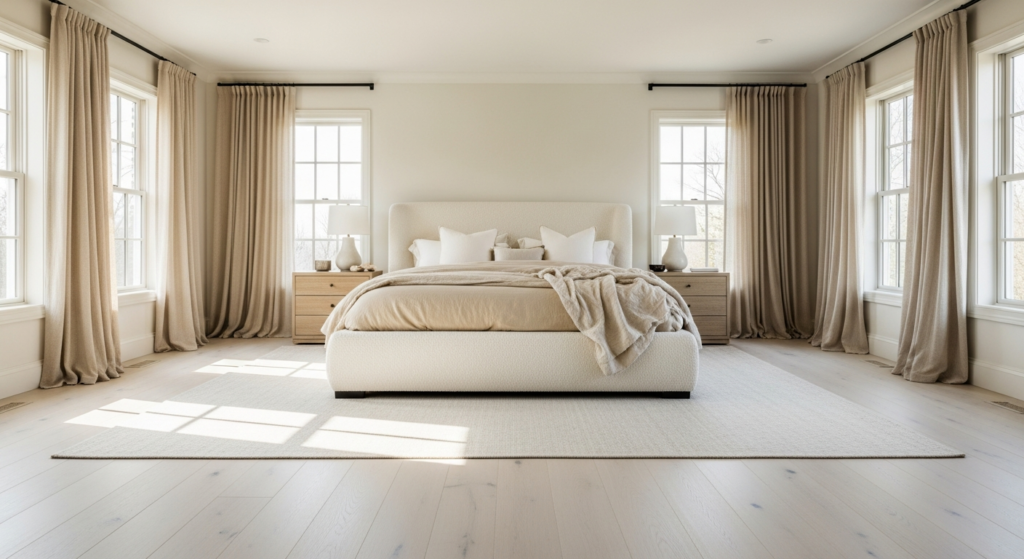
Styling Tip: Treat the bed as a genuine design centrepiece of the studio rather than simply a functional sleeping surface. Invest in high-quality, generously sized bedding in a palette that coordinates with your overall scheme — linen in warm oat or soft grey, cotton percale in clean white, or a textured boucle duvet cover in pale caramel. Add a substantial upholstered headboard that creates a visual anchor for the sleeping zone and signals with quiet authority that this area of the studio has a distinct identity and purpose.
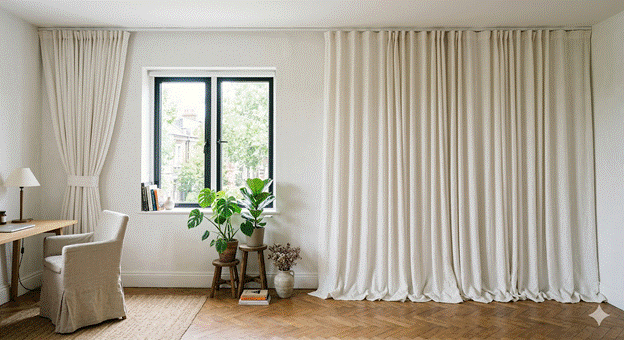
7. Hang Curtains High and Wide
Curtain placement is one of the most commonly under-optimised decisions in small apartment decorating, yet its impact on the perceived scale and elegance of a room is disproportionate to the simplicity of the intervention. Standard curtain hanging — placing the rod at the window frame and using curtains sized exactly to the window width — makes windows look smaller, ceilings look lower, and rooms feel more constrained.
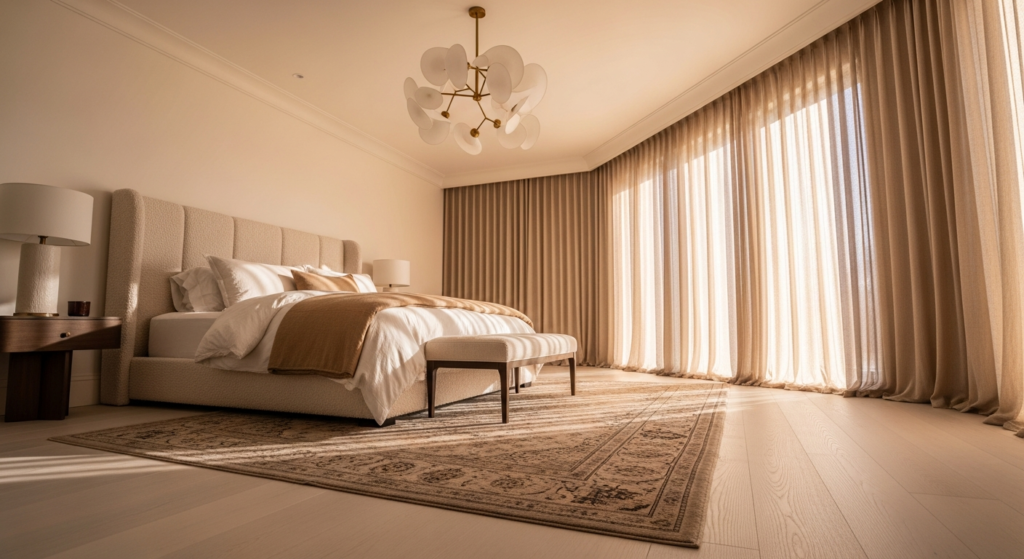
Hanging curtains as close to the ceiling as possible and extending the rod well beyond the window frame on each side — ideally to the full width of the wall — creates an entirely different visual reality. The curtain, when drawn back during the day, reveals a window that appears considerably larger than its actual dimensions. When closed at night, it creates the impression of a wall composed entirely of fabric, which is both visually dramatic and acoustically softening.
Styling Tip: Choose curtain fabric with care in a studio apartment. Sheer or semi-sheer curtains in a warm ivory or pale linen allow natural light to filter through even when closed, maintaining the room’s brightness and softness throughout the day. Floor-length curtains that puddle very slightly on the floor add a sense of relaxed luxury that reads as considered rather than excessive. Avoid patterns in favour of solid tones — in a small space, patterned curtains can feel visually busy and visually shrink the wall they occupy.
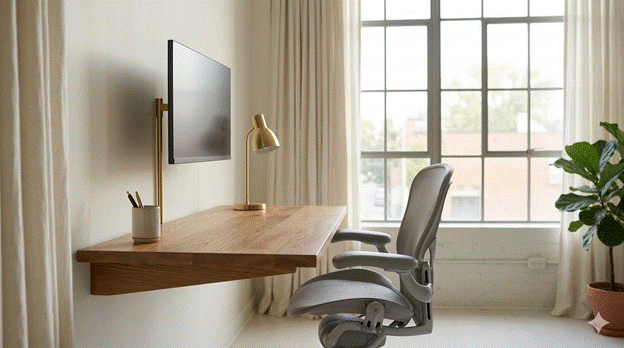
8. Create a Dedicated Work Zone
The studio apartment as a live-work space has become the defining domestic reality for an entire generation of city dwellers, and designing a dedicated work zone within the studio’s single room is both a practical necessity and a significant design opportunity. A thoughtfully designed work area that is visually integrated with the overall scheme — rather than existing as an obvious, incongruous intrusion — elevates the entire aesthetic of the space.
A wall-mounted fold-down desk that closes flat when not in use is the most spatially efficient solution. A floating shelf with a monitor arm and a slim drawer unit beneath functions as a compact home office with genuine working capacity. A secretary desk with interior organisation and a closing front panel conceals the working zone entirely at the end of the day, restoring the visual calm of the living space.
Styling Tip: Regardless of how compact your work zone is, invest in a genuinely good chair. An ergonomically correct, aesthetically considered desk chair — in a neutral tone that coordinates with the room rather than contrasting with it — prevents the work zone from feeling like a visual interruption. A small architectural desk lamp with a warm LED bulb provides focused task lighting that also contributes to the room’s overall warm, layered light atmosphere during evening hours.
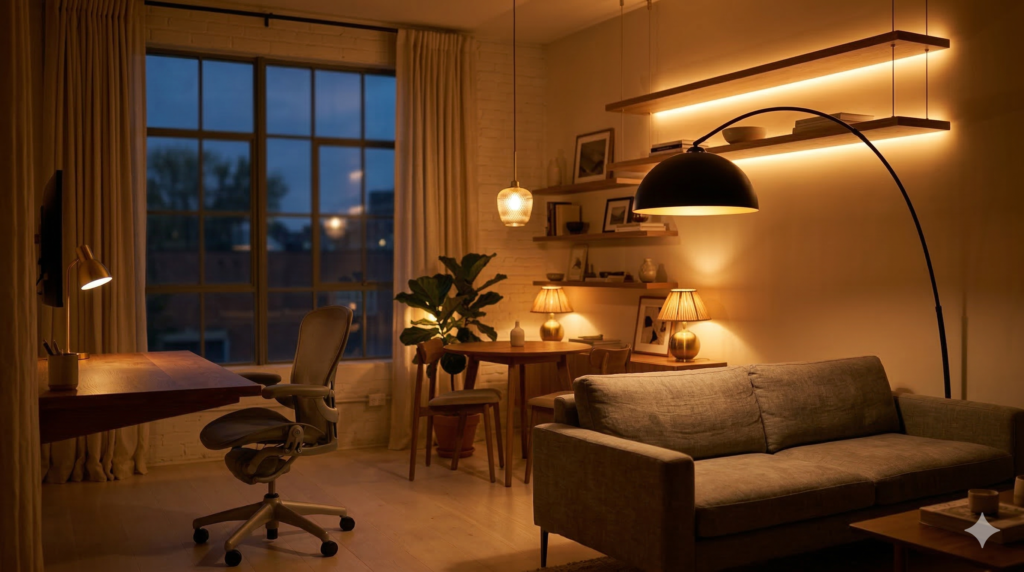
9. Use Lighting to Layer Atmosphere
Lighting is, without question, the single most transformative and most underestimated element of interior design at every scale — but in a small studio apartment, its importance is amplified considerably. Overhead lighting alone, particularly the harsh, flat quality of a single central ceiling fixture, destroys the atmosphere and perceived scale of a small space faster than any other single factor. The solution is layered lighting: multiple light sources at different heights, temperatures, and intensities that create depth, warmth, and visual dimension throughout the room.
The lighting scheme of a well-designed studio apartment includes: ambient light from a statement ceiling fixture or wall sconces that fills the space without harshness; task lighting over the desk, kitchen counter, and reading chair that provides focused illumination exactly where it is needed; and accent lighting — table lamps, floor lamps, LED strip lights beneath floating shelves, fairy lights — that creates pools of warm glow at eye level and below, lending the space the intimate, enveloping quality of a room considerably larger and more deliberately designed.
Styling Tip: The single most impactful lighting change available in any studio apartment is the introduction of a floor lamp beside the sofa or chair. A tall arc floor lamp with a warm-toned shade creates a pool of intimate, domestic light that transforms the living zone from merely functional to genuinely atmospheric. Choose a lamp with a dimmer or select a smart bulb that allows the light level to be adjusted throughout the day — lower in the evening for relaxation, brighter during the day for focus and energy.
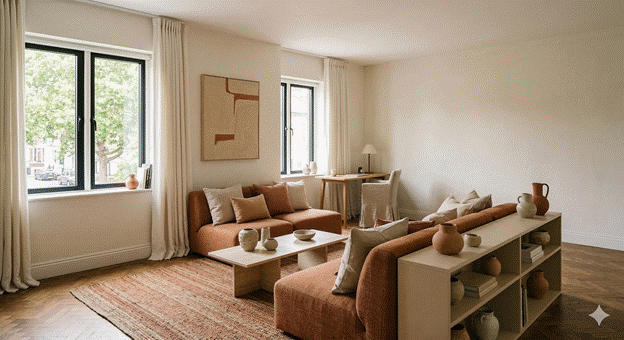
10. Style with a Cohesive Colour Palette
Colour coherence is the invisible architecture of a beautifully decorated studio apartment. When every element in a single-room space — walls, textiles, furniture, objects, plants, art — speaks the same tonal language, the space acquires a sense of calm, spaciousness, and intentionality that is immediately perceptible without being consciously analysable. Conversely, when colour is inconsistent and unplanned, even a well-furnished studio feels visually restless and smaller than it actually is.
For a small studio, a palette of three to four tones is ideal: one dominant neutral for walls and large furniture, one secondary mid-tone for textiles and accent furniture, and one or two accent colours deployed through objects, cushions, and plants. The palette should carry across every zone of the studio without interruption — the same tones appearing in the sleeping area, the living area, the dining area, and the work zone — creating a sense of visual unity that ties the whole space together.
Styling Tip: Build your studio colour palette around a material rather than a paint chip. Choose a fabric — a textured linen, a woven wool, a velvet — in a tone you love and use it as the anchor from which every other colour in the room is derived. This approach ensures an inherent coherence between all elements because they are all tonally related to a single material source. The resulting palette will always feel more sophisticated and more genuinely considered than one assembled from disparate individual choices.
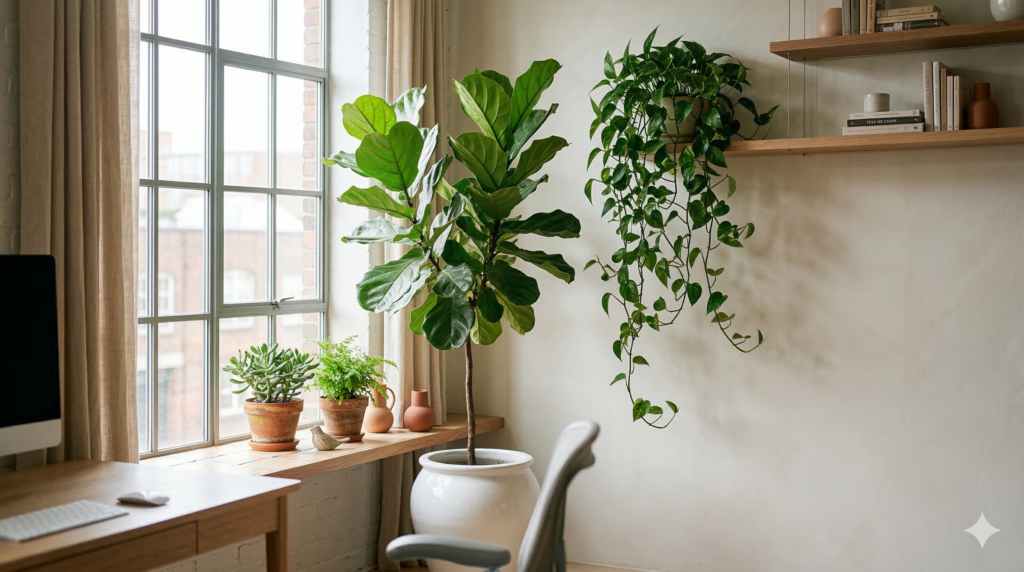
11. Bring Nature Indoors with Plants
Plants perform a function in a small studio apartment that no other decorative element can replicate: they introduce the one quality that compact interior spaces most consistently lack, which is organic, living vitality. A room containing well-chosen, well-tended plants does not feel like a container of objects — it feels like a living environment, breathing and growing and quietly, persistently beautiful.
In a small studio, the selection and placement of plants requires the same spatial consideration as the selection and placement of furniture. Large-scale plants — a tall Monstera deliciosa in a terracotta pot, a Fiddle Leaf Fig beside the window, a trailing Pothos cascading from a high shelf — make bold, sculptural statements that contribute to the vertical layering of the room. Small plants grouped on windowsills, floating shelves, and the dining table add textural interest and warmth at multiple scales simultaneously.
Styling Tip: Choose plants for your studio that genuinely thrive in the light conditions you can offer rather than selecting for appearance alone. A beautiful plant in the wrong light becomes a beautiful dying plant — and a dying plant is the single most depressing element a decorated space can contain. In lower-light studios, ZZ plants, Sansevieria, Pothos, and Heartleaf Philodendrons are among the most forgiving and most beautiful. In brighter studios, the full spectrum of tropical plants becomes available.
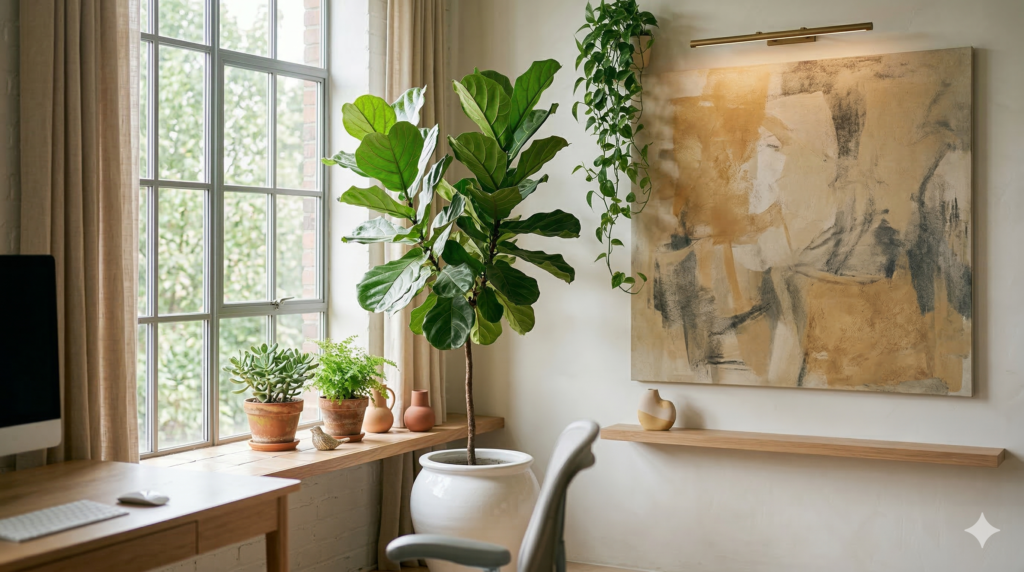
12. Display Art Strategically to Add Depth
Art transforms the atmosphere of a studio apartment in a way that is entirely disproportionate to its physical presence. A beautifully chosen, correctly scaled artwork on the right wall creates a focal point, communicates personality and taste, and adds a layer of visual depth that makes the room feel genuinely composed rather than simply furnished. Art is the element that most clearly distinguishes a decorated room from an occupied one.
For a small studio, scale matters enormously. A single large-scale artwork — one that commands the full attention of a primary wall — creates far greater visual impact than a cluster of small pieces that struggle to register individually. Position key artwork at eye level on the wall opposite or adjacent to the room’s primary entry point, where it will be seen immediately upon entering and will establish the visual tone of the entire space.
Styling Tip: When building a gallery wall in a studio apartment, maintain a consistent frame tone — all black, all white, all natural wood, or all aged brass — to create visual coherence across multiple pieces. Vary the size and orientation of the artworks within the consistent frame palette for visual rhythm. The gallery wall works best on a single, uninterrupted wall rather than one broken up by doors or windows, and should always be centred on the wall’s midpoint to anchor the composition symmetrically.
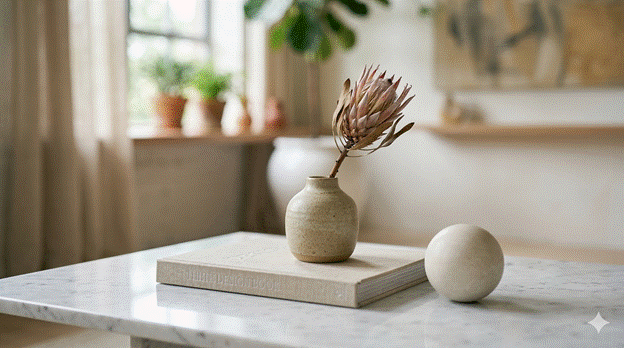
13. Keep Surfaces Edited and Intentionally Styled
In a studio apartment, surfaces — coffee tables, dining tables, kitchen counters, floating shelves, windowsills — are the most visible horizontal planes in the room and carry an enormous responsibility for the overall atmosphere of the space. Cluttered, unedited surfaces are the most common and most damaging source of visual noise in small apartment interiors, creating a sense of disorder that no amount of furniture or colour investment can overcome.
The most beautifully styled studio apartments treat every surface as a curated display opportunity. The coffee table holds three objects maximum: a design book or two, a small ceramic vase with a single stem, and one textural object such as a stone, a candle, or a decorative bowl. The floating shelf holds books interspersed with plants and objects rather than dense, undifferentiated rows of accumulated things. The windowsill holds two or three carefully chosen small plants or a single sculptural object, nothing more.
Styling Tip: Adopt a weekly surface editing practice — a five-minute ritual of removing everything from key surfaces, returning only what genuinely belongs, and composing the remaining objects with fresh intentionality. This discipline prevents the gradual accumulation of surface clutter that is the most common way in which beautifully decorated small apartments slowly lose their visual quality over time. The goal is not minimalism for its own sake but the sustained preservation of intentional design in a space where every object is permanently, visibly on display.
Conclusion
The studio apartment is one of contemporary living’s most interesting design propositions: a space that demands genuine creativity, rewards thoughtful decision-making, and proves, consistently and beautifully, that scale and quality are entirely independent of each other.
These 13 smart ways to decorate a small studio apartment are not workarounds or consolations for living in a smaller space. They are principles — drawn from the best of contemporary interior design thinking — that produce rooms of genuine elegance, warmth, and character regardless of their square footage.
The studio apartment, at its best, is not a small version of a large home. It is a complete, fully realised living environment in which every element has been chosen with care, positioned with precision, and allowed to contribute fully to the whole. That is not a limitation. That is design at its most considered — and its most rewarding.
FAQs
FAQ 1: How do I make a small studio apartment look bigger?
The most effective strategies for making a small studio apartment look bigger combine light, reflection, and visual continuity. Paint walls and ceilings in the same light neutral to create a seamless spatial envelope. Place large mirrors opposite natural light sources to double the perceived depth of the room. Choose furniture with slender legs that allow light to pass underneath. Hang curtains from ceiling height and extend them well beyond the window frame. Maintain a cohesive colour palette across all zones to prevent visual fragmentation that makes the space feel smaller.
FAQ 2: How do I separate areas in a studio apartment?
Zone separation in a studio apartment is best achieved through soft, non-structural methods that define areas without blocking light or reducing perceived space. A large area rug anchors the living zone. A low bookcase or open shelving unit positioned perpendicular to the wall creates a gentle boundary between the sleeping and living areas. Different lighting sources for each zone — a pendant over the dining area, a floor lamp beside the sofa, bedside table lamps in the sleeping zone — signal distinct purposes without any physical partition.
FAQ 3: What furniture works best in a small studio apartment?
The most effective furniture for a small studio apartment combines aesthetic quality with spatial efficiency. Multi-functional pieces — a sofa bed, a storage ottoman, a fold-down dining table, a bed with hydraulic storage drawers — deliver the greatest value per square foot. Scale is critical: furniture that is proportionally sized to the room rather than oversized creates a sense of balance and space. Pieces with visible legs allow light to pass beneath them, contributing to the room’s overall airiness. Avoid furniture with heavy, solid bases that block sightlines and create visual mass at floor level.
FAQ 4: What colours should I use in a small studio apartment?
Light, warm neutrals — pale chalk white, warm ivory, soft greige, and pale stone — are the most effective wall colours for small studio apartments because they reflect natural light and push walls visually outward. A consistent palette of three to four tones carried across all zones of the studio creates visual unity and a sense of greater space. If colour accent is desired, introduce it through textiles, plants, and objects rather than walls, which allows the palette to be updated without repainting.
FAQ 5: How do I add storage to a studio apartment without making it feel cluttered?
The most effective storage solutions for a studio apartment are those that work vertically — floor-to-ceiling shelving, wall-mounted cabinets that reach the ceiling, and stacked storage units that maximise height rather than spreading outward. Furniture with integrated hidden storage — beds with hydraulic drawers, storage ottomans, console tables with deep drawers — keeps the floor plan clean and unobstructed. The key principle is that storage should be either completely concealed behind closed doors or, when open, styled with the same intentionality as a decorative display. Visible storage that is unstyled creates clutter; visible storage that is curated creates character.