Introduction
The modern small apartment presents one of the most compelling design challenges of contemporary living: how to create a space that feels genuinely expansive, visually serene, and elegantly considered — without the luxury of abundant square footage. It is a challenge that the world’s most talented interior designers have addressed with increasing sophistication, and the principles they have developed are entirely accessible to the thoughtful homeowner.
What separates a small apartment that feels spacious from one that feels cramped is rarely a matter of size. It is a matter of design intelligence — the careful orchestration of light, colour, proportion, material, and spatial flow that creates an interior which reads as larger, calmer, and more generous than its actual dimensions suggest.
In this guide, we explore 11 of the most effective small apartment modern design ideas that genuinely feel spacious — each grounded in proven principles of contemporary interior design and each offered with the practical styling guidance needed to translate inspiration into a home you love living in.
1. Commit to a Monochromatic Colour Palette
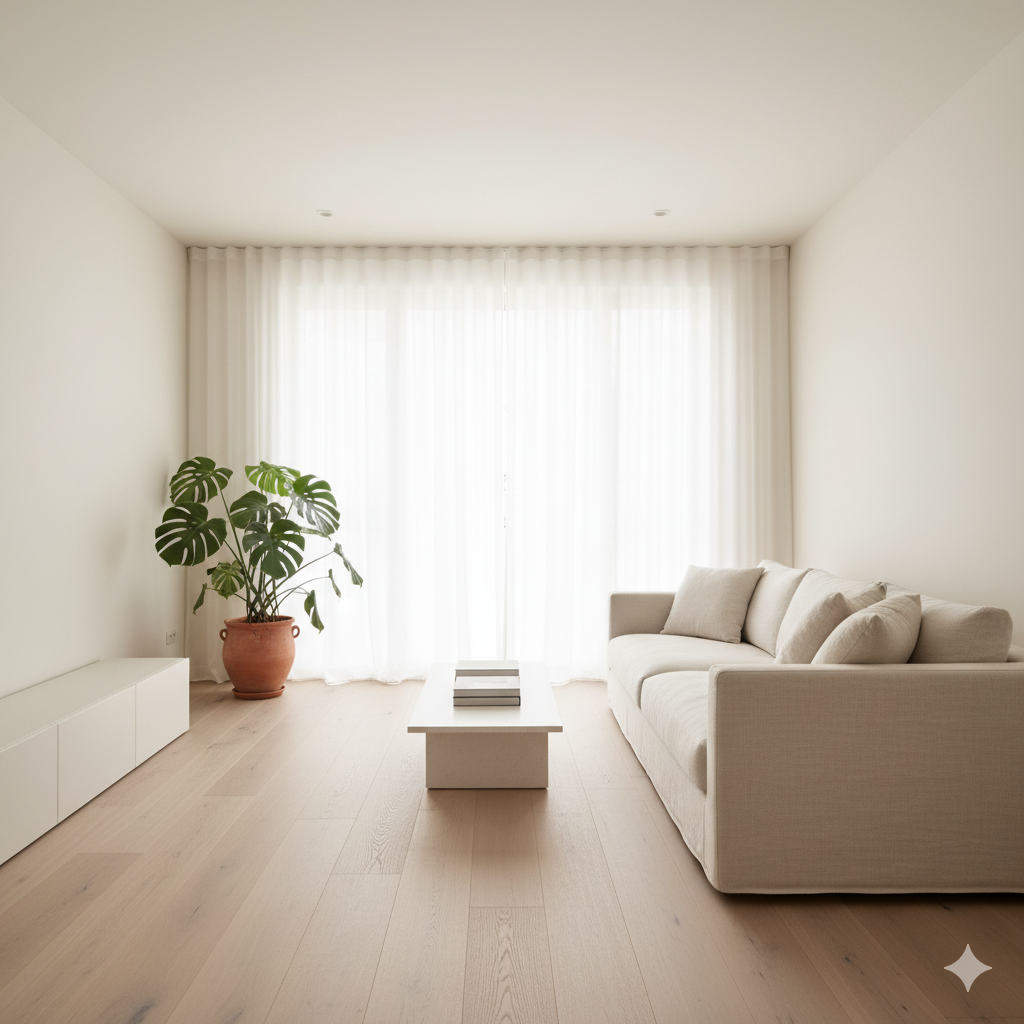
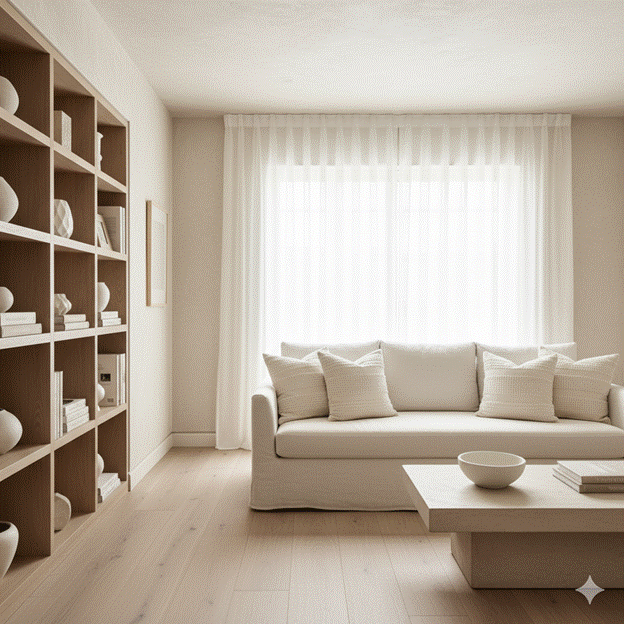
The single most powerful spatial tool available in small apartment modern design is the monochromatic colour palette — a disciplined commitment to one colour family across walls, flooring, cabinetry, and large furniture pieces. When the eye is not required to navigate between competing colours, it travels further and more freely through the space, creating an impression of continuous, uninterrupted volume.
The most effective monochromatic palettes for small modern apartments centre on warm whites, soft off-whites, and warm greiges — tones that maximise light reflection while generating the gentle warmth that prevents a restrained palette from feeling clinical or cold. Tone-on-tone variation within the chosen colour family — a slightly deeper tone on one wall, a lighter tone on the ceiling — adds sophistication and visual depth without introducing the visual interruption of a contrasting colour.
The beauty of a monochromatic approach is its cumulative effect: the longer you live within it, the more you notice the extraordinary variety of texture, material, and light that it allows to come forward. A linen sofa, a plaster-finish wall, a timber floor — all in the same tonal family — create a richness that no amount of colour contrast can replicate.
Styling Tip: When selecting your monochromatic palette, hold your chosen paint sample against your existing flooring material in natural daylight — not artificial light. The interaction between these two surfaces, seen in the light that actually fills your apartment, is the relationship that matters most. Most paint errors in small spaces occur because the sample was evaluated in isolation rather than in dialogue with the floor.
2. Maximise Vertical Height with Floor-to-Ceiling Elements
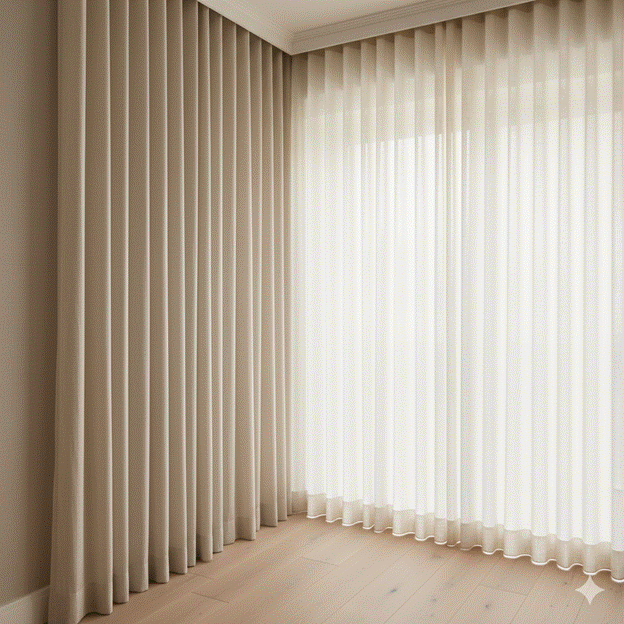
The human eye reads vertical lines as signals of height and space. In a small modern apartment, introducing strong vertical elements — floor-to-ceiling curtains, full-height cabinetry, tall bookshelves, vertical tile patterns, or dramatic pendant lights on long cords — draws the eye upward and creates an impression of ceiling height that the architecture itself may not actually provide.
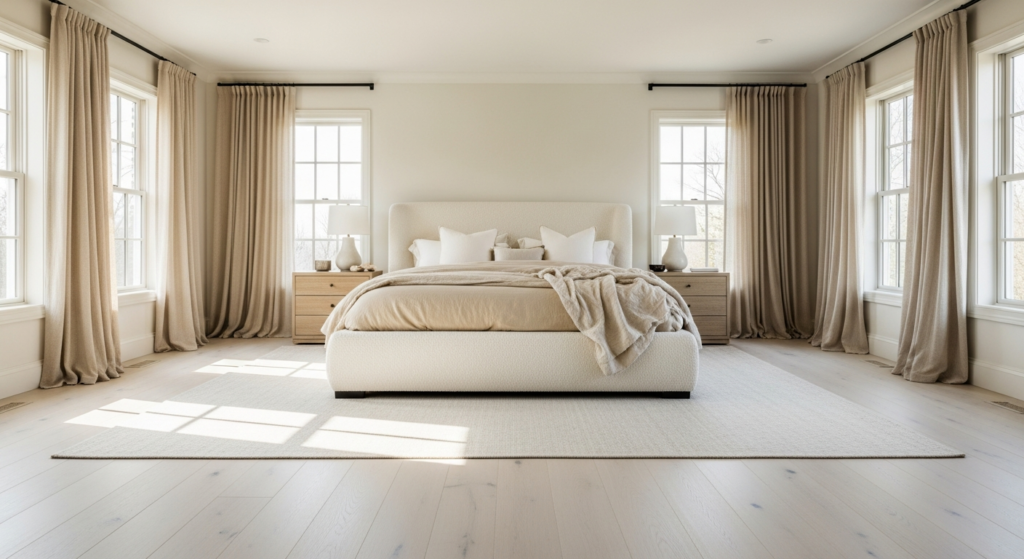
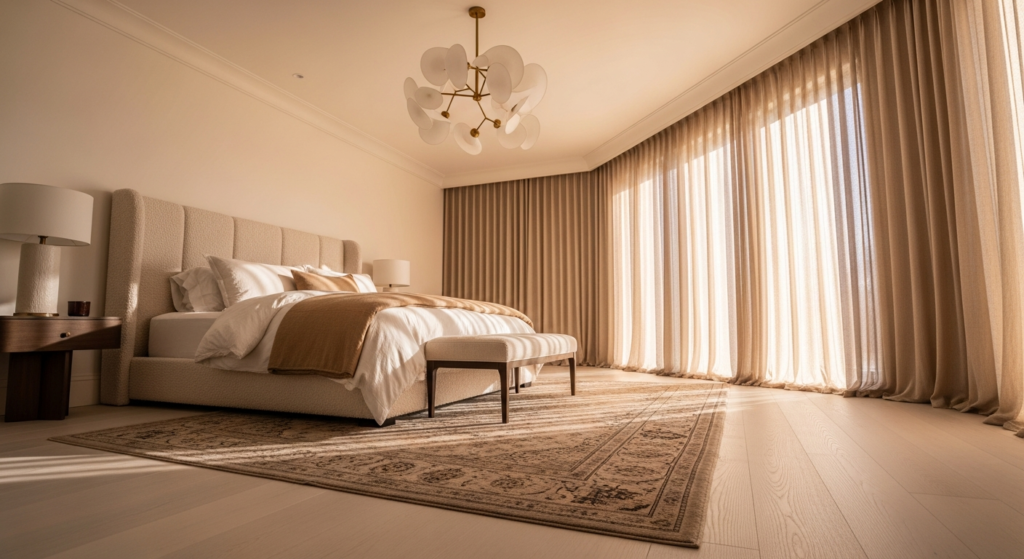
Floor-to-ceiling curtains are the most immediately accessible and visually impactful vertical gesture available. Hung from a rod installed as close to the ceiling as possible and falling in clean, uninterrupted folds to the floor, they create the impression of windows — and therefore walls — of considerably greater height than actually exist. The key is to mount the rod at ceiling height and choose curtains long enough to puddle slightly on the floor, even if the actual window is much shorter.
Full-height cabinetry in the kitchen and bedroom serves the same vertical function while simultaneously providing the storage capacity that small apartments require. When cabinetry runs uninterrupted from floor to ceiling in a consistent finish — particularly a finish that matches the wall colour — it dissolves visually into the architecture, adding storage without adding visual weight.
Styling Tip: Paint the ceiling the same colour as the walls — or marginally lighter — in a small apartment with low ceilings. The conventional wisdom of always painting ceilings white creates a hard stop at the ceiling plane that visually lowers it. A ceiling in the same warm tone as the walls allows the eye to travel upward without interruption, creating a sense of enclosing volume rather than pressing limitation.
3. Choose Furniture with Exposed Legs for Visual Lightness
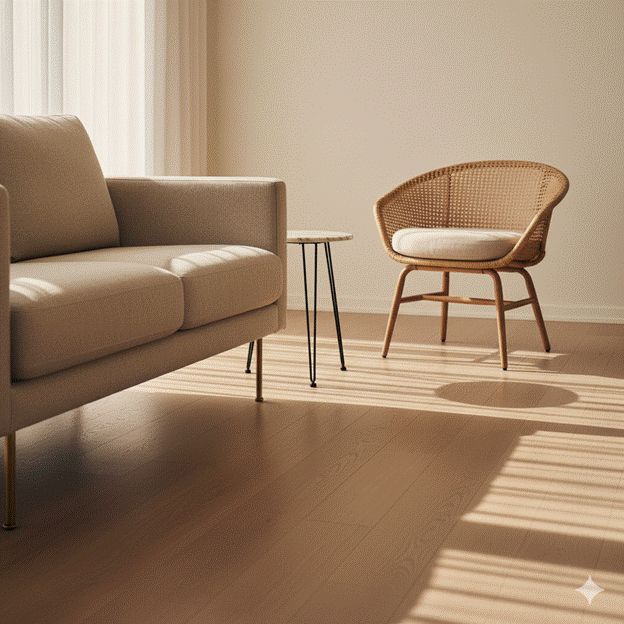
The visual weight of furniture — how heavy or light it appears to the eye — has as much impact on the perceived spaciousness of a small apartment as its physical size. Furniture that sits directly on the floor with no visible gap conceals the floor plane and creates a horizontal visual interruption that makes rooms feel more crowded than they are. Furniture on exposed legs, by contrast, allows the eye to travel beneath and beyond each piece, preserving the continuity of the floor and creating a sense of openness.
The principle applies across every furniture category: a sofa on slim tapered timber legs rather than a platform base; a bed on a raised frame rather than a solid divan; a sideboard on slender metal hairpin legs rather than a plinth base. The cumulative effect of choosing leggy furniture throughout a small apartment is significant — the floor reads as a continuous, generous plane rather than a series of interrupted sections.
Material choice in exposed legs matters considerably. Slim brass or brushed steel legs add a modern elegance that suits contemporary interiors. Natural timber tapers contribute warmth. Hairpin legs in matte black bring an industrial refinement that works beautifully against light walls and pale floors.
Styling Tip: When purchasing a sofa for a small modern apartment, look for a model with a seat height of at least 45cm and visible leg clearance of no less than 15cm. This combination ensures both ergonomic comfort and the visual floor continuity that makes the room feel spacious. Request leg samples in your preferred finish before committing to a bespoke order.
4. Use Large-Format Flooring to Eliminate Visual Fragmentation
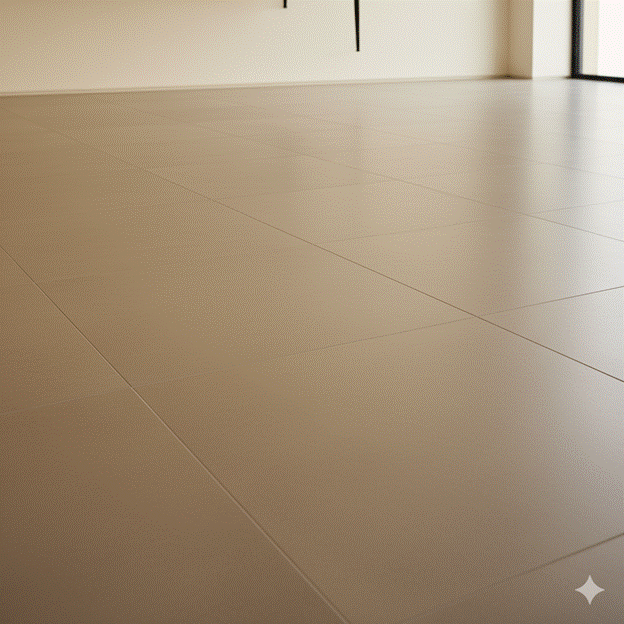
Flooring is one of the most influential and most underestimated spatial tools in small apartment design. Small floor tiles, short-plank timber, or busy patterned flooring all fragment the floor plane visually — the eye is required to track each individual tile or plank edge, creating a busy, visually complex surface that makes the room feel smaller and more active than it needs to.
Large-format flooring — whether wide-plank engineered timber, large-format porcelain tile (60x60cm or larger), or continuous polished concrete — reads as a single, unified surface that the eye travels across without interruption. The fewer grout lines or board joints visible, the more generous the floor appears, and by extension the more generous the entire room.
The direction of floor installation adds another layer of spatial control. Running long planks or rectangular tiles parallel to the longest wall of the room creates a directional momentum that pulls the eye toward that wall, elongating the perceived length of the space. Running them diagonally — the most adventurous choice — adds dynamism and makes the room feel larger by orienting the eye toward the corners rather than the walls.
Styling Tip: For small apartments with existing small-format tiles that cannot be replaced, a large area rug laid over the top in a consistent, low-pile texture achieves a similar visual effect to large-format flooring — reducing the fragmentation of the existing surface and creating a unified visual field beneath the furniture. Choose a rug that is generous enough to extend beyond the furniture footprint on all sides.
5. Incorporate Built-In Storage to Eliminate Visual Clutter
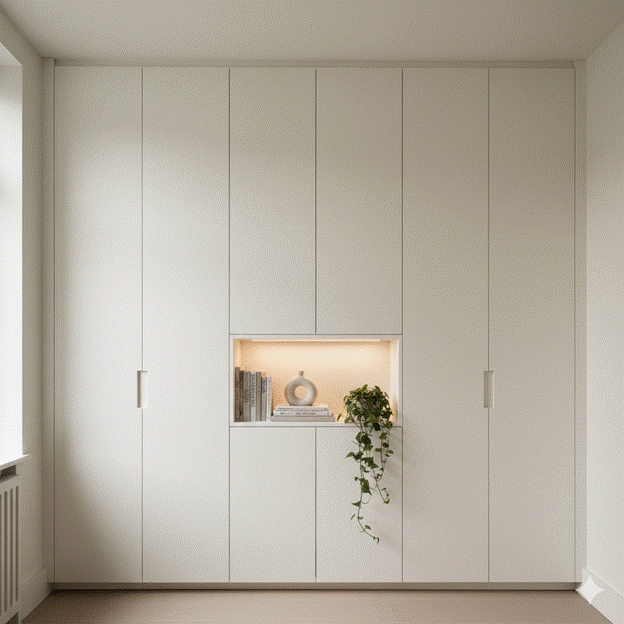
Freestanding storage furniture — bookcases, sideboards, drawer units, wardrobes — all occupy floor space and create visual interruptions in a small apartment. Each piece introduces its own silhouette, its own material, and its own relationship to the walls around it, adding to the visual complexity of the room. Built-in storage, by contrast, integrates into the architecture of the space, disappearing into the walls and leaving the floor and visual field as clean and uninterrupted as possible.
Built-in cabinetry fitted floor-to-ceiling and painted the same colour as the walls achieves something remarkable in a small apartment: it adds enormous storage capacity while making the room feel larger rather than smaller. The storage has been absorbed into the room’s architecture rather than applied to its surface, and the visual result is a space that reads as calm, spacious, and considered rather than furnished and cluttered.
Alcoves, recesses, and the spaces beside chimney breasts are the most common opportunities for built-in storage in apartments. Even in spaces without obvious architectural opportunities, a purpose-built wardrobe or cabinet that runs floor-to-ceiling and wall-to-wall in a corridor or bedroom becomes architecturally integrated through its proportional completeness.
Styling Tip: When designing built-in cabinetry for a small apartment, specify a mix of open and closed sections — typically two-thirds closed and one-third open. The closed sections provide concealed storage for everything that is functional but not beautiful; the open sections create space for the curated display that gives a modern apartment its personality and warmth.
6. Design with Open-Plan Thinking to Connect Spaces
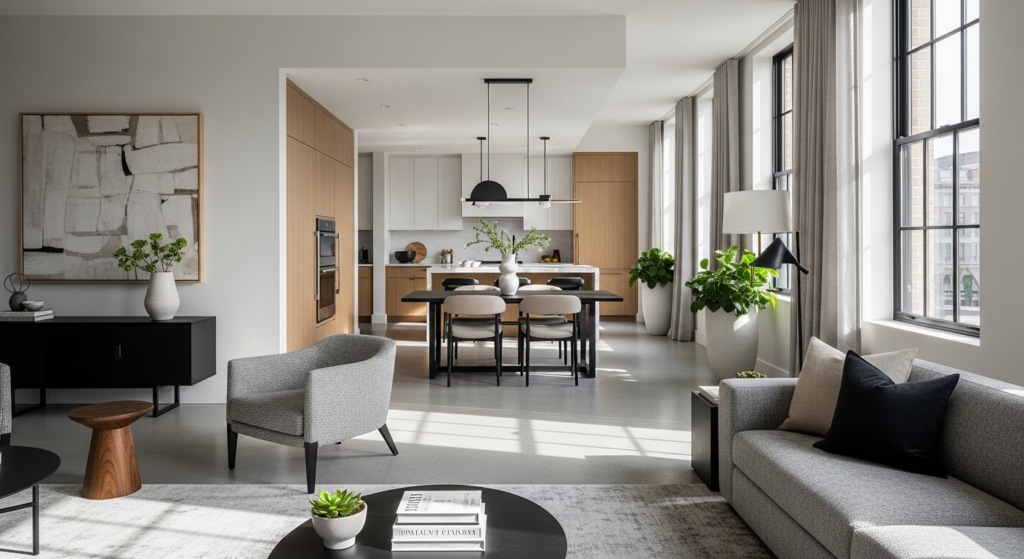
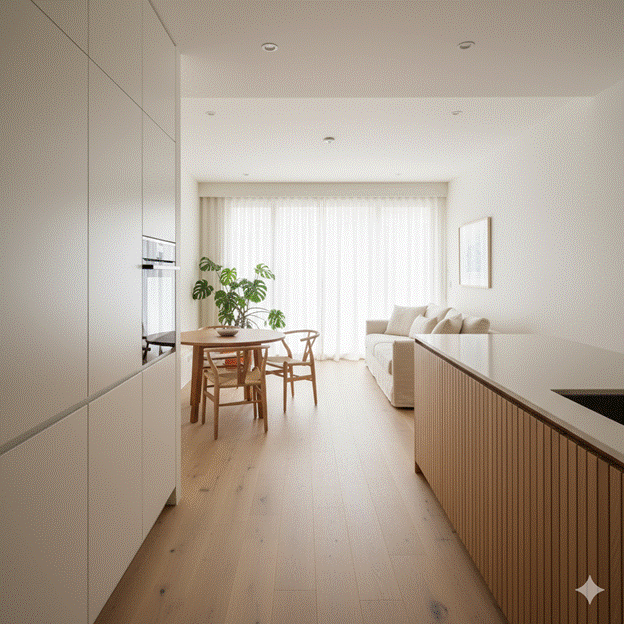
The open-plan layout is the foundational spatial strategy of modern small apartment design — the decision to remove or reduce the physical barriers between kitchen, dining, and living functions and allow them to flow into one another as a single, generous volume. The result is a space that is greater than the sum of its parts: where a separate kitchen, separate dining room, and separate living room in a small apartment would each feel cramped and incomplete, the open-plan equivalent feels genuinely generous.
Even where complete removal of walls is not structurally or financially possible, the open-plan philosophy can be applied through design decisions: a kitchen that opens fully to the living area through a serving hatch or folding window; a dining area defined by a rug and pendant light rather than walls; furniture arranged to suggest zones rather than rooms. The key is maintaining visual continuity across the connected space — consistent flooring, a unified colour palette, and complementary furniture aesthetics.
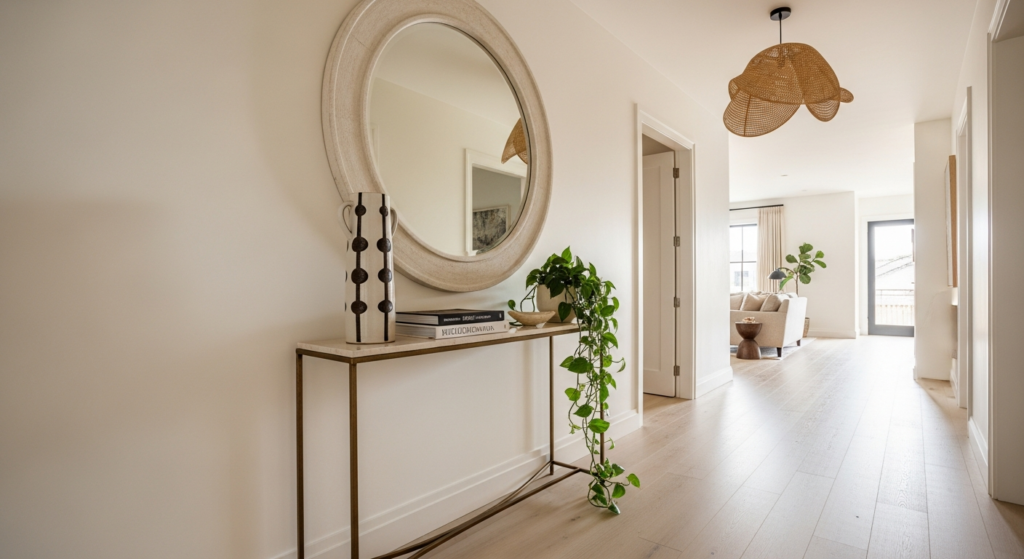
Sight lines are everything in an open-plan space. The most successful open-plan small apartments are those where the longest possible view — from the front door to the furthest window, or from the kitchen to the living area window — is kept entirely clear of obstruction. This uninterrupted diagonal or linear view creates the deepest possible impression of spatial generosity.
Styling Tip: If you are working within an existing apartment where walls cannot be removed, consider replacing a solid wall between kitchen and living area with a half-height counter or open shelving unit. This preserves the separation of function while dramatically opening the visual connection between the two spaces and allowing light to travel freely through both.
7. Select a Statement Piece That Anchors Without Overwhelming
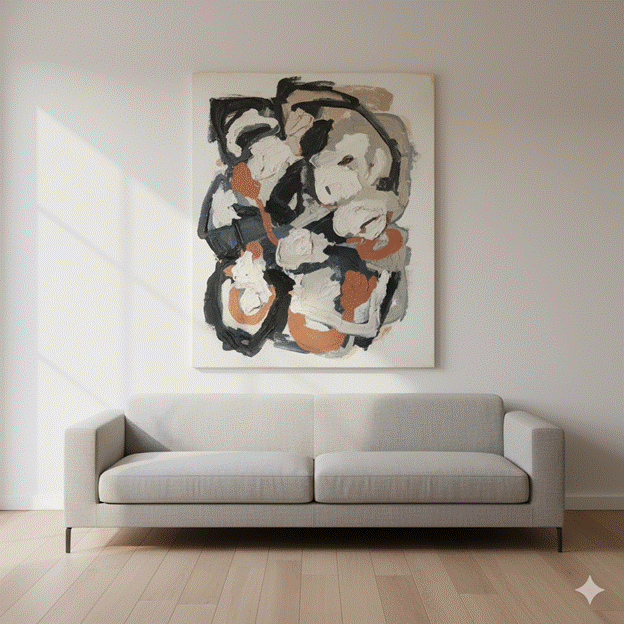
The temptation in small apartment modern design is to minimise everything — to choose only small, retiring furniture pieces that make no visual demands on the space. This instinct, while understandable, frequently produces interiors that feel tentative and incomplete rather than spacious and confident. The most successful small modern apartments almost always include at least one piece of generous scale that anchors the space and communicates design intention.
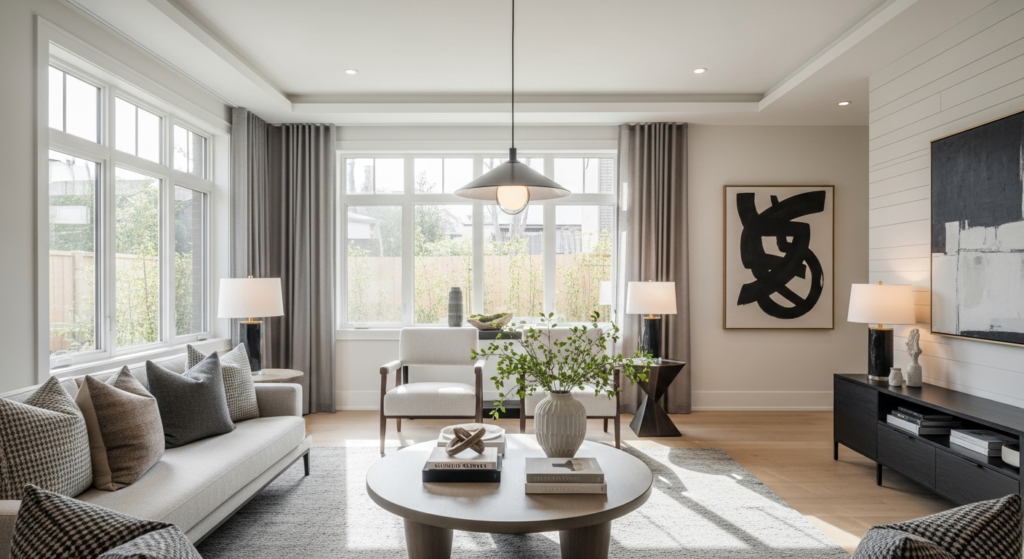
A large sofa in a generous, low-profile form; an oversized artwork that covers most of a wall; a substantial round dining table; a dramatic floor lamp with a wide shade — these statement pieces create visual focal points that give the eye somewhere to settle and the room a sense of considered, confident composition. The trick is to choose one statement piece per room and allow everything else to support rather than compete with it.
The proportional relationship between the statement piece and the room is crucial. A sofa that is too small for the wall it occupies creates an awkward, undersized impression; one that fills the wall appropriately creates a sense of rightness and spatial mastery. Learning to trust larger scale in a small space is one of the most counterintuitive but consistently rewarding lessons in interior design.
Styling Tip: When selecting artwork for a small modern apartment, choose one large piece rather than a gallery wall of smaller prints. A single canvas or print measuring at least 80 x 100cm on a wall of 2.5m width creates a confident, editorial quality that a collection of smaller works cannot achieve. The single large piece also simplifies the wall, contributing to the visual calm that small spaces require.
8. Layer Lighting Across Three Distinct Levels
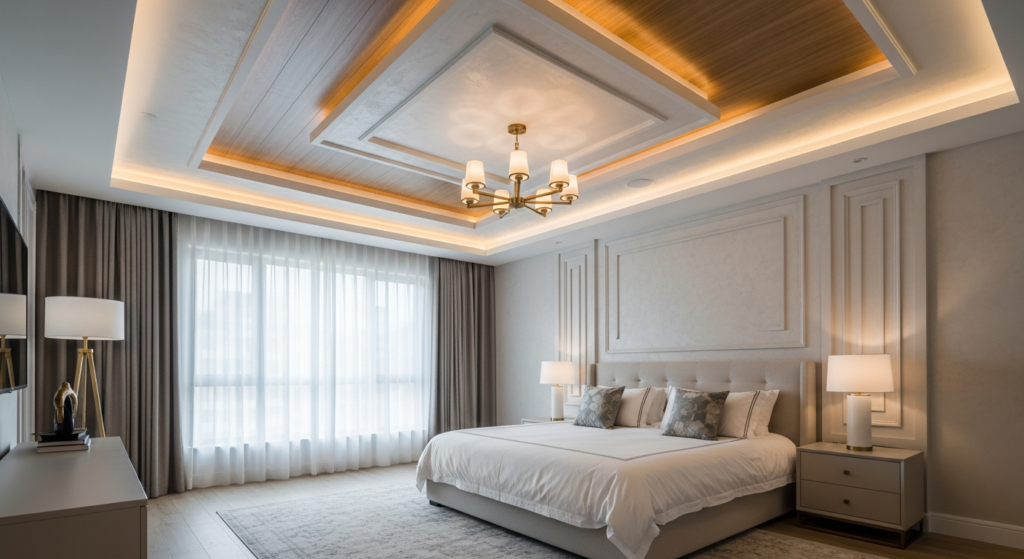
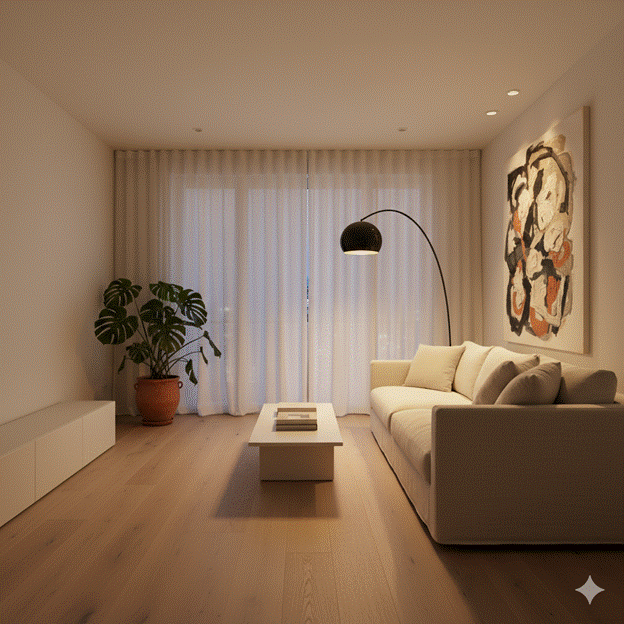
Lighting in a small modern apartment is not merely a functional requirement — it is the most transformative design tool available for altering the perceived size, warmth, and atmosphere of a space at will. A room illuminated only by a central overhead fitting reads as flat, institutional, and visually smaller than it actually is. The same room with layered lighting — ambient, task, and accent — reads as larger, warmer, and more dimensionally complex.
Ambient lighting provides the room’s overall illumination: a recessed ceiling fitting, a ceiling pendant on a dimmer, or a series of low-profile downlights. Task lighting addresses specific functional needs: a reading lamp beside the sofa, under-cabinet lighting in the kitchen, a desk lamp in the work area. Accent lighting creates atmosphere and visual depth: a floor lamp behind the sofa casting a warm glow toward the ceiling, a small spotlight trained on a wall-hung artwork, a string of warm lights in a shelving niche.
The critical element that transforms layered lighting from good to excellent is the dimmer switch. The ability to reduce ambient lighting to 20–30% in the evening, while maintaining accent lighting at full intensity, creates an atmospheric depth that makes a small apartment feel genuinely enveloping and generous rather than exposed and compact.
Styling Tip: Install warm-white LED bulbs throughout at a colour temperature of 2700K — this is the closest available equivalent to traditional incandescent light, producing a warm amber quality that makes all skin tones and natural materials look their best. Avoid the cooler 4000K daylight bulbs in living spaces — they create a harshness in evening light that makes small rooms feel less comfortable and less spacious.
9. Bring the Outside In with Biophilic Design Elements
Biophilic design — the intentional integration of natural elements, materials, and references into the built interior — is among the most powerful tools available for making a small modern apartment feel both spacious and genuinely alive. The presence of living plants, natural stone, timber, water features, and views to greenery creates a psychological sense of connection to a world beyond the apartment’s physical boundaries, making the space feel larger by implication.
The most immediate biophilic gesture is the living plant. A single large statement plant — a mature fiddle-leaf fig, a monstera deliciosa with full leaf development, a tall olive tree in a generous ceramic pot — introduces organic scale, movement, and colour into a modern interior in a way that no decorative object can replicate. Its presence is felt as much as seen; it changes the quality of the air and the character of the light that moves through it.
Natural materials — unpolished timber, honed stone, raw ceramic, woven grasses — ground a modern interior in a sensory richness that keeps it from feeling sterile or impersonal. The modern apartment that combines clean lines and restrained colour with genuinely natural materials achieves an equilibrium between visual calm and tactile warmth that is the hallmark of the most enduringly beautiful contemporary interiors.
Styling Tip: If space and light conditions limit your plant choices, choose a trailing pothos or string-of-pearls for high shelving positions — their cascading forms add vertical dimension and organic movement to an interior without requiring significant floor space. Place them at ceiling-mounted shelf level and allow them to trail downward for maximum spatial and visual impact.
10. Edit Ruthlessly and Display Intentionally
The single greatest enemy of spatial elegance in a small modern apartment is accumulated visual noise — the proliferation of objects, surfaces, and decorative elements that individually seem harmless but collectively create a sense of crowding that no amount of clever furniture arrangement can overcome. The discipline of editing — the ongoing, ruthless removal of everything that is not genuinely beautiful, genuinely functional, or genuinely meaningful — is the foundational practice of successful small apartment living.
Editing is not the same as minimalism. A well-edited small apartment is not empty; it is intentional. Every object that remains has been chosen consciously rather than accumulated passively, and its presence contributes to the overall composition of the space rather than competing with it. The edited apartment feels spacious because the eye is not overwhelmed; it is invited to rest, to travel, and to appreciate what is genuinely there.
Display is the active dimension of editing — the considered arrangement of the objects that remain after everything unnecessary has been removed. A ceramics collection in three tonal variations, arranged on a single floating shelf. A stack of three art books beside a small sculptural object. A single framed artwork, perfectly positioned and properly lit. These moments of composed display create the personal warmth that prevents a well-edited apartment from feeling impersonal.
Styling Tip: Adopt the ‘one in, one out’ principle as a household rule: every new object that enters the apartment requires the removal of an existing one. This single discipline, applied consistently, prevents the gradual accumulation that is the most common source of spatial and visual crowding in small apartments. It also dramatically improves the quality of what remains — because each new acquisition is evaluated against what it will displace.
11. Create Seamless Indoor-Outdoor Flow Where Possible
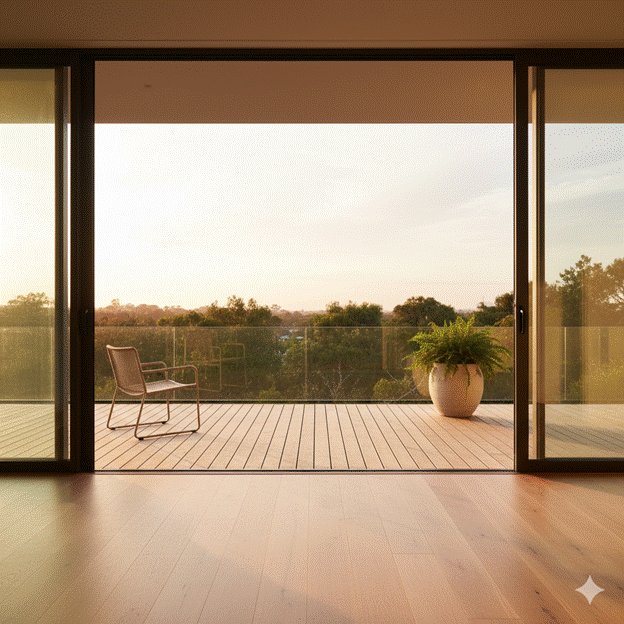
Where the architecture of a small apartment allows access to an outdoor space — a balcony, a terrace, a small private garden — the design relationship between indoors and outdoors becomes one of the most powerful spatial tools available. A small apartment that opens visually and physically to an outdoor space feels dramatically larger than its interior square footage suggests, because the eye travels beyond the physical boundary of the walls and the mind registers the outdoor space as a continuation of the home.
The key to creating seamless indoor-outdoor flow is continuity — of flooring material, of colour palette, and of furniture style. Interior timber flooring that continues onto a timber-decked balcony, interior wall colour that reappears in the balcony’s planter boxes, interior furniture in the same material language as outdoor seating — these continuities dissolve the boundary between inside and outside and allow the two spaces to read as a single, generous whole.
Even in apartments where a balcony door exists but the outdoor space itself is modest, the visual connection — the sight line through a full-height glass door to greenery or sky beyond — adds an immeasurable quality of spatial openness to the interior. Keep the glass clean, keep the view unobstructed, and allow the outside world to participate in the interior’s spatial story.
Styling Tip: If your balcony or terrace is modest in size, use the same or very similar outdoor furniture to your interior pieces — a slim metal outdoor dining chair that echoes the metal dining chairs inside, an outdoor rug in the same tonal family as the interior rug. This material continuity makes the two spaces feel designed together rather than separately, amplifying the sense of spatial generosity for both.
Conclusion
The small apartment that feels genuinely spacious is always the product of design intelligence rather than architectural luck. The principles explored in this guide — monochromatic colour discipline, vertical emphasis, visual lightness in furniture, large-format flooring, integrated storage, open-plan thinking, confident statement pieces, layered lighting, biophilic warmth, ruthless editing, and indoor-outdoor connection — each address a different dimension of the same fundamental challenge.
What they share is a commitment to the idea that space is a perception as much as a measurement. The apartment that feels spacious is one where the design has been orchestrated to allow the eye and the mind to move freely — where light is generous, visual noise is minimal, and every element has been chosen with the full awareness of how it will contribute to the whole.
Begin with whichever idea resonates most strongly with the specific limitations of your own apartment, and build outward from there. The transformation of a small apartment into a space that feels genuinely modern and genuinely spacious is entirely achievable — and the process of achieving it is one of the most rewarding creative journeys available to any home designer.
Frequently Asked Questions
Q1. What makes a small apartment look modern and spacious?
The combination of a restrained monochromatic colour palette, clean architectural lines, furniture with exposed legs, large-format flooring, and the elimination of visual clutter creates the most convincing impression of modern spaciousness in a small apartment. Natural light amplified through mirrors and sheer window treatments, and the absence of accumulated objects, complete the effect. Modern design’s emphasis on visual calm and spatial clarity is inherently well-suited to small spaces.
Q2. What furniture should you avoid in a small modern apartment?
Avoid furniture that sits directly on the floor with no leg clearance, oversized upholstered pieces in dark or heavy fabrics, large glass-fronted display cabinets that compete with the wall behind them, and any piece that is too small for the space it occupies — undersized furniture creates a tentative, unresolved quality that makes rooms feel more cramped than they are. Also avoid matching furniture sets, which create a static, showroom quality that prevents the layered warmth of a genuinely lived-in modern interior.
Q3. How do you make a small apartment feel luxurious as well as spacious?
Luxury in a small modern apartment comes from material quality rather than spatial abundance. A genuinely beautiful timber floor, a sofa upholstered in high-quality linen or bouclé, a marble or stone kitchen counter, a sculptural pendant light — these material investments create an atmosphere of quality that elevates the entire space. Restraint of clutter, consistent warm lighting, the presence of living plants, and the considered display of a few genuinely beautiful objects complete the luxury register.
Q4. What is the best layout for a small open-plan apartment?
The most effective layout for a small open-plan apartment positions the kitchen along one wall or in a corner, the dining area adjacent to the kitchen (often defined by a pendant light and rug rather than walls), and the living area oriented toward the primary window or balcony access. Keeping the longest visual axis — the sight line from the entrance to the furthest window — entirely free of obstructing furniture is the single most important layout decision. Furniture should define zones through placement rather than through physical barriers.
Q5. How do you add personality to a small modern apartment without making it feel cluttered?
Personality in a small modern apartment is best expressed through a few considered elements rather than many decorative objects: a single bold textile — a dramatically patterned throw, a textured rug with genuine character — that introduces personality through one surface rather than many; a wall of bookshelves styled with personal objects, plants, and books that reflects genuine interests; one or two significant artworks rather than a crowded gallery wall. The discipline is always the same: depth and quality of individual choices rather than breadth and quantity of accumulated objects.