Introduction
The dining room is the heart of the home — the place where meals become memories, where conversations linger long after the plates are cleared, and where the design intention of an interior is felt most deeply by everyone who sits down at the table. In a small apartment, creating a dining space that is genuinely stylish demands both creativity and a clear-eyed understanding of what the space needs to do.
The good news is that a compact dining room is not a design liability. Approached with the right principles — thoughtful furniture selection, intelligent use of light, and a cohesive aesthetic vision — even the smallest dining corner can achieve an elegance that rivals rooms ten times its size.
In this guide, we explore 14 of the best small apartment dining room ideas that look stylish without sacrificing a single square foot of livability. Whether you are working with a dedicated dining room, an open-plan corner, or a modest alcove, there is an idea here that will transform your space into something genuinely beautiful.
1. Choose a Round Table to Open Up the Space
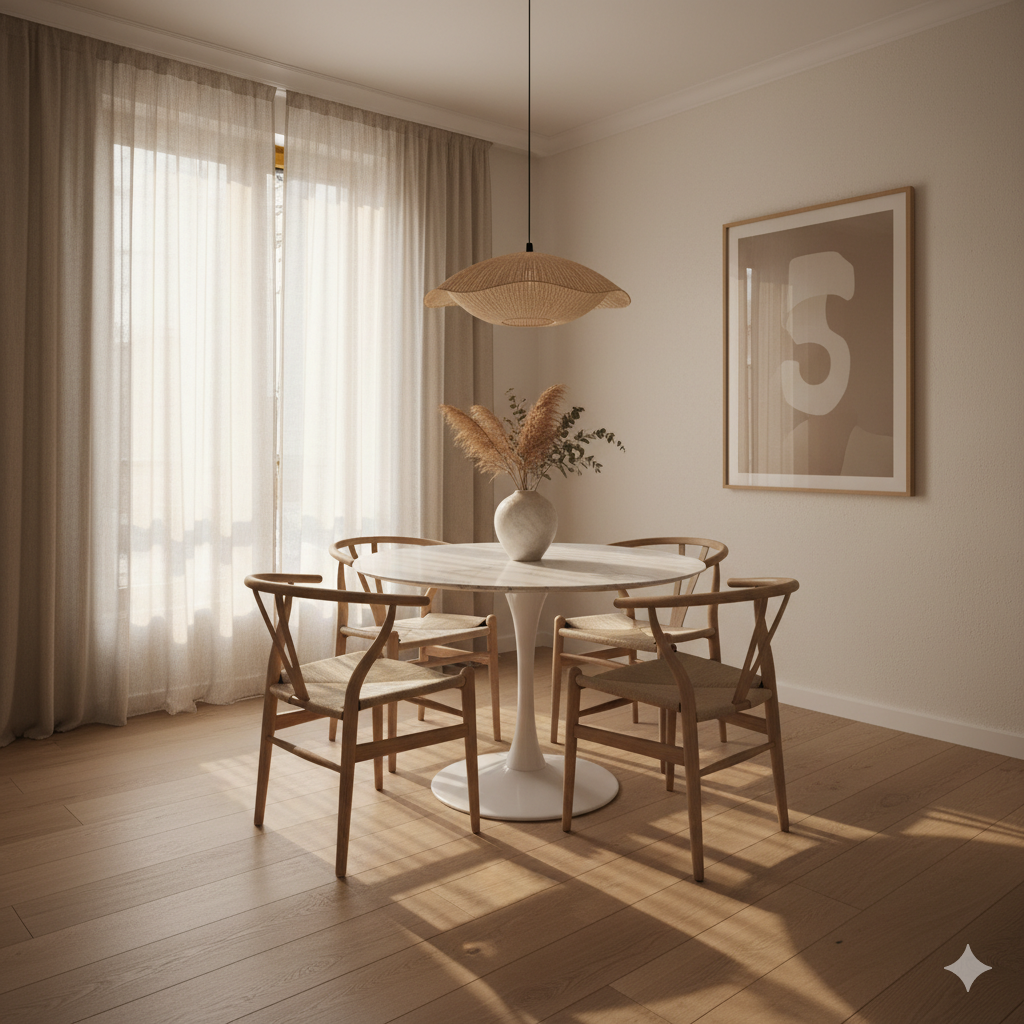
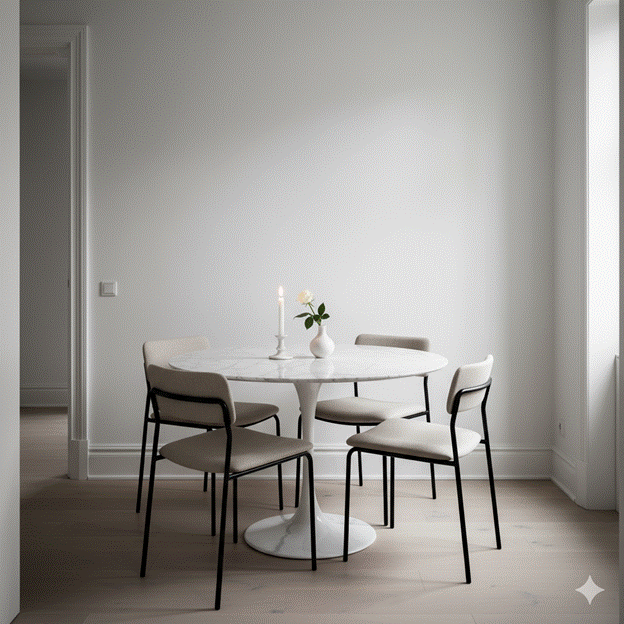
The round dining table is arguably the single most transformative furniture choice available to the small apartment dining room. Its absence of corners eliminates the visual sharpness that square and rectangular tables bring to compact spaces, and its circular form creates a natural sense of flow and openness that makes rooms feel significantly larger than they are.
Beyond aesthetics, the round table is supremely social — there is no head of the table, no hierarchy of seating, and every person present feels equally included in the conversation. For a small apartment where the dining table is often the centrepiece of both meals and gatherings, this egalitarian quality is as practically valuable as it is philosophically appealing.
A pedestal-base round table is the most space-efficient option, as the single central column eliminates the leg obstruction that four-legged tables create, making it easier to squeeze an extra chair into the space when needed.
Styling Tip: Choose a round table diameter between 80cm and 100cm for 2–4 people in a small apartment. A marble or stone top adds visual weight and luxury without physically enlarging the table’s footprint, while a glass top creates the illusion of more floor space by allowing the eye to travel through the surface uninterrupted.
2. Use a Wall-Mounted Drop-Leaf Table for Maximum Flexibility
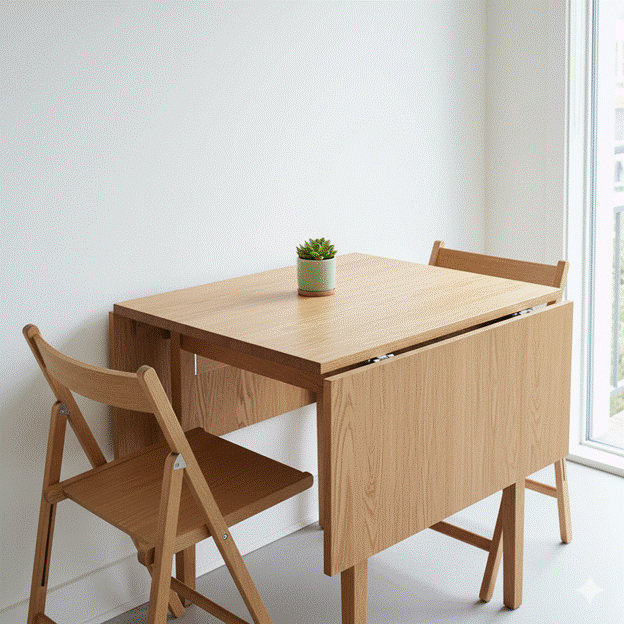
For the most space-constrained apartments, the wall-mounted drop-leaf table is a solution of elegant minimalism — a dining surface that exists only when it is needed and disappears entirely when it is not. Folded flat against the wall, it reads as a simple shelf or wall panel; extended, it provides a generous surface for meals, work, and casual gatherings.
The visual appeal of a well-chosen drop-leaf table extends beyond its practical ingenuity. Finished in natural timber with clean, considered hardware, it becomes a genuine design element on the wall it inhabits — a piece that contributes to the room’s aesthetic even in its folded, inactive state.
This is the ideal solution for studio apartments and single-room living spaces where the dining function must be created rather than merely furnished — where every square foot of floor space has multiple claims on its use throughout the day.
Styling Tip: Mount the drop-leaf table at a height of 74–76cm — standard dining table height — for ergonomic comfort. Pair with folding or stacking chairs that can be stored flat against the wall or inside a cupboard when the table is not in use, to maintain the room’s spatial freedom between mealtimes.
3. Build a Banquette Seating Nook for Charm and Storage
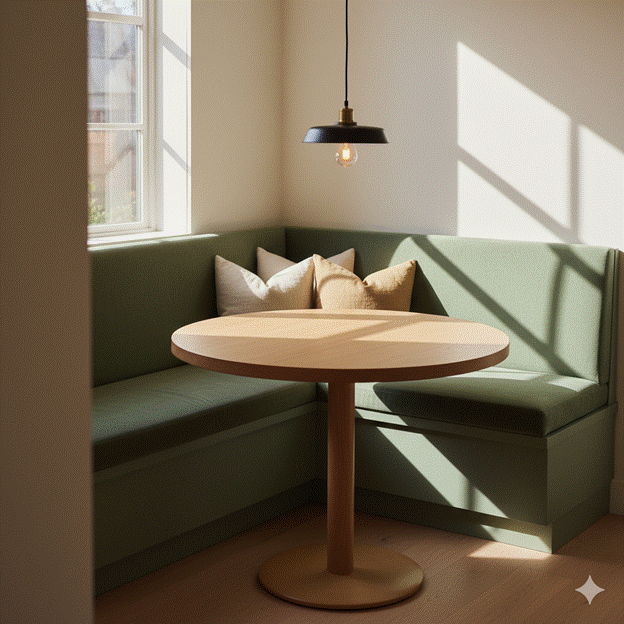
The banquette — a built-in bench seat positioned against one or two walls of the dining area — is one of interior design’s most enduring solutions for small dining spaces. It solves three problems simultaneously: it provides seating without the floor space demand of individual chairs, it creates an enclosed, intimate dining environment that feels designed rather than improvised, and it offers substantial storage within its bench structure.
A banquette nook positioned in a corner — with bench seats along two perpendicular walls and a table fitted snugly between them — can accommodate four to six people in a footprint that a standard four-chair dining set could not begin to match. The enclosed quality of the corner adds a sense of warmth and occasion to every meal.
Aesthetically, the banquette is an opportunity for considered material layering: a painted timber bench frame, cushions in a textured boucle or linen fabric, a pendant light positioned precisely above the table, and perhaps a small framed print or mirror on the wall above the seating.
Styling Tip: Add concealed storage within the banquette bench by fitting hinged lids to the seat surfaces. This creates a completely invisible storage solution for table linens, seasonal items, and kitchen overflow — one of the most elegantly efficient storage strategies available in a small apartment dining room.
4. Hang a Statement Pendant Light to Define the Space
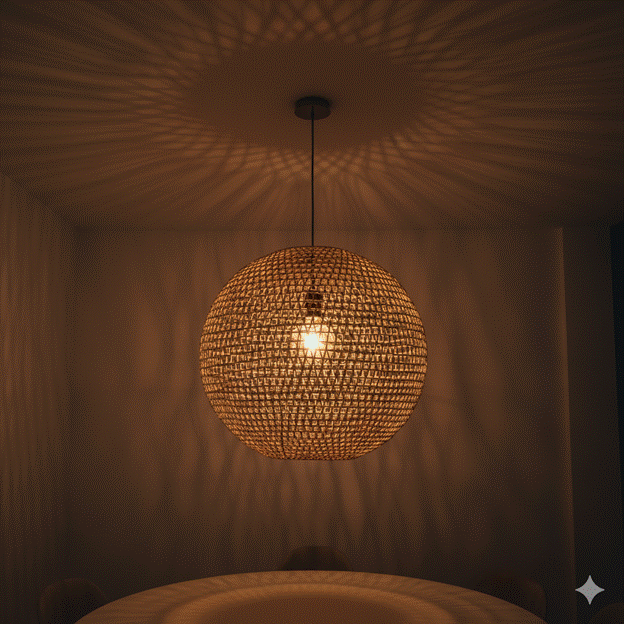
In an open-plan apartment where the dining area shares its floor with the kitchen or living room, the pendant light is the most powerful tool available for defining the dining zone as a distinct and intentional destination. A pendant hung low over the table — ideally 70–80cm above the surface — creates a visual anchor that communicates clearly: this is the dining space.
The pendant light is also the most immediate opportunity for expressing design personality in a small dining room. Where furniture choices must balance practicality with aesthetics, the light fitting operates almost entirely in the aesthetic register — it can be dramatic, sculptural, romantic, or minimalist according to the vision of the space without any practical compromise.
For a small apartment dining room, scale matters enormously. A pendant that is too small looks tentative and loses its anchoring power. A pendant at the correct scale — generous enough to relate meaningfully to the table below — transforms the entire character of the dining area.
Styling Tip: For a round table of 80–100cm diameter, choose a pendant or cluster of pendants spanning 50–70cm in diameter. For a rectangular table, a linear pendant or three pendants in a row at equal spacing provide the most proportionate and visually compelling overhead treatment.
5. Embrace Mirrors to Double the Perceived Space
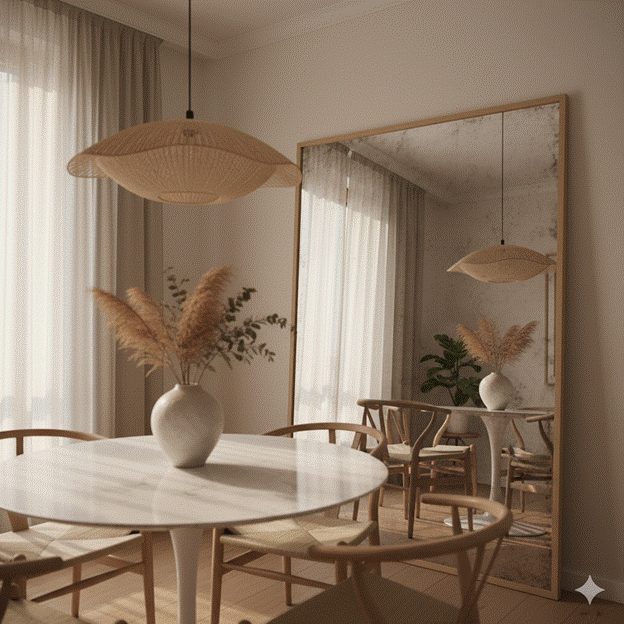
The mirror is the small apartment designer’s most reliable ally, and in a dining room its application is particularly effective. A large mirror — floor-to-ceiling or occupying the full width of one wall — reflects the dining table, the pendant light, and the view to the window, creating an impression of depth and volume that genuinely alters the perceived dimensions of the room.
The reflection of candlelight or warm pendant illumination in a well-positioned mirror adds an atmospheric warmth to evening dining that no other design element can replicate. The doubled light source makes the room feel both larger and more intimate simultaneously — a paradox that the mirror achieves with effortless grace.
Antique or aged mirrors introduce an additional layer of visual interest — the slight imperfections in the silver backing create a depth and warmth in the reflection that standard flat mirrors do not possess. A large antique mirror leaning against a dining room wall is one of the most beautiful and spatially generous gestures available in interior design.
Styling Tip: Position a large mirror on the wall directly opposite the primary light source — whether a window by day or the pendant light by evening — to maximise its light-doubling effect. Frame it in a material that complements the dining table: a timber frame beside a timber table, a brass frame beside a marble table.
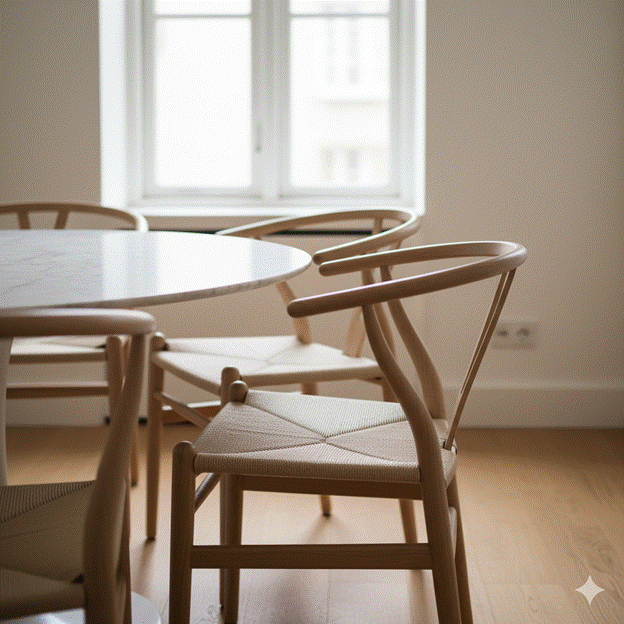
6. Select Slim-Profile Chairs to Keep the Room Light
Chair selection is one of the most consequential decisions in the small dining room, and the most common mistake is choosing chairs that are too visually heavy for the space. Chunky upholstered armchairs, generous club chairs, or bulky dining chairs with wide padded backs all consume significant visual space — they make a small room feel overwhelmed before a single person has sat down.
The alternative is the slim-profile dining chair: wire and bent-metal designs, slender solid timber frames, wishbone chairs, acrylic ghost chairs, or cane-backed designs that allow the eye to travel through the chair rather than stopping at its surface. These chairs provide comfortable, beautiful seating while maintaining the visual openness that small rooms require.
Mixing chair styles — two different designs at the same table — is a sophisticated and increasingly fashionable approach that adds visual interest while allowing each chair to be chosen specifically for its proportional appropriateness to the space.
Styling Tip: Consider replacing two of your dining chairs with a bench on one side of the table. A bench provides seating for two or three people in the width of a single chair plus some, is easier to slide away under the table when not in use, and adds a relaxed, contemporary informality to the dining space.
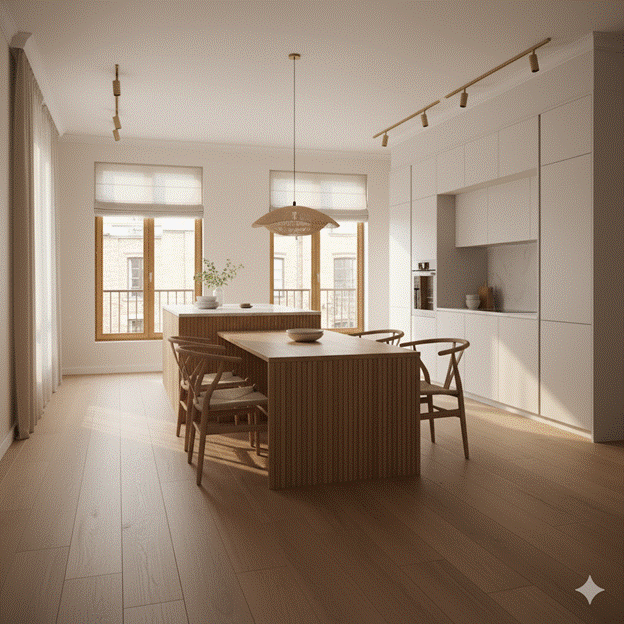
7. Extend Your Dining Room Into the Kitchen with Continuity
In an open-plan small apartment, the boundary between kitchen and dining room is a design decision rather than a fixed architectural fact. Creating visual continuity between the two zones — through consistent flooring, a unified colour palette, or complementary material choices — makes both spaces feel larger by allowing them to read as a single generous room rather than two cramped ones.
The kitchen island or breakfast bar, positioned thoughtfully, can serve double duty as both food preparation surface and informal dining table — eliminating the need for a separate dining area entirely in the smallest apartments, or providing additional seating capacity when a dedicated dining table is also present.
Where the kitchen and dining area meet, design the transition with intention. A change of pendant style above the dining table signals the shift from working kitchen to social dining space while maintaining the open-plan feel. A kitchen-side dining bench that shares its back wall with the kitchen cabinetry creates a seamless connection between the two functions.
Styling Tip: Match the dining table material to one element of the kitchen — a timber dining table paired with timber kitchen cabinetry, or a white marble dining table paired with white marble kitchen countertops — to create the material thread that ties the two zones into a coherent whole.
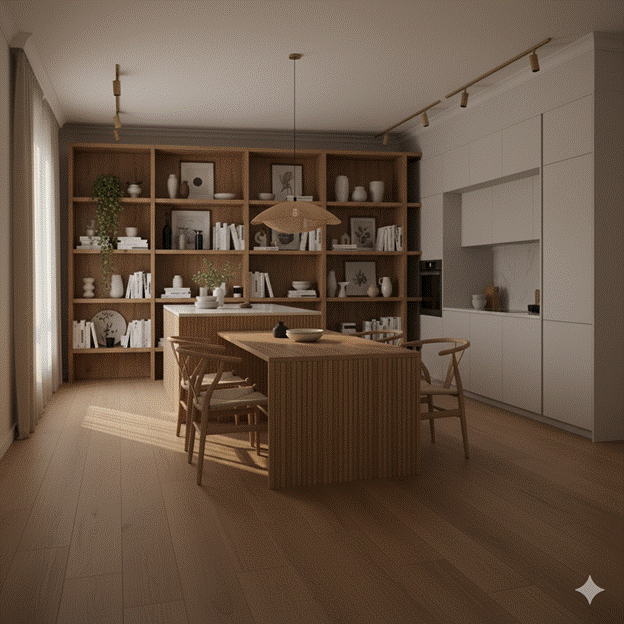
8. Go Vertical with Shelving for Style and Storage
The walls of a small dining room are a resource that most apartment dwellers leave almost entirely unexploited. Floor-to-ceiling shelving along one wall of the dining room transforms the space from a single-function eating area into a multi-dimensional interior — one that houses books, art objects, plants, and tableware within a display that becomes the room’s most visually compelling feature.
Open shelving in a dining room creates an atmosphere that feels curated and personal — a reflection of the tastes and interests of the people who eat there. Arranged thoughtfully, with a mix of books, ceramics, small plants, and framed artworks, a well-styled dining room shelf becomes the equivalent of a gallery wall with practical function embedded within it.
For a more refined aesthetic, consider closed cabinetry at the base with open shelving above — this combination provides discreet storage for less photogenic items below while maintaining the decorative appeal of the open display above.
Styling Tip: When styling open dining room shelves, arrange objects in groups of three at varying heights — this creates visual rhythm without the rigid regularity that makes shelves look arranged rather than lived-in. Alternate between horizontal and vertical elements (a stack of books beside a tall vase, a small ceramic bowl beside an upright framed print) for the most natural-looking composition.
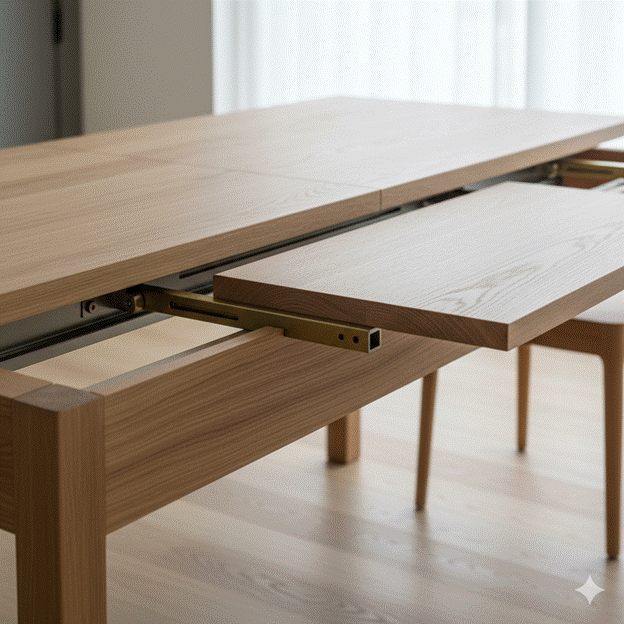
9. Incorporate a Foldable or Extendable Table for Versatility
The extendable dining table is the small apartment’s answer to the social demand that compact spaces must meet: the ability to seat four comfortably on a Tuesday evening and eight generously on a Sunday gathering without occupying eight-person table space every day of the week.
Modern extendable tables have evolved far beyond the visible leaf-and-bracket mechanisms of previous decades. The most elegant contemporary designs extend through concealed butterfly or self-storing leaf systems that maintain the table’s visual integrity in both its compact and extended configurations. At rest, they read as a considered, well-proportioned piece of furniture. Extended, they become something genuinely generous.
The foldable table — hinged along its length to fold to half its width — offers a more dramatic spatial economy than the extendable, reducing the table to a console-width profile that can be pushed against a wall during the day and brought into the centre of the room for meals.
Styling Tip: When purchasing an extendable table, test the extension mechanism in the shop. The best designs extend smoothly and lock firmly at both widths with no wobble or misalignment. A table that is frustrating to extend will quickly cease to be extended — defeating the entire purpose of its design.
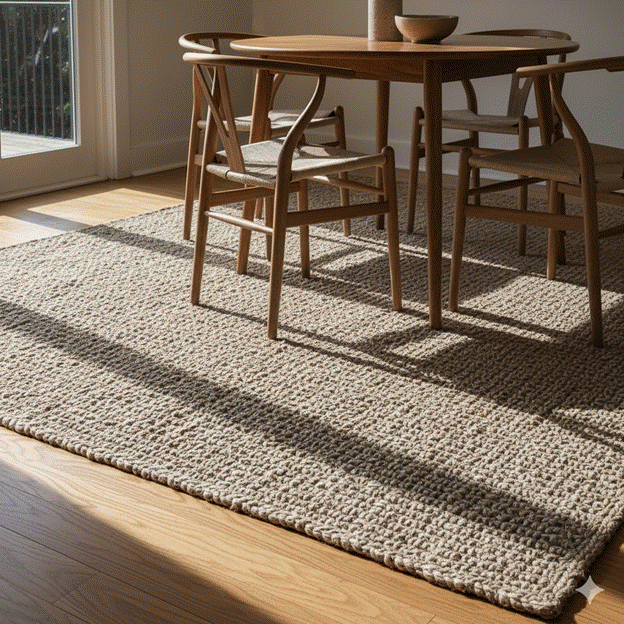
10. Layer Rugs to Ground and Define the Dining Area
A dining rug is one of the most immediately transformative additions to a small apartment dining room — it defines the dining zone within a larger open-plan space, adds warmth and texture underfoot, and absorbs the acoustic energy that hard floor and bare walls inevitably amplify in compact rooms.
The rug must be generously sized — large enough that all chair legs remain on the rug even when chairs are pulled out from the table. A rug that is too small creates a cramped, afterthought quality; a rug sized correctly creates the impression that the dining area is a properly considered destination within the wider room.
For a small apartment dining room, flatweave rugs in natural fibres — cotton, jute, or a jute-cotton blend — are the most practical choice. They are easy to clean, low enough in pile to not impede chair movement, and available in textures and patterns that add genuine visual interest without competing with the furniture above them.
Styling Tip: Choose a rug that extends at least 60cm beyond the table edge on all sides — this ensures chairs remain on the rug when pulled out and creates the spatial generosity that makes the dining area feel properly proportioned. For round tables, a round rug is the most cohesive choice; for rectangular tables, a rectangular rug at a size of approximately 160 x 230cm works well for most configurations.
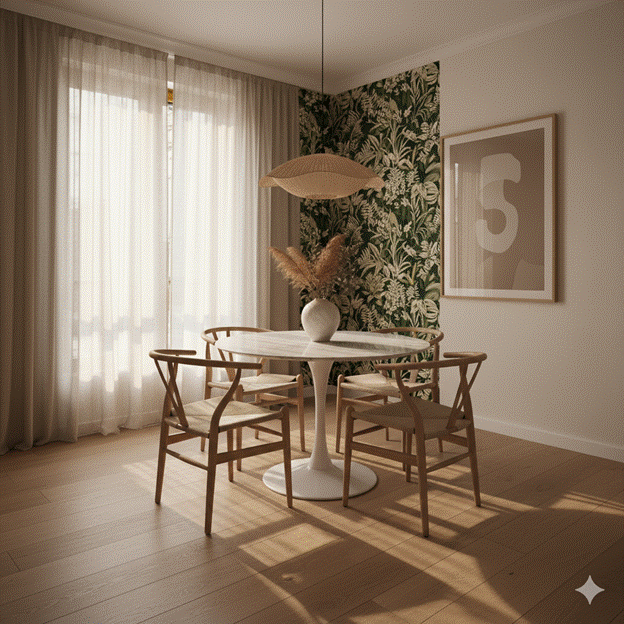
11. Use Bold Wallpaper on One Wall for Visual Drama
In a small dining room, a single wall of bold wallpaper — botanical, geometric, or painterly — creates a sense of visual drama and spatial depth that no other surface treatment can replicate at comparable cost. The pattern draws the eye into the wall, creating an illusion of depth that makes the room feel more expansive rather than smaller.
The key to using wallpaper effectively in a small space is restraint of application — one wall, not four. A single feature wall of pattern provides the visual impact of a fully papered room while allowing the three remaining walls to remain neutral, preserving the airiness that small rooms require. The papered wall becomes the room’s focal point, orienting the dining table and the entire composition of the space toward it.
Scale of pattern matters in a small room. Large-scale botanical prints — oversized tropical leaves, sweeping floral motifs — work surprisingly well in compact dining rooms because their scale implies a generous space beyond the pattern itself. Small, repetitive patterns can have the opposite effect, amplifying the sense of a small, busy room.
Styling Tip: If permanent wallpaper feels too committed a choice, consider removable peel-and-stick wallpaper in the same pattern. The visual effect is identical and the reversibility is particularly valuable in rental apartments where permanent wall treatments are not permitted.
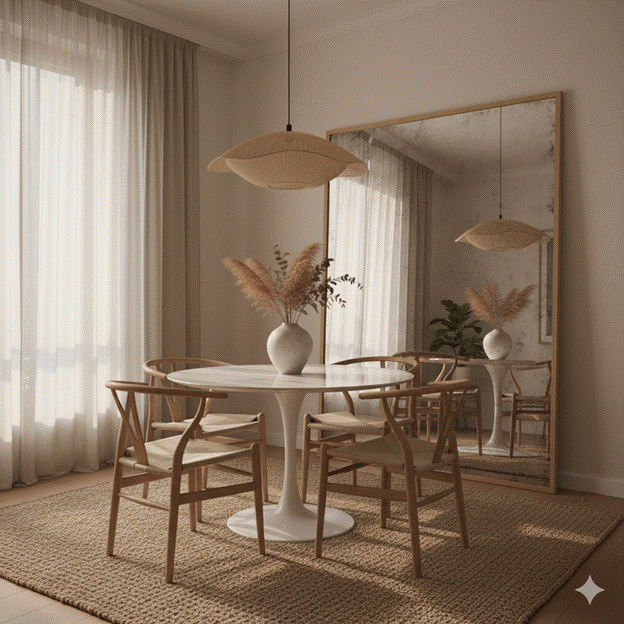
12. Maximise Light with Strategic Mirror and Glass Use
A small apartment dining room that lacks abundant natural light presents one of interior design’s most interesting challenges — and one of its most rewarding solutions. The strategic combination of mirrors, glass table surfaces, and reflective materials can transform a naturally dim dining space into one that feels bright, airy, and genuinely inviting.
A glass or acrylic dining table is the single most radical space-and-light-expanding choice available. The transparent surface allows the eye to travel to the floor, to the walls, and to the room behind — creating an impression of significantly more space than the table physically occupies. Paired with slim-profile metal or clear acrylic chairs, a glass table can make a small dining room feel almost entirely open.
For dining rooms with limited natural light, warm-toned artificial lighting is more important than in naturally bright spaces. A dimmer-controlled pendant at low height over the table, supplemented by candles or low-profile table lighting, creates an intimate warmth that transforms the absence of daylight from a limitation into an atmospheric quality.
Styling Tip: In a dining room with limited natural light, avoid painting walls in cool greys or stark whites — these tones can feel cold and clinical without sunlight. Instead, choose warm off-whites, pale terracotta, warm greige, or soft sage — tones that radiate warmth from their own pigment regardless of the quality of available light.
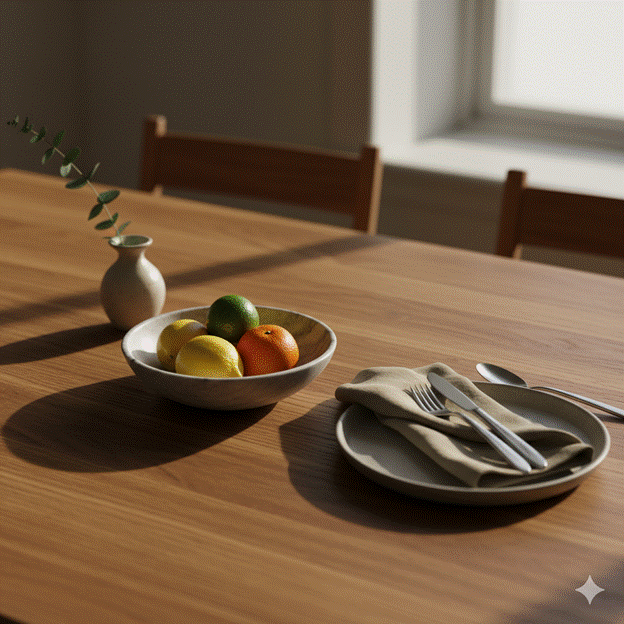
13. Bring in Natural Materials for Warmth and Texture
The dining room that achieves genuine elegance in a small apartment is almost always one that has committed to natural materials — timber, stone, linen, ceramic, rattan, and leather — rather than relying on synthetic alternatives that, however visually convincing in isolation, fail to generate the tactile warmth and visual depth that make a room feel genuinely beautiful.
A solid timber dining table ages with a grace that no laminate surface can approach. A marble or stone centrepiece bowl on the table introduces geological pattern and weight. Linen napkins, a ceramic vase with a single stem, a woven rattan pendant above — each element contributes to a material story that accumulates into something richer than the sum of its individual parts.
Natural materials also have the quality of improving with use — the patina that develops on a regularly used timber table, the softening of linen with repeated washing, the deepening richness of leather seat covers over time. A dining room furnished with natural materials is one that gets better rather than worse as family life moves through it.
Styling Tip: If the budget allows only one natural material investment, make it the dining table. A solid timber or stone-top table is the most visible and frequently engaged surface in the dining room, and its quality — or lack of it — defines the entire register of the space. Every other element can be economical; the table should not be.
14. Style the Table as a Permanent Decorative Feature
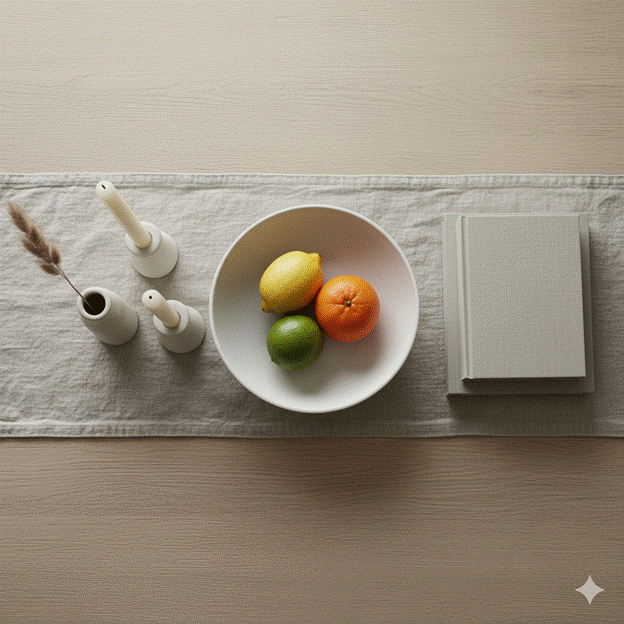
The most stylish small apartment dining rooms treat the table not merely as a functional surface awaiting the next meal but as a permanent decorative feature — styled between meals with the same thoughtfulness brought to a coffee table or a sideboard. A beautifully set table, even in the absence of food, creates a sense of occasion and intention that elevates the entire room.
A centrepiece that changes with the seasons — a sculptural vase of dried grasses in autumn, a trio of pillar candles in winter, a single stem in a ceramic bud vase in spring — gives the dining room a visual life beyond its functional hours. Linen napkins folded simply and placed on each setting, a small ceramic salt cellar, a timber fruit bowl at the table’s centre — these elements transform a bare table into a composed still life.
The discipline required is minimal: reserve ten minutes each week to reset the table after its most vigorous use. The result is a dining room that is always ready to receive, always worth photographing, and always capable of making the people who sit down at it feel that the meal they are about to share has been genuinely considered.
Styling Tip: Build a small ‘table styling kit’ in a kitchen drawer — a set of matching linen napkins, a collection of candle holders in complementary sizes, a ceramic bud vase, and a small timber trivet. With these five elements, the table can be dressed for any occasion in under five minutes and returned to its everyday decorative state in the same time.
Conclusion
A small apartment dining room does not need to compromise on style. On the contrary, the constraints of limited space, approached with genuine design intelligence, often produce dining rooms of extraordinary charm and considered beauty — spaces that feel curated rather than accidental, intimate rather than cramped.
The 14 ideas explored in this guide share a common foundation: that the most stylish small dining rooms are those where every decision — the table shape, the chair profile, the lighting choice, the wall treatment, the material selection — has been made with both aesthetic vision and spatial awareness in equal measure.
Begin with the furniture foundations, layer in the atmospheric elements of light and texture, and treat the table itself as the decorative centrepiece it deserves to be. The stylish small apartment dining room you have imagined is entirely achievable — and the journey toward it is one of the most rewarding creative projects available to any home decorator.
Frequently Asked Questions
Q1. What is the best dining table shape for a small apartment?
A round table is generally the best choice for small apartments — it eliminates sharp corners, creates a sense of flow in compact spaces, and allows easier movement around it. A pedestal base further maximises space by removing leg obstructions. For narrow rooms, a rectangular table pushed against one wall with a bench on the wall side can be the most space-efficient option.
Q2. How do you create a dining area in a studio apartment?
In a studio apartment, create a dining area through three design tools: a well-positioned pendant light hung low over the dining surface to define the zone visually, a rug beneath the table to ground the space physically, and a consistent furniture aesthetic that distinguishes the dining corner from the living and sleeping areas around it. A wall-mounted drop-leaf table is the most space-efficient option when floor space is extremely limited.
Q3. What colours make a small dining room look bigger?
Warm whites, soft off-whites, pale sage, and warm greige are the most effective colours for making a small dining room feel larger. These tones maximise the reflection of available light while creating a warmth that cold whites lack. A single feature wall in a deeper tone — terracotta, forest green, or charcoal — adds depth and drama without making the overall room feel smaller, provided the three remaining walls stay light.
Q4. How do you make a small dining room feel luxurious?
Luxury in a small dining room is achieved through material quality and lighting atmosphere rather than spatial generosity. A solid timber or stone-top table, a sculptural pendant light, linen or velvet seat covers, a large antique mirror on one wall, and warm candlelight on the table create an atmosphere of genuine luxury that has nothing to do with room size. Restraint of clutter is equally important — a carefully edited, uncluttered dining space always reads as more luxurious than a crowded one.
Q5. What lighting is best for a small apartment dining room?
A pendant light hung 70–80cm above the table surface is the essential element — it defines the dining zone, creates intimacy, and provides focused illumination for the table. Supplement with a dimmer switch to allow the light level to be reduced for evening dining atmosphere. For rooms with limited natural light, add a floor lamp or wall sconces at the periphery of the dining space to create the layered lighting that gives a room warmth and depth at all times of day.