Introduction
The most beautiful living rooms are rarely the most complicated ones.
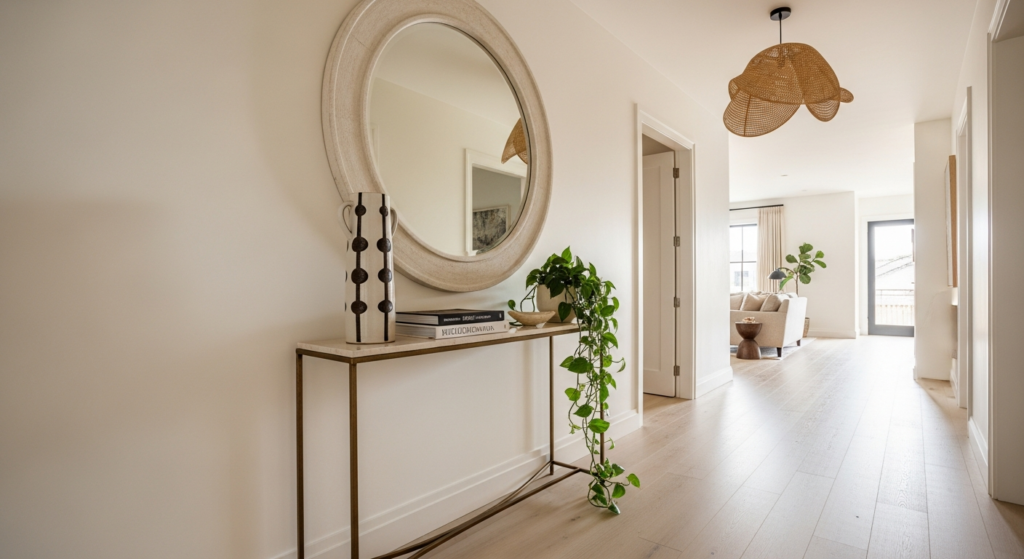
There is a quiet power in simplicity — in a room that breathes, that has been thoughtfully edited rather than endlessly filled, that feels as beautiful at noon in natural light as it does at dusk with warm lamps glowing. A simple living room does not mean a boring one. It means a space where every element has been chosen with intention, where comfort and aesthetics exist in perfect equilibrium, and where the design speaks with a calm, confident voice.
In 2025, the most aspirational living room inspiration is moving away from maximalism and toward something more considered. Clean lines, warm textures, layered natural materials, and a refined colour palette are defining the rooms that stop the scroll and inspire genuine change.
Whether you are redesigning your living room from scratch or simply looking for ideas to refresh what you already have, these ten simple living room ideas will give you the inspiration, the direction, and the practical guidance to create a space you genuinely love coming home to.
1. Embrace a Warm Neutral Colour Palette
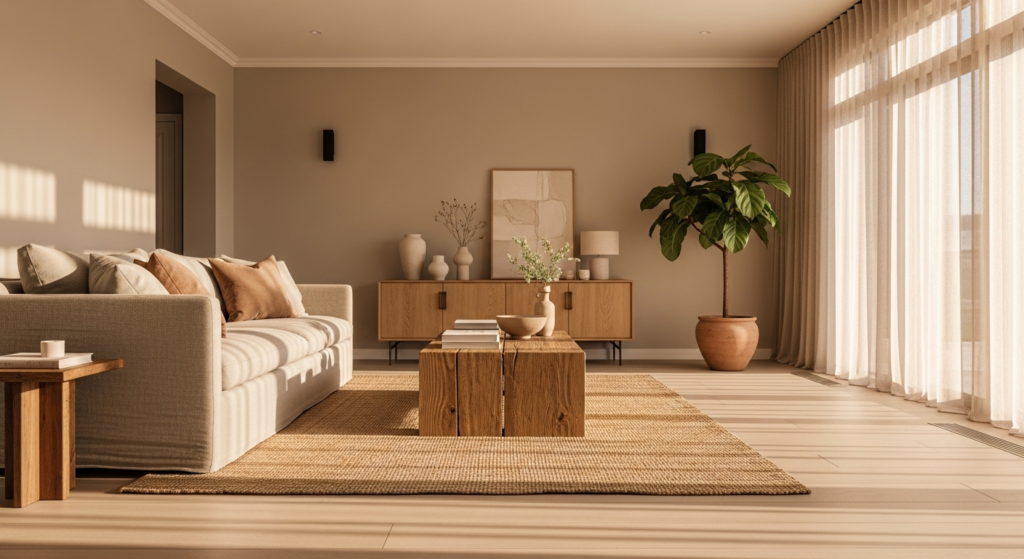
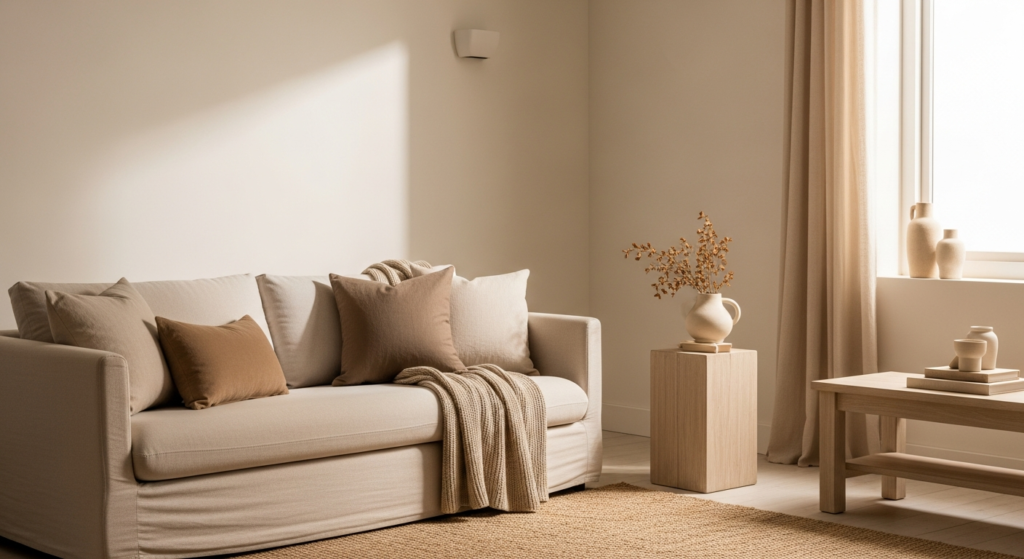
The foundation of every stunning simple living room is its colour palette — and warm neutrals remain the most timeless and transformative choice available. Shades of warm white, soft ivory, warm greige, and sandy beige create a backdrop that feels both expansive and deeply inviting.
Styling Tip: Avoid cold, grey-toned neutrals which can make a space feel clinical and flat. Instead, choose warm whites with yellow or pink undertones, and layer them with complementary shades in the same family — cream cushions on a warm greige sofa, ivory curtains against a soft sand wall. The tonal variation creates depth without introducing colour complexity. Add warmth through timber, rattan, and linen textures throughout the room.
Warm neutral living rooms photograph exceptionally well in natural light — they glow rather than simply reflect, creating the kind of ambient beauty that makes a room feel genuinely lived in and loved.
2. Invest in One Statement Sofa
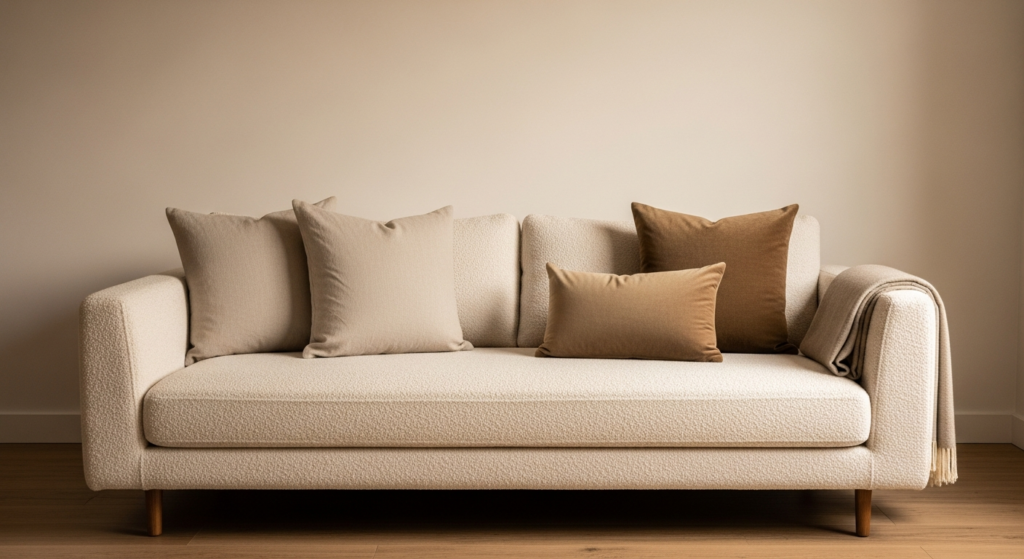
In a simple living room, the sofa is the most important single investment you will make — it anchors the entire space and sets the tone for every other decision. Rather than filling the room with multiple seating options, invest in one beautifully crafted statement sofa that commands the space with confidence.
Styling Tip: Choose a sofa in a timeless silhouette — clean-lined, low-profile, or gently curved — in a quality fabric that ages beautifully. Bouclé, linen, velvet in muted tones, and performance fabric in warm neutrals are among the most elegant and durable choices. Keep the sofa in a tone that complements rather than dominates the room — warm ivory, soft camel, dusty sage, or deep charcoal all work beautifully depending on the overall palette.
Layer the sofa with cushions in varying textures — linen, velvet, knit — and a single throw draped casually over one arm. Simplicity in the cushion arrangement is key: three to five cushions maximum, in tonal or complementary shades.
3. Let Natural Light Lead the Design
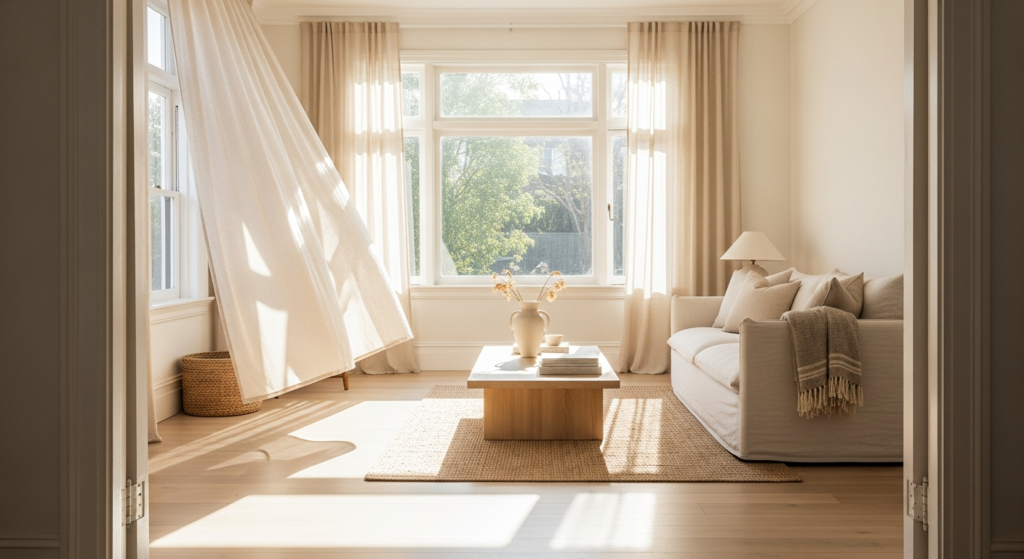
Natural light is the single most powerful design element in any living room — and in a simple, elegant space, it becomes the hero of the entire aesthetic. The way light moves through a room throughout the day transforms its mood, its warmth, and its character in ways that no artificial light source can fully replicate.
Styling Tip: Maximise natural light by choosing sheer, floor-to-ceiling curtains in ivory or white linen that filter rather than block the light. Position mirrors strategically — opposite or adjacent to windows — to reflect light deeper into the room. Keep window sills clear of heavy objects that interrupt the light flow. Pale walls and reflective surfaces like polished stone and light timber amplify natural light beautifully.
In rooms with limited natural light, layer artificial lighting thoughtfully — a combination of warm floor lamps, table lamps at varying heights, and soft overhead lighting creates a sense of warmth that approximates natural light in the most beautiful way.
4. Build with Natural Textures and Materials
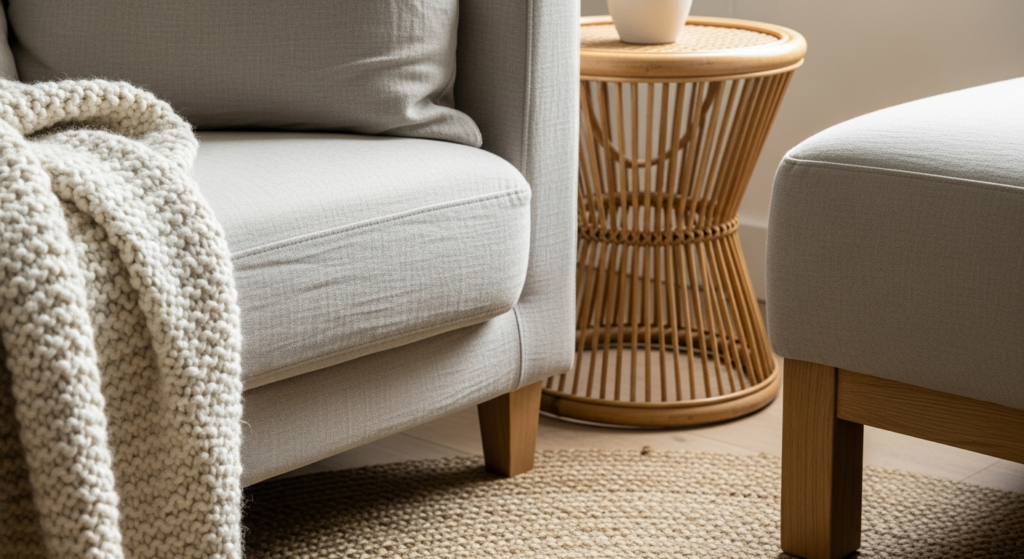
A simple living room achieves its depth and visual richness not through colour or decoration, but through the layering of natural textures and materials. Linen, jute, rattan, raw timber, stone, cotton, and wool all bring an organic warmth and tactile beauty that manufactured materials simply cannot replicate.
Styling Tip: Layer at least four distinct natural textures in your living room for a space that feels rich without feeling busy. A linen sofa, a jute area rug, a rattan side table, a wool throw, and a raw timber coffee table create a beautifully layered material story without introducing any colour complexity. The textures do all the visual work, allowing the palette to remain calm and cohesive.
Natural materials also improve with age — timber deepens, linen softens, rattan develops character — making them the most sustainable and long-term investment in your home’s aesthetic.
5. Choose a Minimal Coffee Table as the Room’s Anchor
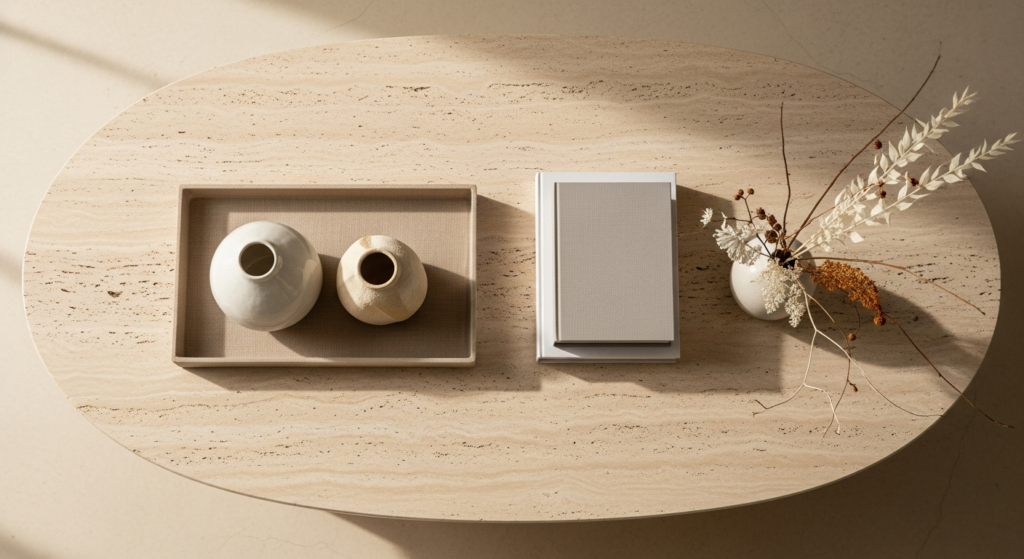
The coffee table is the functional and visual centre of the living room — and in a simple, elegant space, it deserves as much consideration as any other element. A beautifully chosen minimal coffee table anchors the seating arrangement, provides visual grounding, and offers a surface for curated styling.
Styling Tip: Choose a coffee table in a natural material — raw timber, travertine, rattan, or stone — that complements the room’s texture palette. Keep the table surface deliberately edited: a single tray holding two or three objects, a small stack of design books, and one low organic vase is all that is needed. Resist the impulse to fill the surface. Empty space on a coffee table is not a failure of styling — it is a deliberate and elegant choice.
Oval and circular coffee tables work particularly well in simple living rooms as their soft edges improve traffic flow and create a more relaxed, considered composition.
6. Use a Large Area Rug to Define the Space
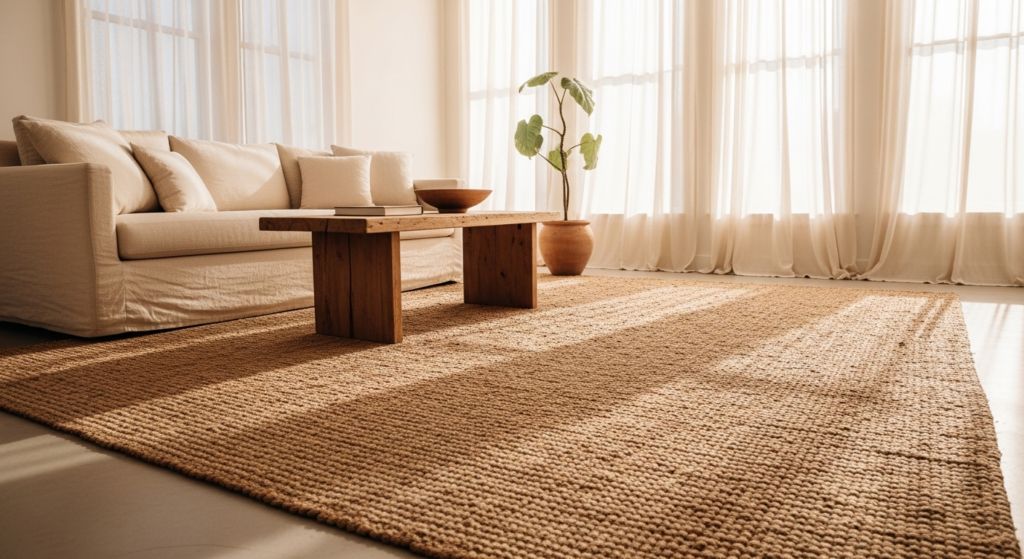
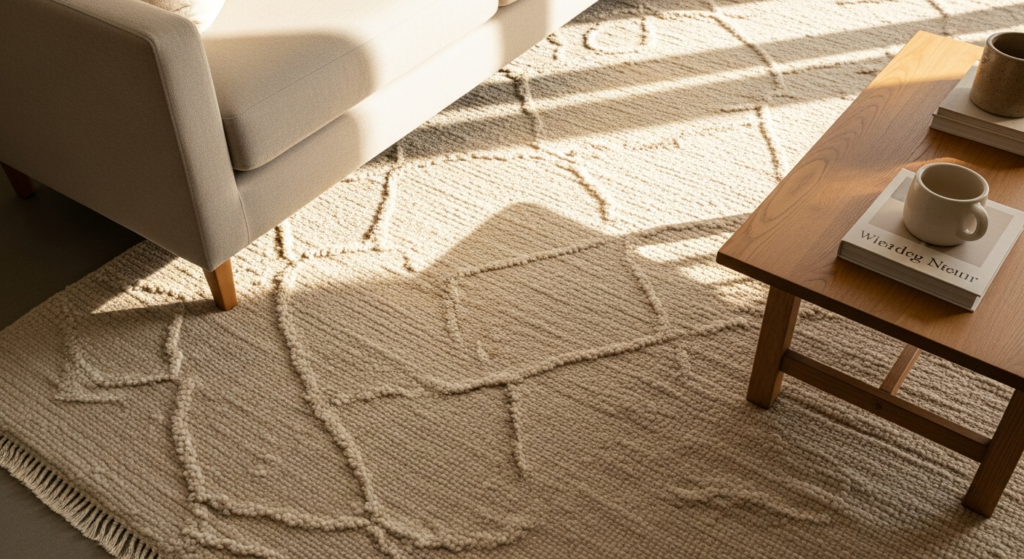
In an open plan living area or a room with hard flooring, a large area rug is one of the most transformative simple living room additions available. It defines the seating zone, adds warmth underfoot, introduces texture, and draws the entire furniture arrangement together into a cohesive, intentional composition.
Styling Tip: Always choose a rug that is larger than you think you need — this is the most common area rug mistake in interior design. In a living room, all four sofa legs should ideally sit on the rug, or at minimum the front two legs of each seating piece. This grounds the furniture arrangement and makes the room feel complete. Choose rugs in natural fibres — wool, jute, or cotton — in warm neutrals or subtle organic patterns for the most timeless result.
A well-chosen area rug also absorbs sound, making the living room feel quieter, warmer, and more intimate.
7. Curate a Considered Bookshelf or Shelving Display
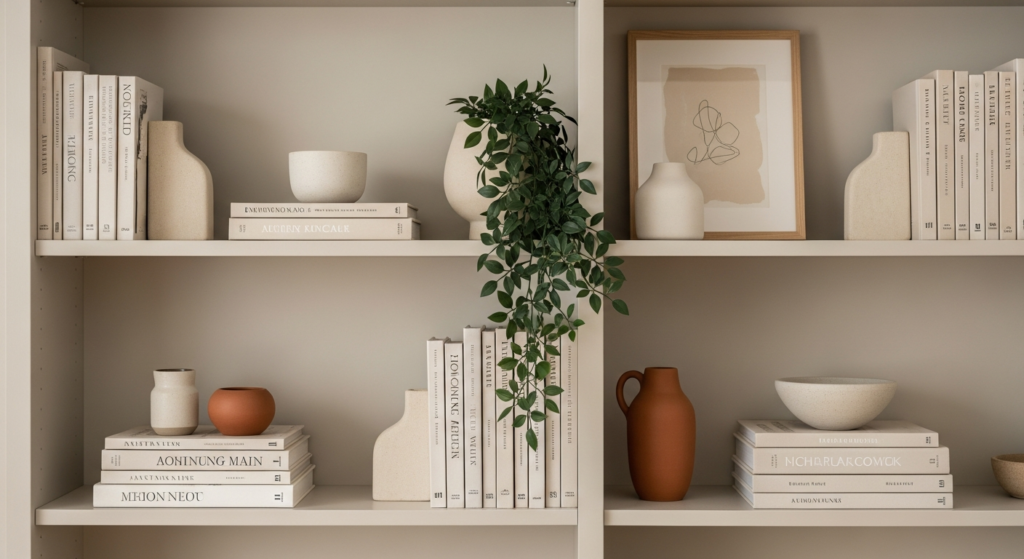
Open shelving and built-in bookcases offer one of the most beautiful opportunities for simple, considered styling in a living room. When curated thoughtfully, they become a genuine design feature — a reflection of personality, taste, and aesthetic sensibility.
Styling Tip: The secret to beautiful shelf styling is deliberate editing. Remove everything from the shelf and return only what genuinely belongs. Mix books — arranged both vertically and horizontally — with a small selection of objects: ceramic vessels, a single plant, a stone sculpture, a framed artwork leaned against the back panel. Leave visible breathing room between groupings. Aim for approximately sixty percent filled and forty percent empty for the most elegant result.
Keep the colour palette of shelf objects tonal and restrained — cream, terracotta, sage, and natural wood tones create a beautifully cohesive display without visual noise.
8. Introduce Greenery and Organic Shapes
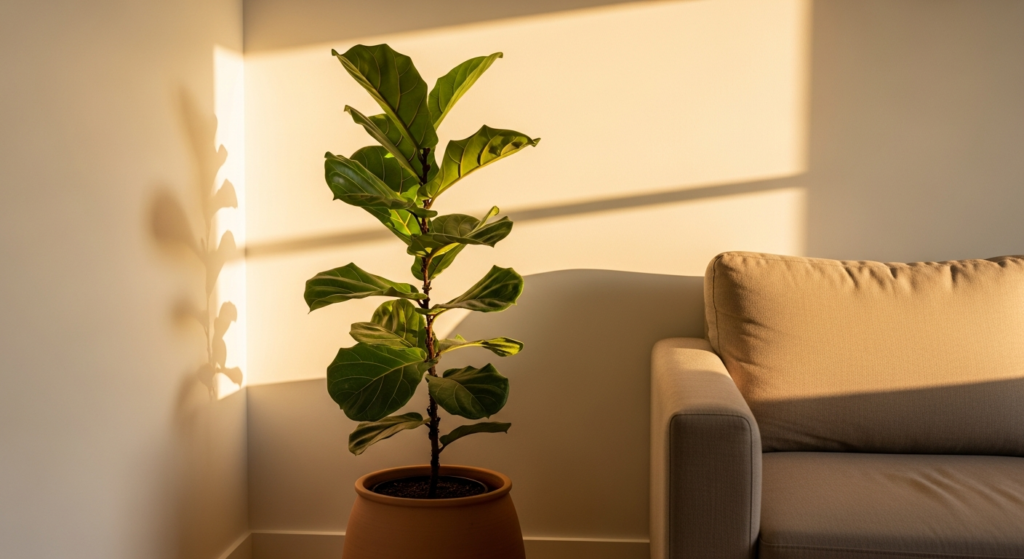
Plants are one of the simplest and most impactful additions to any living room — they bring life, movement, organic shape, and a connection to nature that softens even the most minimal space and makes it feel genuinely inhabited.
Styling Tip: Choose plants with interesting architectural shapes rather than simply selecting for size. A sculptural fiddle leaf fig, a cascading pothos on a high shelf, a cluster of small terracotta-potted succulents on the coffee table, or a single dramatic olive tree in a linen pot all add distinct character. Use quality ceramic, terracotta, or stone pots rather than plastic nursery containers — the vessel is as important as the plant itself in a considered living room design.
Group plants in odd numbers and varying heights for the most natural, editorial arrangement. One large statement plant always makes a stronger impact than several small ones scattered randomly around the room.
9. Layer Lighting for Warmth and Atmosphere
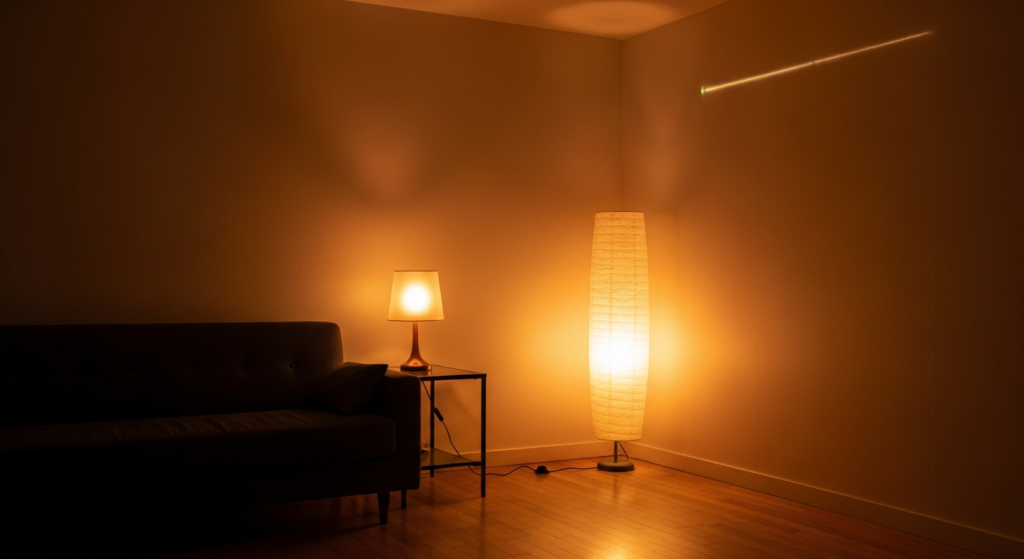
Lighting is the element that most dramatically transforms the feeling of a living room — yet it is the one most frequently overlooked in the initial design process. A simple living room with beautifully layered lighting feels luxurious, warm, and deeply comfortable at every hour of the day.
Styling Tip: Never rely on a single overhead light source for living room illumination. Layer three types of lighting for the most beautiful result: ambient lighting from a soft overhead source, task lighting from table lamps positioned beside seating, and accent lighting from a floor lamp in a corner or picture lighting above artwork. All light sources should use warm-toned bulbs — 2700K to 3000K colour temperature — for the most flattering, inviting atmosphere.
Dimmer switches are one of the highest-value investments in a living room — they allow the same space to transition effortlessly from bright and functional during the day to warm and atmospheric in the evening.
10. Edit Ruthlessly and Let Space Breathe
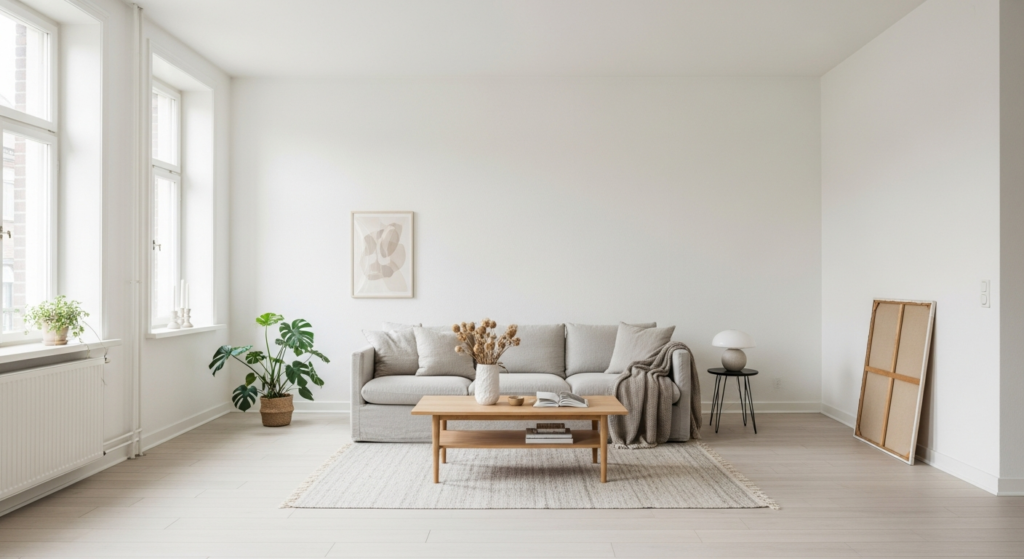
The final and perhaps most important principle of a stunning simple living room is one of restraint — the willingness to edit, remove, and allow space to simply breathe. The rooms that feel most beautiful and most aspirational in interior design are always the ones that contain less than you might expect.
Styling Tip: Walk through your living room and remove anything that does not serve a functional or genuinely aesthetic purpose. Temporary items that have become permanent fixtures, duplicated decorative objects, furniture pieces that interrupt the flow — all of these reduce the quality of the space without adding to it. Once you have removed the unnecessary, live with what remains for a few days before adding anything back. You will often find the room already contains everything it needs.
White space — or negative space — in interior design is not emptiness. It is the intentional pause that allows the eye to rest, appreciate, and truly see the beautiful elements that remain.
Conclusion
A stunning living room does not require an unlimited budget, a complete renovation, or an interior designer. It requires something far more accessible — intention.
The ten simple living room ideas explored here share a single underlying principle: that beauty in interior design comes from thoughtfulness, not accumulation. From the warmth of a carefully chosen neutral palette to the transformative power of layered lighting and the quiet elegance of edited shelving, these ideas prove that simplicity, when applied with care, creates spaces of genuine and lasting beauty.
Your living room is the heart of your home. Treat it as such — with patience, with intention, and with the quiet confidence that less, done well, will always be enough.
FAQs
Q1: What are the best simple living room ideas for small spaces? For small living rooms, the most effective simple ideas include choosing a single statement sofa in a light neutral tone, using a large area rug to define the space, maximising natural light with sheer curtains, incorporating mirrors to create the illusion of depth, and editing furniture to only the essential pieces. Avoiding clutter and maintaining visual breathing room are the most impactful strategies in compact living rooms.
Q2: How do I make a simple living room look expensive on a budget? The most impactful budget-friendly upgrades for a simple living room include repainting walls in a warm neutral tone, investing in quality cushion covers and throws in natural fabrics, replacing outdated light fittings with warmer alternatives, adding a large jute or wool area rug, and curating a considered shelf display using existing objects. Editing and decluttering costs nothing and delivers an immediate improvement in the quality of the space.
Q3: What colours work best for a simple living room? Warm neutrals are the most timeless and universally successful colour choices for simple living rooms — warm white, soft ivory, warm greige, sandy beige, and soft sage all create a beautiful, calming backdrop. These tones work with every natural material, every lighting condition, and every personal style, making them the most reliable long-term choice for a simple, elegant living room.
Q4: How do I style a simple living room with natural textures? Layer at least four distinct natural textures throughout the space — a linen sofa, a jute rug, a rattan or timber side table, a wool throw, and ceramic or stone decorative objects create a beautifully rich material palette without introducing colour complexity. The key is to keep the colour palette restrained and let the textures provide the visual interest and warmth.
Q5: What is the most important element of a simple living room design? Editing — the willingness to remove rather than add — is the single most important principle of simple living room design. A beautifully edited space where every element has been chosen with intention will always feel more elegant and more luxurious than a room filled with objects that have not been deliberately considered. Start with less, live with it, and add only what the space genuinely needs.