Introduction
A beautiful living room does not happen by accident.
It is the result of a series of deliberate, patient, and deeply personal decisions — the decision to choose a sofa fabric that rewards being touched, to hang a mirror where the afternoon light will hit it perfectly, to layer three different textures in the same neutral family until the sofa corner feels genuinely, irresistibly comfortable.
The living room is the room that works harder than any other space in the home. It hosts conversations and silences, mornings and midnights, guests and solitude. It communicates who you are before you have said a word. And the most beautifully decorated living rooms in the world are not the most expensive ones — they are the most considered ones.
Every object was chosen. Every layer was intentional. Every color was tested against the specific quality of light in that specific room at that specific time of day.
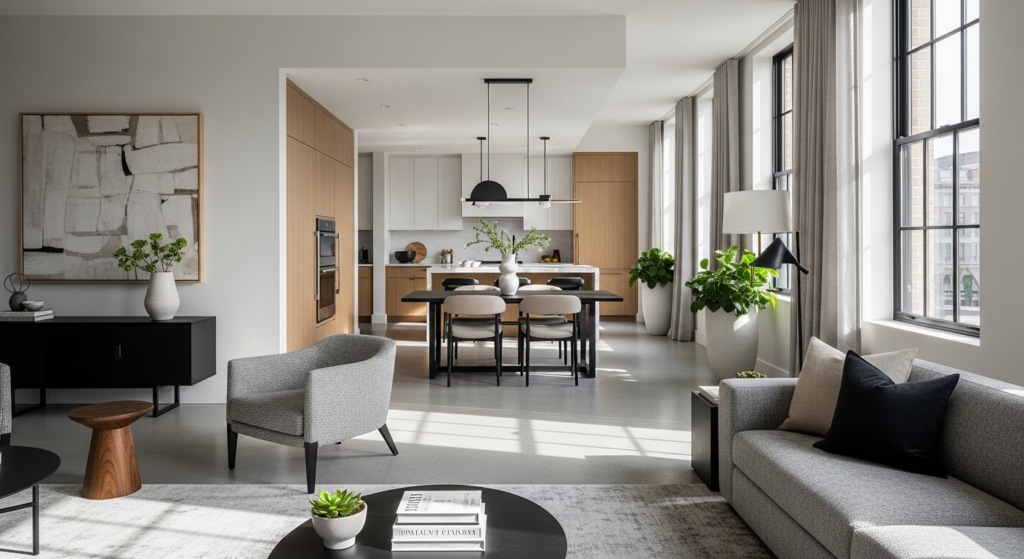
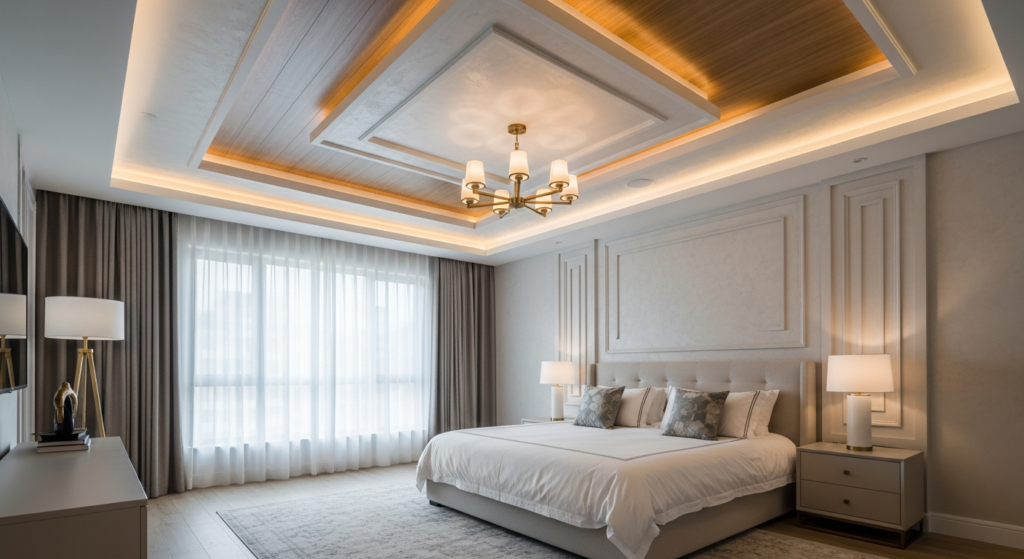
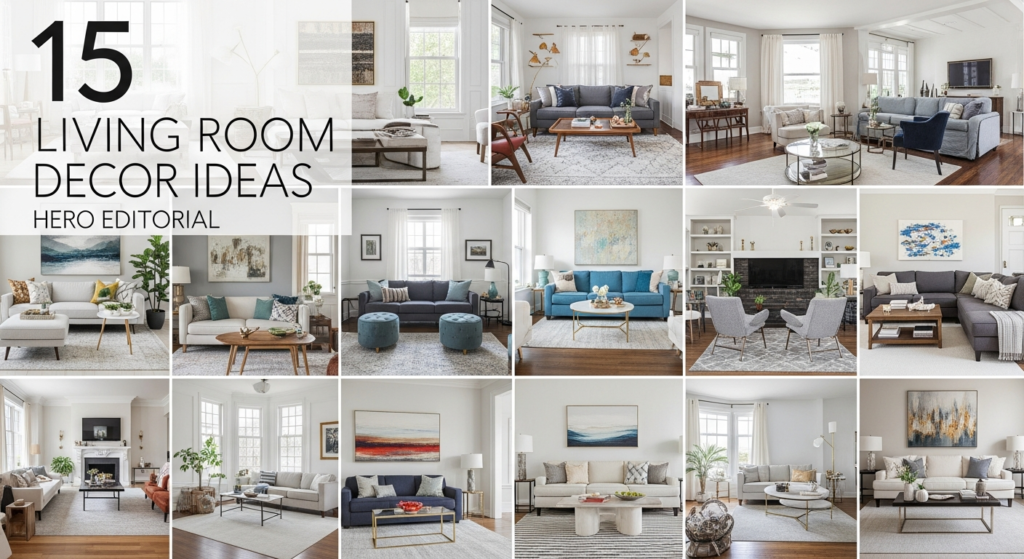
In this guide, we are exploring 15 stunning living room decor ideas that span textures, color palettes, lighting strategies, furniture arrangements, and the finishing details that transform a space from simply furnished into genuinely, memorably beautiful.
Each idea comes with practical styling guidance — because inspiration without implementation is simply a very beautiful dream.
And your living room deserves to be both the dream and the reality.
1. Invest in a Statement Sofa — The Room’s Visual Anchor
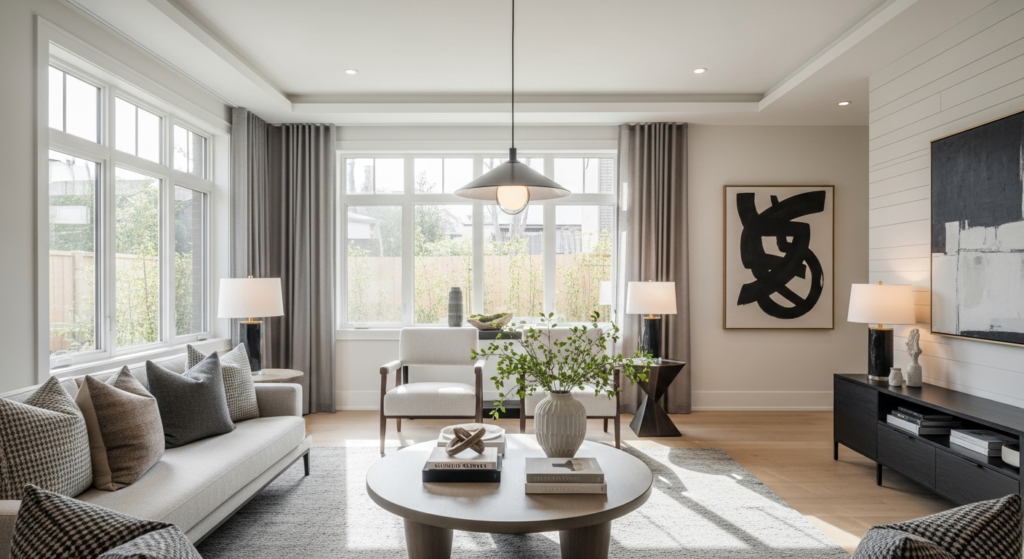
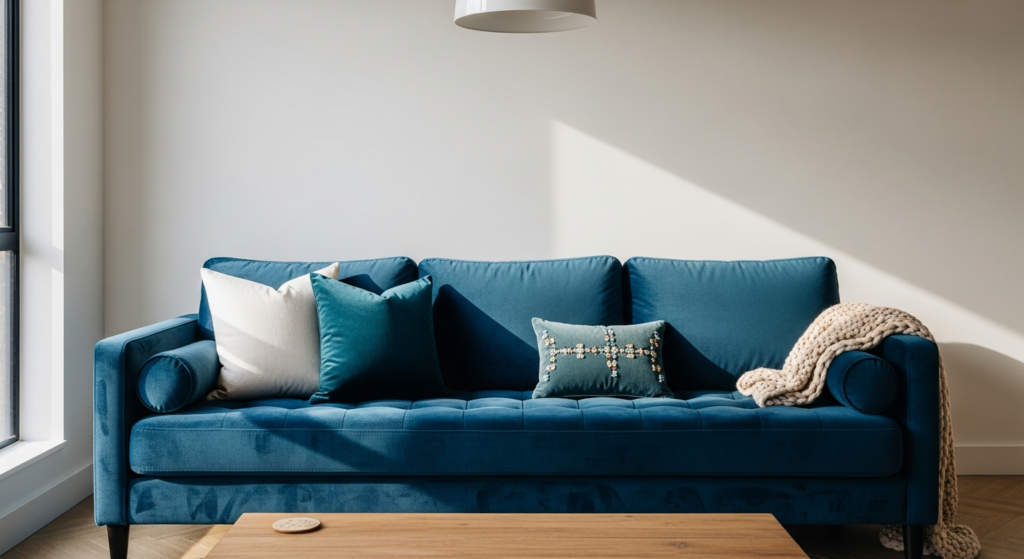
The sofa is the most important furniture decision in any living room decor scheme — the piece that everything else in the room must respond to, work with, and ultimately be organized around. Getting the sofa right is not simply a comfort decision. It is the room’s single most consequential design choice.
Styling Tips:
- Choose a sofa fabric that elevates the entire room through its material quality alone: a cream bouclé, a deep velvet in a jewel tone, a warm camel linen, or a rich leather in cognac or warm tan — each communicates a distinct but equally compelling living room decor direction.
- The sofa’s scale must be correct for the room: a sofa that is too small in a large room creates a sense of emptiness and insecurity; a sofa that is too large in a compact room creates visual overwhelm. Measure the wall length and allow a minimum of 18 inches of circulation space on each end before choosing a size.
- Invest in sofa quality over sofa novelty — a well-constructed frame and high-resilience foam core in a neutral but beautiful fabric will serve the living room decor for a decade; a fashionable but cheaply constructed piece will need replacing within two years.
- Style the sofa with cushions in an intentional odd number: three or five, mixing sizes (one large, one medium, one small) and textures (a smooth linen beside a velvet beside an embroidered or boucle) for the most editorial, layered result.
- Position the sofa in relationship to the room’s focal point — whether a fireplace, a window, a gallery wall, or a television — so that sitting on it naturally directs the eye and the body toward the room’s most beautiful feature.
The statement sofa is the living room decor decision that defines everything else — the anchor around which the room’s entire visual and spatial story is told.
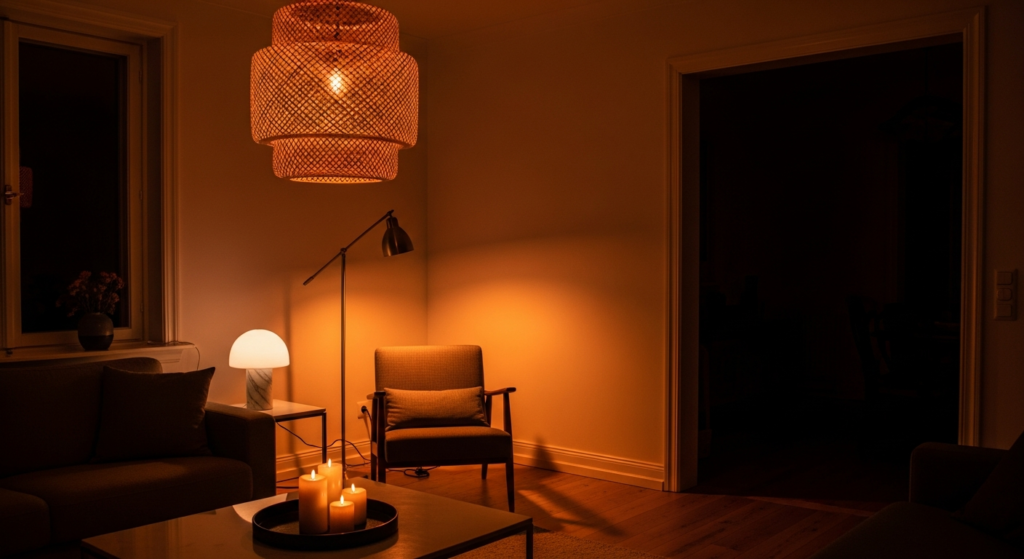
2. Layer Your Lighting — The Transformation That Costs Less Than a Sofa
If there is a single living room decor change that produces the most dramatic transformation relative to its cost and effort, it is the strategic layering of lighting. Most living rooms rely on a single overhead light source that simultaneously does too much and achieves too little — flooding the room with flat, characterless illumination that flattens texture, undermines atmosphere, and makes even the most beautifully decorated spaces feel clinical and unwelcoming.
Styling Tips:
- Design with three distinct lighting layers: ambient light for general illumination (a ceiling fixture or recessed lighting on a dimmer), task light for functional areas (a floor lamp beside a reading chair, a lamp on a work surface), and accent light for atmosphere and visual depth (table lamps, wall sconces, and candles).
- Replace any overhead lighting with a statement pendant or chandelier that contributes to the living room decor aesthetic rather than simply serving as a light source — the fixture itself should be beautiful enough to be considered decorative.
- Install dimmer switches on all ceiling and overhead fixtures — this single, inexpensive upgrade transforms the living room’s atmospheric capability more dramatically than almost any other single intervention.
- Choose all bulbs in the living room at a warm 2700K color temperature — this maintains the warmth of the space’s color palette and material qualities through evening hours when natural light no longer contributes.
- Add a floor lamp in a sculptural or architectural form in the room’s darkest corner — beyond its functional value, a quality floor lamp adds height, fills visual dead space, and contributes to the layered, editorial quality of well-dressed living room decor.
Layered lighting is the living room decor secret that professional interior designers protect most carefully — because once a client experiences the difference between flat overhead light and a beautifully layered room, they will never accept the former again.
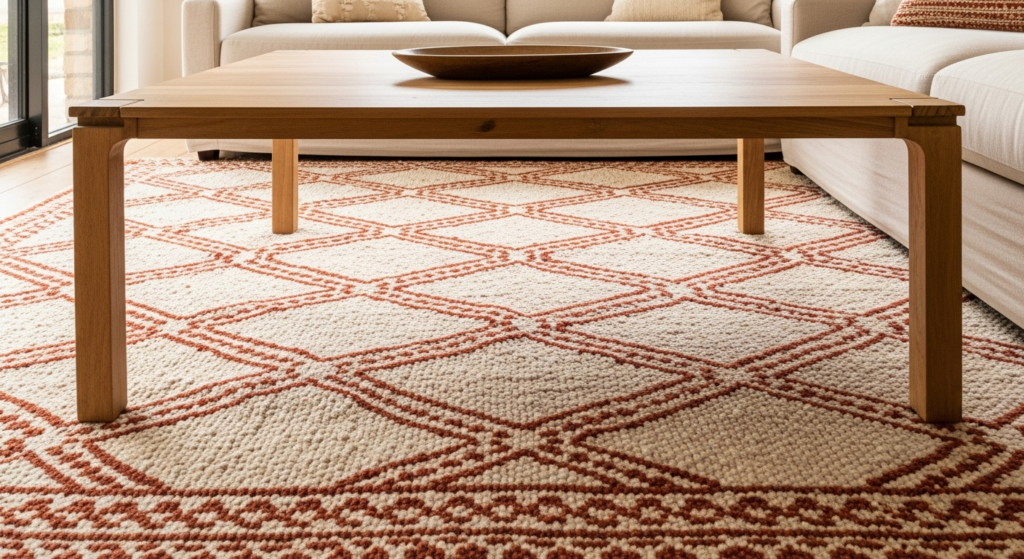
3. The Area Rug — Anchor, Scale, and the Foundation of Comfort
The area rug is one of the most underestimated and most consequential elements of living room decor — responsible simultaneously for anchoring the seating arrangement, defining the room’s spatial zones, adding the most significant texture element to the floor plane, and creating the fundamental sense of warmth and comfort that any genuinely beautiful living room requires.
Styling Tips:
- Size is the most critical area rug decision: in most living rooms, the rug should be large enough for all key seating furniture pieces to sit on it, or at minimum for all front legs to rest on the rug. A rug that is too small — particularly one that sits only beneath the coffee table — makes a room feel unanchored and disproportionate.
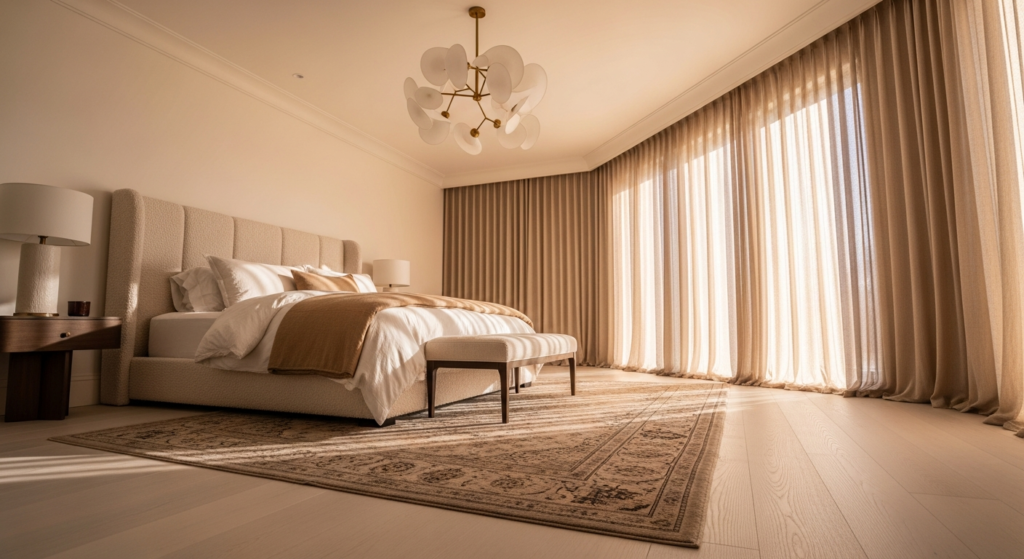
- Choose a natural fiber rug for the most beautiful and most durable living room decor result: a hand-knotted wool or wool-blend rug, a flat-woven kilim in warm tones, a jute or seagrass rug for a coastal or organic aesthetic, or a vintage-style Persian rug for a more layered, eclectic direction.
- In a neutral living room decor scheme, the rug can be the room’s single most expressive pattern element — a geometric, abstract, or traditional pattern in warm complementary tones adds visual richness without the permanence of wallpaper or painted color.
- Layer a smaller sheepskin, cowhide, or textured accent rug on top of a flat-woven or jute foundation rug to create the layered, hotel-lobby quality that makes living room floors look deeply styled and considered.
- Invest in rug pad underneath — it prevents slipping, extends the life of the rug dramatically, and adds a softness underfoot that bare rug-on-floor cannot achieve.
The right area rug is the living room decor element that transforms a collection of furniture into a room — the visual foundation that makes every other element feel as though it belongs exactly where it has been placed.
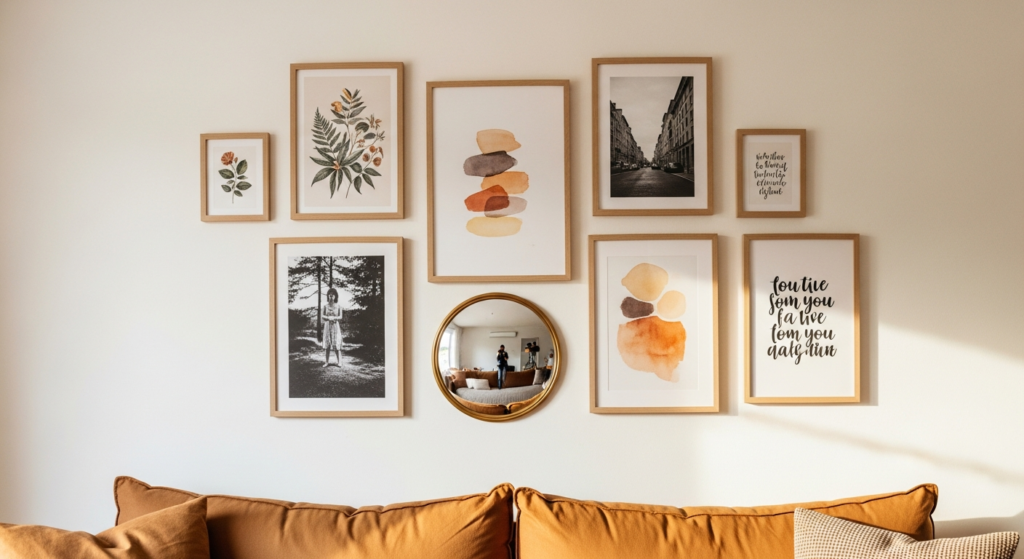
4. Create a Gallery Wall — Personal, Layered, and Endlessly Beautiful
A thoughtfully curated gallery wall is one of the most powerful, most personal, and most transformative living room decor ideas available — capable of turning a blank wall into the room’s most compelling visual feature without requiring expensive renovation or permanent architectural changes.
Styling Tips:
- Establish a single unifying element before selecting pieces: all frames in the same material finish (all black, all natural oak, all antique gold), a shared color palette across all artwork, or a consistent subject matter. This thread holds visually diverse pieces in coherent, considered relationship.
- Mix content types for maximum visual richness and personal depth: a fine art print beside a personal photograph beside an abstract watercolor beside a small mirror beside a typographic piece creates a gallery wall that is both visually dynamic and genuinely personal.
- Use kraft paper templates cut to the exact size of each frame, taped to the wall, to plan the arrangement before making a single hole — this investment of thirty minutes prevents hours of patching and repainting.
- Maintain consistent spacing between all frames — 2 to 3 inches regardless of the size variation of individual pieces — because consistent spacing is the technical distinction between a curated gallery wall and a collection of things hung without purpose.
- Start from the center and work outward, using the largest piece as the compositional anchor from which the surrounding pieces radiate. This creates a natural visual hierarchy that guides the eye through the arrangement with the ease of a well-designed page.
A gallery wall is the most honest form of living room decor — it fills a wall not with something beautiful in the abstract, but with the specific things that are beautiful to the specific person living here.
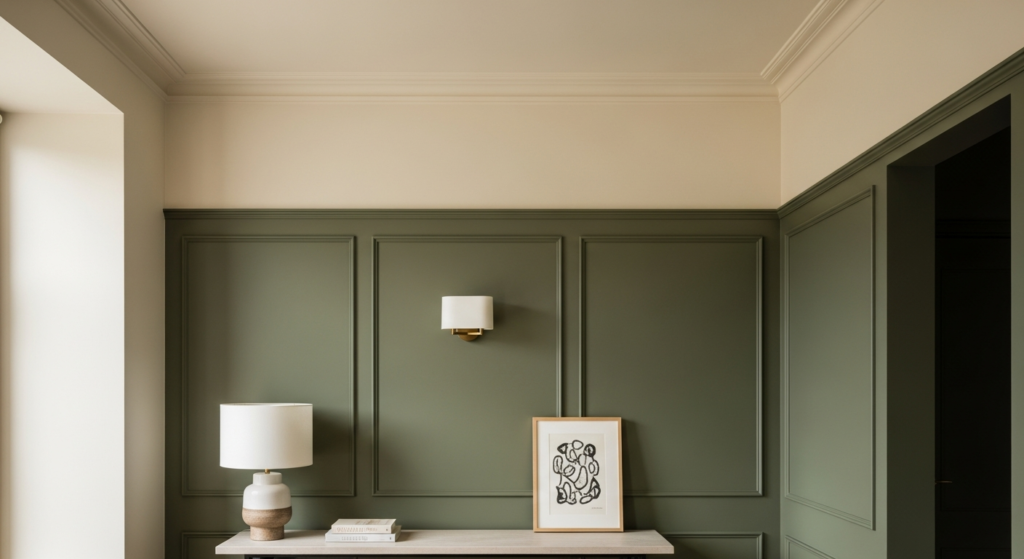
5. Introduce Architectural Interest with Decorative Moulding
Decorative moulding — picture rail, ceiling coving, wall panelling, or wainscoting — is one of the most overlooked and most powerfully transformative living room decor ideas for those willing to invest a moderate amount of effort in exchange for results that permanently and fundamentally elevate a space’s architectural quality.
Styling Tips:
- Wall panelling — whether installed as full wainscoting (chair-height wooden panels) or as contemporary flat-profile picture-frame moulding applied directly to the wall — adds the kind of architectural depth and visual weight that makes an ordinary room feel as though it was designed with genuine intention.
- Paint the moulding in the same tone as the wall for a sophisticated, tonal effect that adds texture and dimension without strong color contrast — a popular approach in contemporary Scandinavian and Japandi-influenced living room decor.
- Alternatively, paint the panelled lower section in a deeper tone than the upper wall for a two-tone effect that grounds the room visually and creates a distinctly elevated, architectural quality.
- Install picture rail at the traditional height (approximately 12 inches below the ceiling) and use it to hang artwork without drilling the walls — the practical benefit complements the architectural beauty of the rail itself.
- Ceiling coving or crown moulding, even in the most minimal profile, draws the eye upward, visually increases the sense of ceiling height, and adds a quality of permanence and finish that no other living room decor element can achieve.
Decorative moulding is living room decor that pays dividends indefinitely — an architectural investment that makes every single design decision within the room look more deliberate, more refined, and more deeply considered.
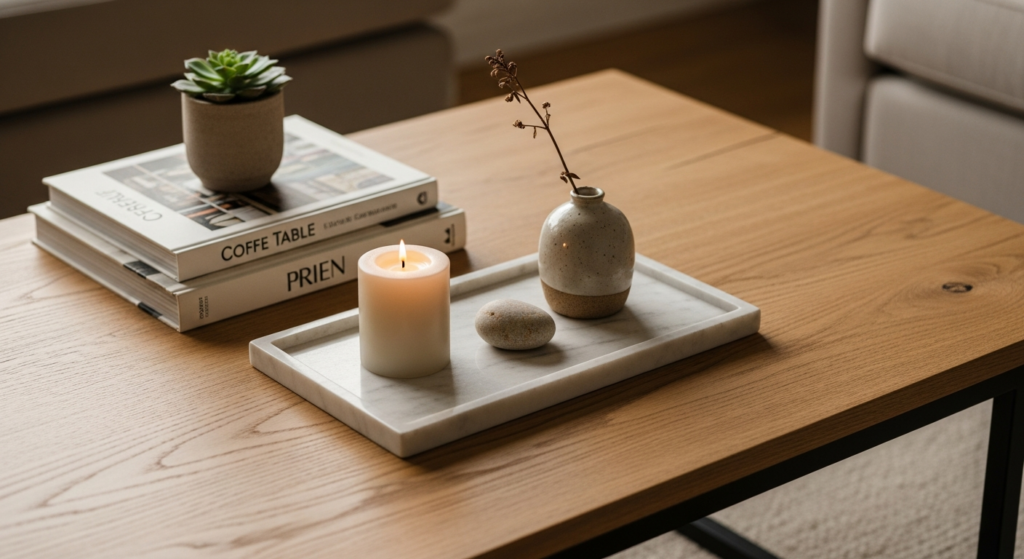
6. Style the Coffee Table — The Room’s Most Visible Stage
The coffee table surface is one of the most photographed and most frequently discussed elements of living room decor — the small, highly visible stage at the room’s center that communicates design intelligence through the quality, restraint, and intentionality of what is placed upon it.
Styling Tips:
- The most beautifully styled coffee tables follow the “rule of three”: three groupings of varying height — a tall element (a vase or plant), a medium element (a stack of beautiful books or a sculptural object), and a low element (a decorative tray or bowl) — create visual rhythm and hierarchy without appearing over-staged.
- A decorative tray functions as the coffee table’s organizing principle, gathering smaller objects into a cohesive grouping that reads as deliberate rather than scattered. Choose trays in natural materials: marble, brass, raw timber, or woven rattan.
- Coffee table books are one of living room decor’s most effective and most beautiful dual-function objects: they provide genuine reading pleasure while functioning as the most effortlessly stylish riser and surface for other objects in the arrangement.
- Include one living element — a small potted plant, a single stem in a bud vase, or a branch of seasonal foliage — to bring organic life and visual freshness to the styled surface.
- Edit ruthlessly and resist the instinct to fill every surface: a coffee table that is 60 to 70 percent filled reads as curated and intentional; one that is 100 percent filled reads as cluttered, regardless of the individual beauty of its components.
The coffee table style is where living room decor shows its intelligence most clearly — because it is the arrangement that must look simultaneously studied and effortless, personal and beautiful, full and uncluttered all at once.
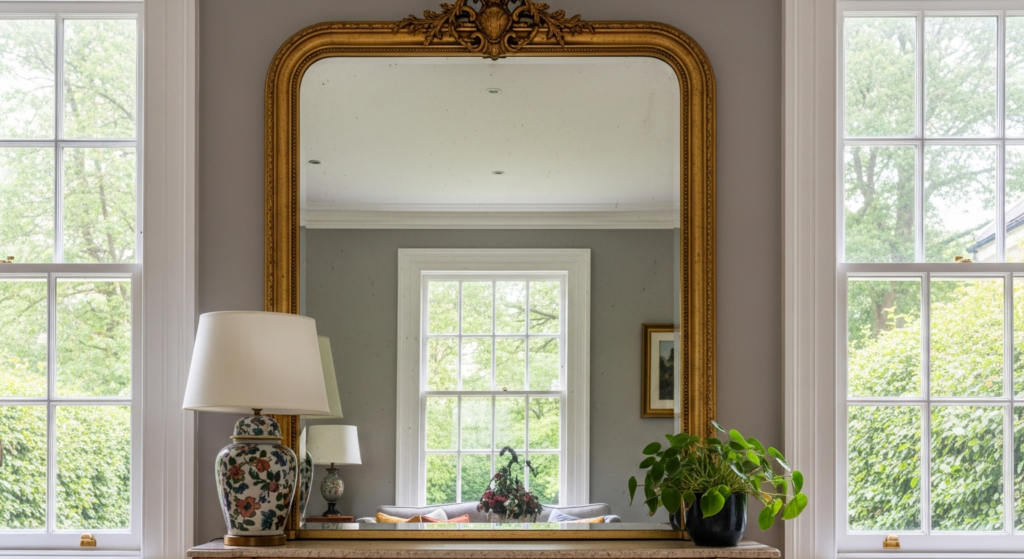
7. Use Mirrors Strategically — Light, Space, and Visual Magic
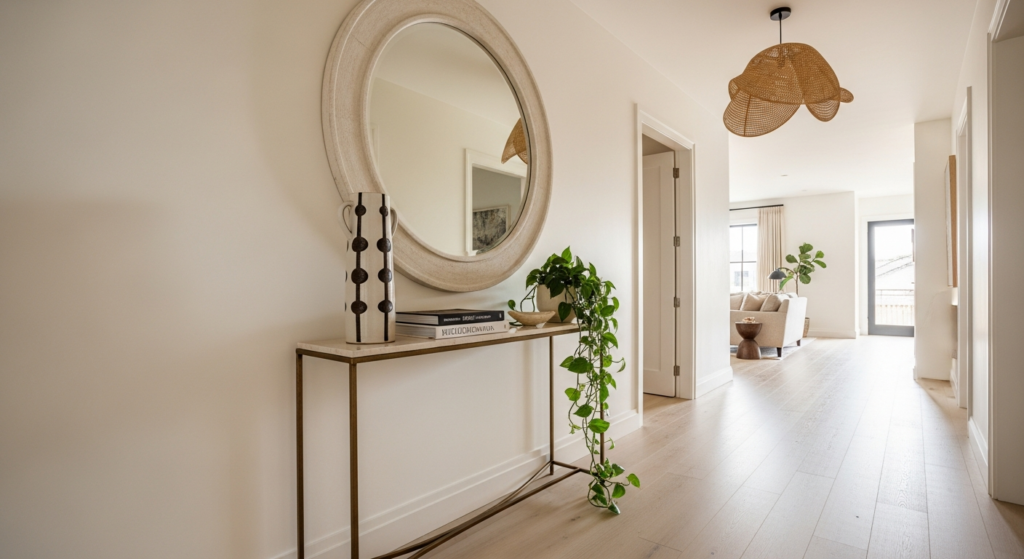
Mirrors are one of living room decor’s most powerful and most versatile tools — simultaneously capable of doubling the apparent light in a dark room, visually expanding the perceived dimensions of a compact space, creating a dramatic focal point on a bare wall, and reflecting the room’s most beautiful elements back at the people within it.
Styling Tips:
- Position the most important mirror directly opposite the room’s best natural light source — a window, a glass door, or a light well — to maximize the reflection of daylight deep into the room’s interior.
- Choose a mirror with a frame that contributes to the living room decor aesthetic: an ornate antique gold frame for a maximalist or traditional direction, a thin black metal frame for a contemporary or industrial aesthetic, a raw timber frame for a Scandinavian or biophilic approach, or a simple beveled frameless panel for a minimalist, architectural scheme.
- A large leaning mirror — one that stands from floor to ceiling or at least floor to mid-wall — is one of the most impactful and affordable living room decor interventions available for small spaces, creating the visual impression of a second room beyond the reflection.
- Group smaller mirrors of varying shapes and frames into a gallery-style wall arrangement for a decorative effect that adds both light reflection and visual complexity to an otherwise plain wall.
- Place mirrors at or slightly below eye level when seated — this ensures that the reflection includes the most beautiful elements of the opposite wall at the height from which the room is most frequently experienced.
Mirrors are the living room decor element that gives back more than they receive — filling a space with light, depth, and the reflected beauty of everything around them.
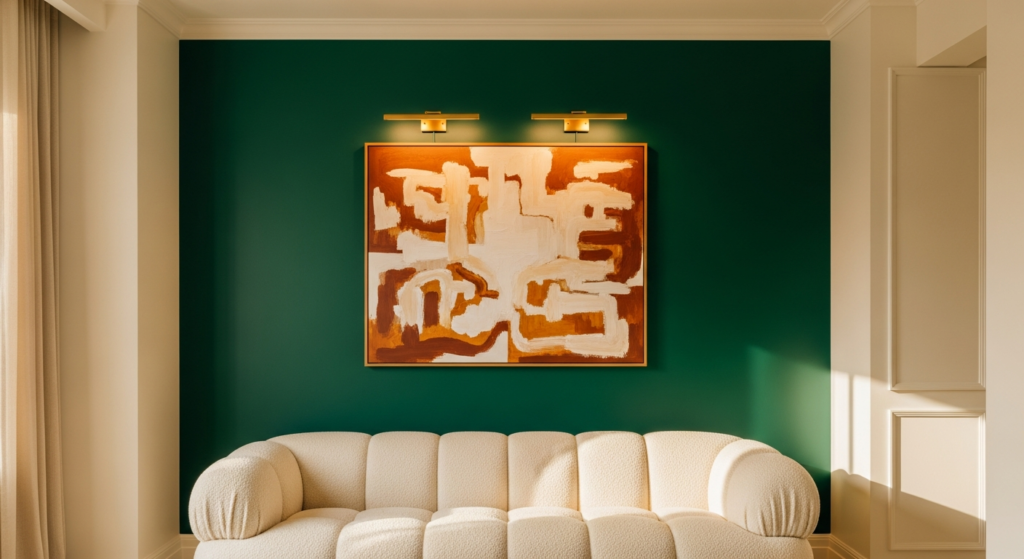
8. Add an Accent Wall — Bold Color, Beautiful Focus
The accent wall — one wall in a living room treated with a depth, richness, or material quality that distinguishes it from the room’s other surfaces — is one of the most transformative and most immediately impactful living room decor ideas available to those ready to commit to color or texture with genuine confidence.
Styling Tips:
- Choose the accent wall thoughtfully: the most effective accent walls are those behind the primary seating piece (the sofa wall), opposite the main entrance (so the statement is the first thing seen upon entering), or beside the fireplace (amplifying the room’s existing focal point).
- Deep, rich colors create the most compelling accent walls: midnight forest green, inky navy, warm charcoal, rich plum, and deep terracotta all produce a quality of visual depth and warmth that lighter tones simply cannot achieve.
- Beyond paint, accent walls can be created through wallpaper (a botanical print, a textured grasscloth, or a geometric pattern), timber panelling, stone cladding, or a large-scale artwork or gallery arrangement that treats the entire wall as a single curatorial statement.
- Paint the ceiling the same deep tone as the accent wall for a fully immersive, cocooning effect that transforms the entire room rather than simply adding a stripe of color to one surface.
- Balance the accent wall’s visual weight with the room’s opposite surfaces: if the accent wall is deep and dramatic, keep the remaining three walls in a light, complementary neutral that allows the accent to read clearly rather than creating a claustrophobic effect.
The accent wall is living room decor’s most decisive commitment — a single choice that changes the room’s entire emotional register and announces, with complete clarity, the design intention of everyone who lives there.
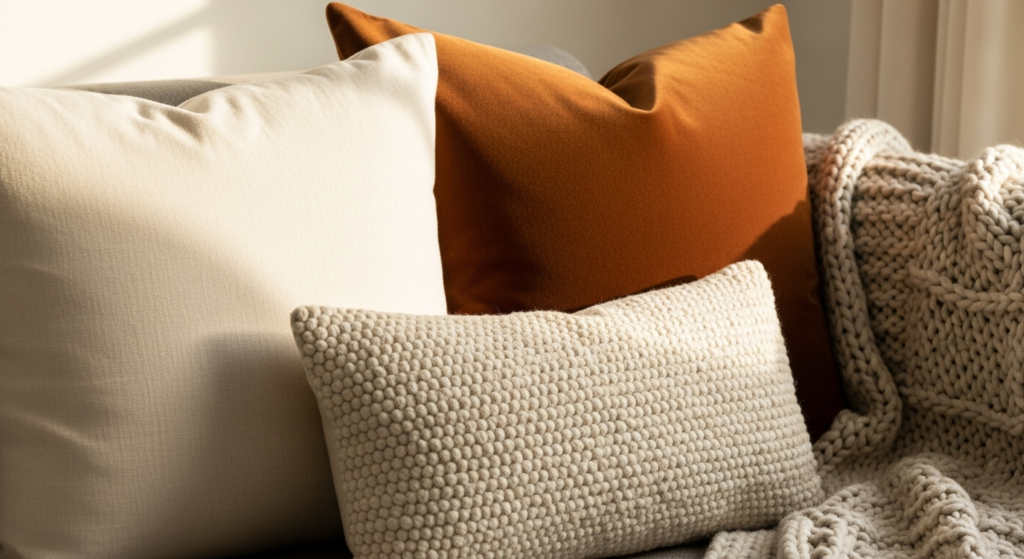
9. Embrace Textural Layering — The Secret of Rooms That Feel Expensive
The living rooms that feel most genuinely luxurious — the ones that photograph beautifully and feel even better to inhabit — are rarely the ones with the most expensive furniture. They are the ones with the most thoughtfully layered textures: the rooms where the eye and the hand find something new and satisfying to engage with at every turn.
Styling Tips:
- Introduce a minimum of five distinct textures into the living room decor scheme: a smooth surface (polished marble, glass, or lacquered timber), a rough surface (raw timber, exposed brick, or woven rattan), a soft surface (velvet, bouclé, or cashmere), a sheer surface (linen curtain panels, gauze, or fine cotton), and a matte surface (plaster walls, ceramic objects, or a wool rug).
- Vary textures most deliberately within the room’s most intimate zone — the sofa and coffee table area — where the variety will be most frequently encountered in close physical proximity.
- Natural materials provide the richest and most visually complex textures: timber grain, stone veining, woven rattan, and hand-thrown ceramic all contain the kind of irregular, organic complexity that no manufactured material can replicate.
- Avoid the common mistake of over-coordinating textures: a room where every soft surface is in the same fabric, every hard surface in the same material, and every object from the same collection reads as showroom-staged rather than genuinely lived in and beautifully decorated.
- Introduce one tactile element that is genuinely unexpected within the room’s overall scheme: a chunky hand-knit throw on a sleek modern sofa, a rough ceramic object on a polished marble surface, or a velvet cushion on a clean linen armchair — these deliberate contrasts are the moments that make a room feel genuinely, beautifully considered.
Textural layering is the living room decor technique that interior designers use more consistently than any other to create rooms that feel expensive, considered, and genuinely alive — because texture is what the room feels like, not just what it looks like.
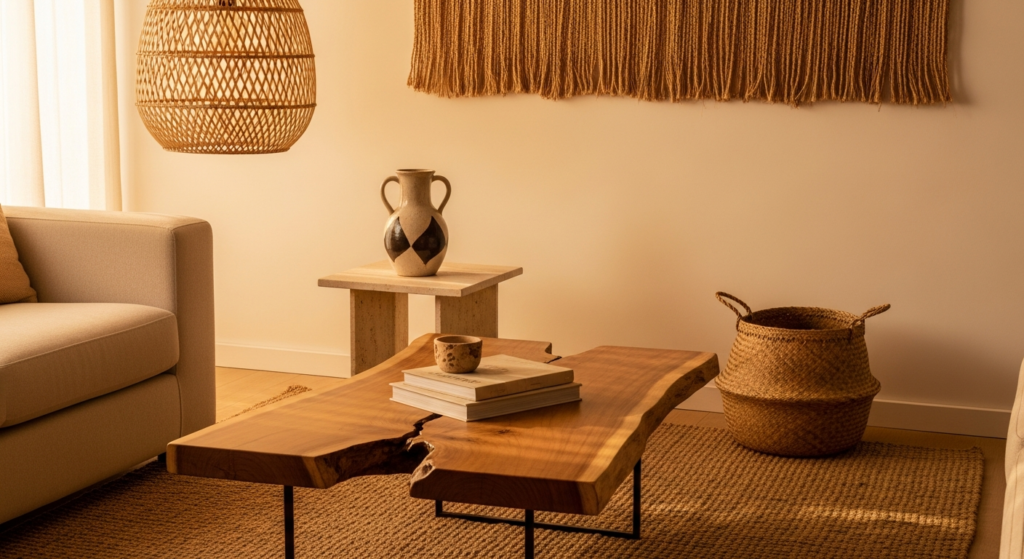
10. Bring in Organic Materials — The Warmth That Cannot Be Manufactured
The most enduringly beautiful living rooms share a commitment to organic, natural materials — timber, stone, rattan, linen, jute, wool, and handmade ceramics — that bring a warmth, depth, and authentic character to living room decor that no synthetic alternative can replicate. Natural materials age beautifully, improving with use, and connect the interior environment to the natural world in a way that is profoundly, instinctively calming.
Styling Tips:
- Introduce raw or natural timber through furniture legs, a coffee table, floating shelves, a wooden headboard in an adjacent space, or a statement timber-clad feature wall — natural wood grain is one of the most universally warm and visually rich materials in any interior.
- Add stone through surfaces and objects: a marble tray on the coffee table, a travertine side table, a slate hearth surround, or stone coasters clustered on a shelf introduce a mineral richness that anchors the living room decor in something genuinely ancient and beautiful.
- Choose rattan, wicker, and woven natural fiber for accent furniture, lighting, and storage: a rattan pendant light overhead, a wicker side table, seagrass or jute baskets on shelves create a cohesive natural material story throughout the room.
- Display handmade ceramic objects as deliberately as you would display fine art: a hand-thrown vase, a rough-glazed bowl, or a set of unmatched ceramic candle holders bring the warmth of human craft into the living room decor scheme.
- Incorporate natural botanical elements beyond potted plants: dried pampas grass in a ceramic vase, a branch of eucalyptus in a tall floor vase, or a woven dried botanicals wreath hung as wall art all bring organic life and texture to the living room without requiring ongoing care.
Organic materials are the living room decor element that time improves rather than diminishes — they develop character, patina, and beauty with use, becoming more beautiful precisely because a real life has been lived alongside them.

11. Curate Your Bookshelves — Storage as a Design Statement
The bookshelf is one of living room decor’s most revealing and most beautifully personal design elements — simultaneously a storage solution, a gallery of intellectual and aesthetic interests, and the most immediate visual clue to the character and passions of the person who lives in the room.
Styling Tips:
- The most beautifully styled bookshelves alternate between books, objects, and deliberately preserved empty space in roughly equal proportions — each element playing a distinct visual role: books for color and depth, objects for dimension and personal meaning, and empty space for the visual breathing room that elevates everything around it.
- Organize books in a combination of vertical stacking and horizontal piling — the horizontal stacks serve as risers for objects and create visual variety within the shelf’s vertical rhythm.
- Group books in color families rather than alphabetical order for a more visually cohesive result that reads as curated rather than simply organized.
- Introduce a variety of object scales on each shelf: a large ceramic vase beside a small figurine beside a candle creates visual rhythm; objects of identical size create monotony.
- Include one living element on every two shelves: a small trailing plant, a single stem in a bud vase, or a sprig of eucalyptus brings organic life into the shelf composition and prevents it from feeling static.
A beautifully styled bookshelf is living room decor’s most personal achievement — the arrangement that, more than any other element in the room, tells a visitor exactly who you are, what you care about, and how you see the world.
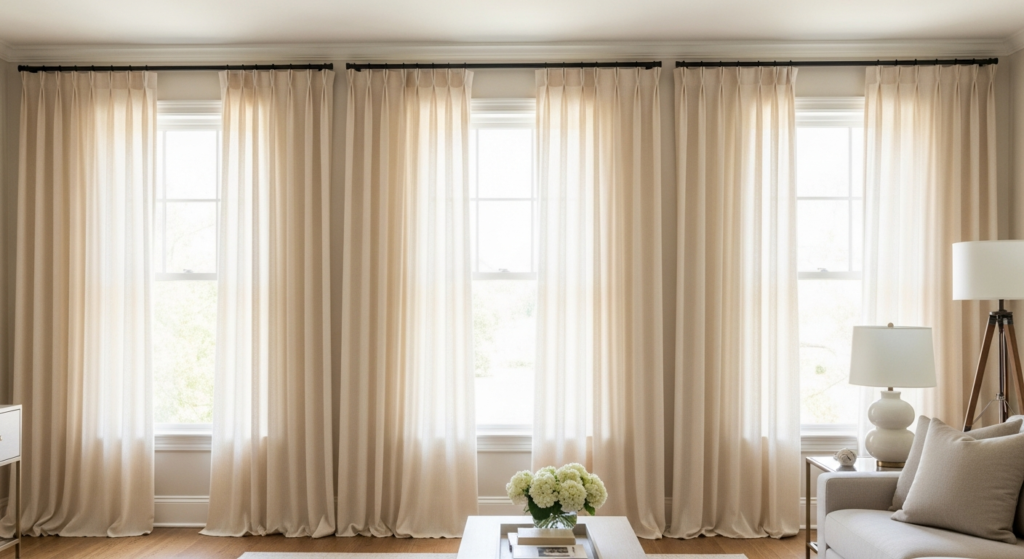
12. Choose the Right Curtains — Frame, Soften, and Complete
Curtains and window treatments are among the most powerful yet most frequently underinvested elements of living room decor — capable of dramatically changing the room’s proportions, warmth, light quality, and overall aesthetic when chosen and installed with genuine care.
Styling Tips:
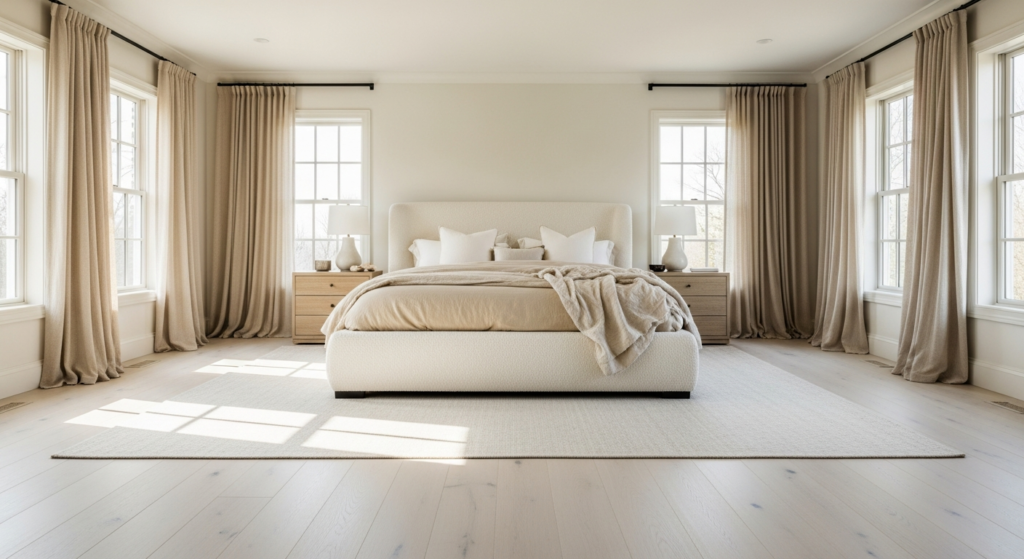
- Hang curtain rods as high as possible — ideally at ceiling height or within 2 to 4 inches of the ceiling — regardless of where the window frame actually ends. This single styling decision makes any window look taller, any room feel larger, and any ceiling feel higher than it actually is.
- Extend the curtain rod 8 to 12 inches beyond the window frame on each side, so that the curtains frame the window without covering it when open — allowing maximum natural light into the room while creating the visual impression of a much larger window.
- For most living room decor aesthetics, floor-length curtains that either just graze the floor or pool very slightly create the most elegant and visually generous result — never hang curtains that stop above the floor, as this visually shortens both the window and the wall.
- Choose curtain fabrics that serve the room’s light and privacy needs: sheer linen panels allow natural light to filter beautifully while providing daytime privacy; blackout panels layered behind sheers provide complete privacy and darkness when needed; velvet or heavy linen panels add warmth, sound dampening, and visual weight to rooms that need both.
- Select a curtain color that either closely matches the wall tone (for a quiet, architectural result) or provides one of the room’s most considered color statements (a deep forest green, a warm rust, or a rich navy creating a frame for the window that functions as an accent wall in fabric form).
The right curtains complete a living room decor scheme the way the right frame completes a painting — adding the final, essential edge that makes everything within it look more deliberate, more finished, and more genuinely beautiful.
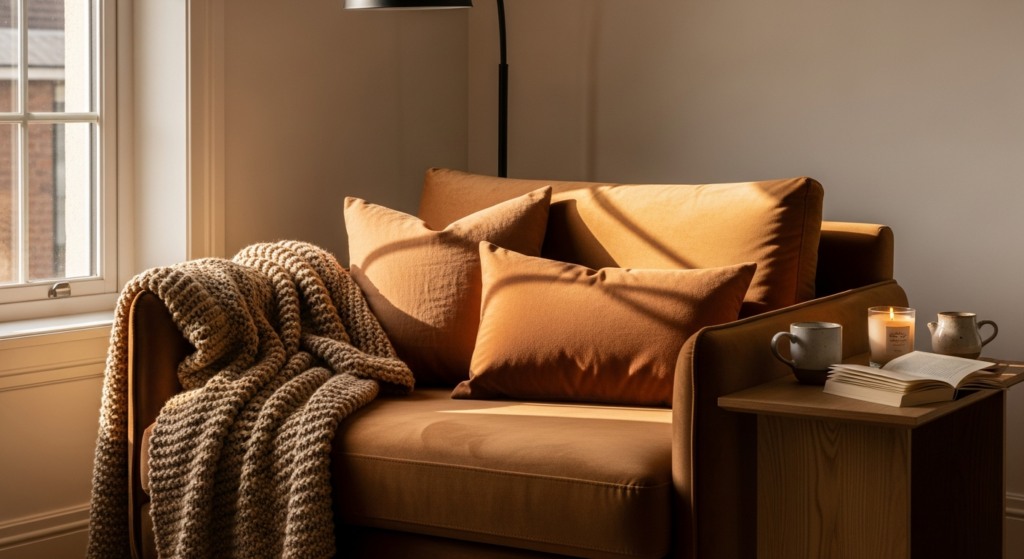
13. Design a Reading Nook — Intimate, Functional, and Irresistibly Comfortable
A thoughtfully designed reading nook within the living room is one of the most beloved and most pinned living room decor ideas of the present moment — a recognition that the most beautifully designed homes create specific, intentional zones for specific, intentional activities, rather than expecting a single large space to serve all purposes equally well.
Styling Tips:
- Choose a corner, an alcove, or the space beside a window as the nook’s location — natural light is the reading nook’s most essential design element, and proximity to a window source makes the space genuinely functional as well as visually beautiful.
- Choose a chair that is exceptional in both comfort and aesthetic: an oversized armchair with generous depth and rounded arms, a wingback chair in a rich upholstery, or a chaise longue positioned to face the window — the reading nook’s primary piece must be, above all else, genuinely comfortable enough to spend hours within.
- Layer the chair with a generously sized throw and two to three cushions that add both physical comfort and the visual softness that transforms a chair into a nook.
- Install a floor lamp or wall-mounted reading light that provides focused, warm illumination without requiring ceiling fixtures — the reading nook should feel independent and intimate, with its own dedicated light source.
- Style the surrounding area with a small side table (for a cup of tea, a candle, and a current book), a small basket for throws and additional books, and one personal object that makes the corner feel genuinely yours.
The reading nook is the most personally generous living room decor idea in this guide — a small but profound act of designing for actual human pleasure rather than for visual impression alone.
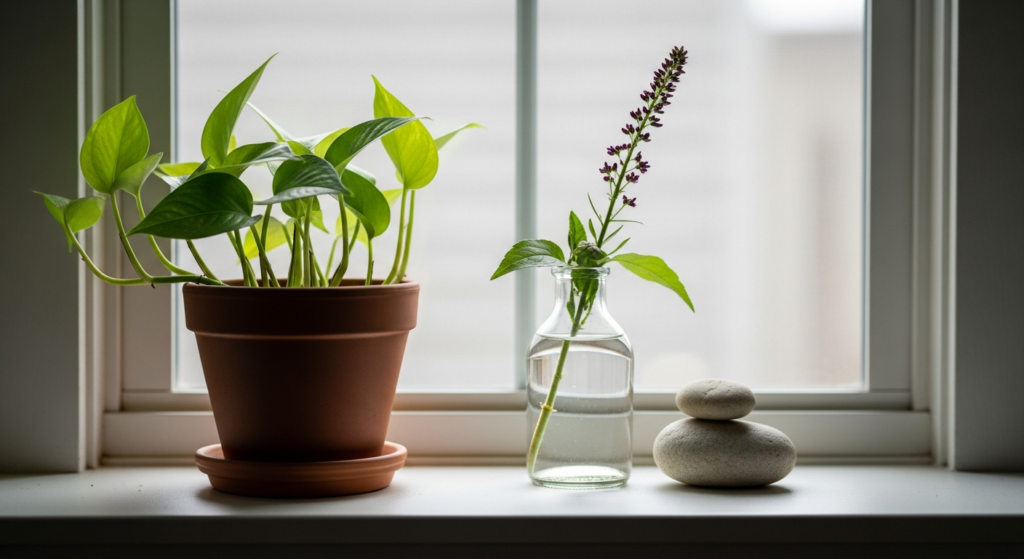
14. Style the Windowsill — The Most Overlooked Decorative Surface
The windowsill is one of living room decor’s most consistently overlooked and most genuinely rewarding surfaces — a built-in display ledge that sits in the room’s best natural light and provides the perfect conditions for both living plants and considered still-life arrangements.
Styling Tips:
- Prioritize plants on windowsills that receive direct or bright indirect light — succulents and cacti on south-facing sills, ferns and trailing pothos on east-facing windows, and flowering plants on north-facing sills in warmer months.
- Beyond plants, the windowsill is an ideal location for a small, beautiful still-life arrangement: a single ceramic object, a clear glass vase with a seasonal cutting, and one natural element (a small stone, a piece of coral, a smooth river pebble) together create a composition that changes with the light throughout the day.
- In a kitchen or informal living area, a windowsill herb garden — small terracotta pots of basil, rosemary, thyme, and mint — adds sensory life (fragrance as well as visual beauty) to the living room decor scheme.
- Avoid cluttering the windowsill with practical objects that should live elsewhere: the windowsill is a decorative surface and a light surface — practical items undermine both its aesthetic contribution and its natural light-distributing function.
- Consider a window seat if the sill depth and structural conditions allow — a built-in window seat with cushion and storage transforms the entire architectural zone of the window into the room’s most beloved and most photographed feature.
The windowsill is the living room decor surface that requires the least investment and rewards the most attention — it is already in the room’s best light, already at the most human scale, and already perfect for the arrangement of beautiful small things.
15. Edit Ruthlessly — The Most Important Living Room Decor Principle of All
Every living room decor guide eventually arrives at the same fundamental truth: the rooms that feel most beautiful are not the most filled ones. They are the most edited ones. The spaces where every object, every piece of furniture, and every decorative element has been examined honestly and kept only because it genuinely belongs there.
Styling Tips:
- Apply the edit principle seasonally rather than waiting until the room feels overwhelmingly cluttered: remove one object from every surface and shelf twice a year, and observe whether the room feels lighter, more balanced, or more beautiful in the absence of what was removed.
- The test for any living room decor object is three questions: Is it beautiful? Is it meaningful? Does it serve a function? An object that answers yes to at least two of these three questions earns its place. An object that cannot answer yes to any of them should not be in the room.
- Resist the impulse to fill every empty space — the negative space in a well-designed room is as intentional and as valuable as the objects within it. Empty space is not an absence of decoration; it is decoration’s most sophisticated expression.
- When a room feels visually restless or cluttered, remove rather than rearrange — the impulse to reshuffle existing objects rarely addresses the fundamental issue, which is usually that there are too many objects rather than that they are in the wrong positions.
- Consider rotating objects seasonally: storing some pieces and replacing them with others means that the living room decor always feels fresh and considered rather than permanent and stale, and that every object in the room is currently earning its place.
Ruthless editing is the living room decor principle that separates genuinely beautiful rooms from merely decorated ones — the understanding that the most powerful design statement is not the addition of one more extraordinary thing, but the removal of everything that was preventing the extraordinary things from being seen.
Conclusion
A beautiful living room is built one decision at a time.
Not one renovation at a time, not one shopping trip at a time, but one decision — one piece of furniture chosen with genuine care, one layer of lighting added to a dark corner, one shelf edited down to only the objects that truly belong there.
The 15 living room decor ideas in this guide are not a checklist to complete. They are a vocabulary to develop — a set of design principles and practical techniques that, applied with patience and growing confidence, will transform your living room into the most beautiful, the most personal, and the most genuinely welcoming space it has ever been.
Start with the idea that excites you most. Implement it with intention. Observe carefully how the room responds.
And then choose the next one.
Because the most beautiful living rooms are not designed in a day — they are grown, slowly and lovingly, by people who care deeply about the spaces they come home to.
FAQs
Q1: What are the most impactful living room decor ideas for a complete transformation? The three living room decor changes with the highest visual impact relative to cost and effort are: replacing flat overhead lighting with layered warm-toned lamps on dimmers; choosing or replacing the area rug with one large enough to anchor the entire seating group; and creating a gallery wall or introducing a deep accent wall color behind the primary sofa. These three changes together transform a room’s atmosphere, proportions, and personality more dramatically than almost any other combination of interventions.
Q2: How do I decorate a living room on a tight budget? The most effective living room decor upgrades on a limited budget include: rearranging existing furniture to create better flow and focal point organization; adding plants in inexpensive terracotta pots for immediate organic warmth; installing dimmer switches and replacing existing bulbs with warm-toned alternatives; shopping vintage and second-hand markets for a statement mirror, a set of art prints, or a quality area rug; and introducing new cushion covers and a quality throw to refresh the sofa without replacing it.
Q3: What size area rug should I use in my living room? As a general guideline, the living room area rug should be large enough for all front legs of seating furniture to rest on it — or, ideally, for the entire seating group to sit within the rug’s perimeter. In a standard living room, this typically means a minimum rug size of 8 by 10 feet or 9 by 12 feet. A rug that is too small — floating beneath only the coffee table with furniture legs entirely off its surface — is one of the most common and most visually disruptive living room decor mistakes.
Q4: How do I make a small living room look bigger with decor? The most effective living room decor strategies for visually expanding a compact space include: using a cohesive light-toned color palette across walls, furniture, and soft furnishings; hanging curtains at ceiling height with extended rods to make windows appear larger; placing a large mirror directly opposite the room’s primary light source; choosing low-profile furniture that keeps the visual center of gravity close to the floor; and avoiding over-cluttering surfaces, which contracts the perceived dimensions of a space more than almost any other single factor.
Q5: What is the most timeless living room decor style? The most consistently beautiful and most genuinely timeless living room decor approaches are those rooted in enduring design principles rather than moment-specific trends: warm minimalism (quality natural materials, restrained palette, layered texture), mid-century modern (honest craftsmanship, organic form, warm material palette), and the eclectic but cohesive “curated home” approach (a unified color palette holding together objects from different eras and origins). These aesthetics share a commitment to quality, intention, and the honest expression of personal taste — the three qualities that no design trend can render obsolete.