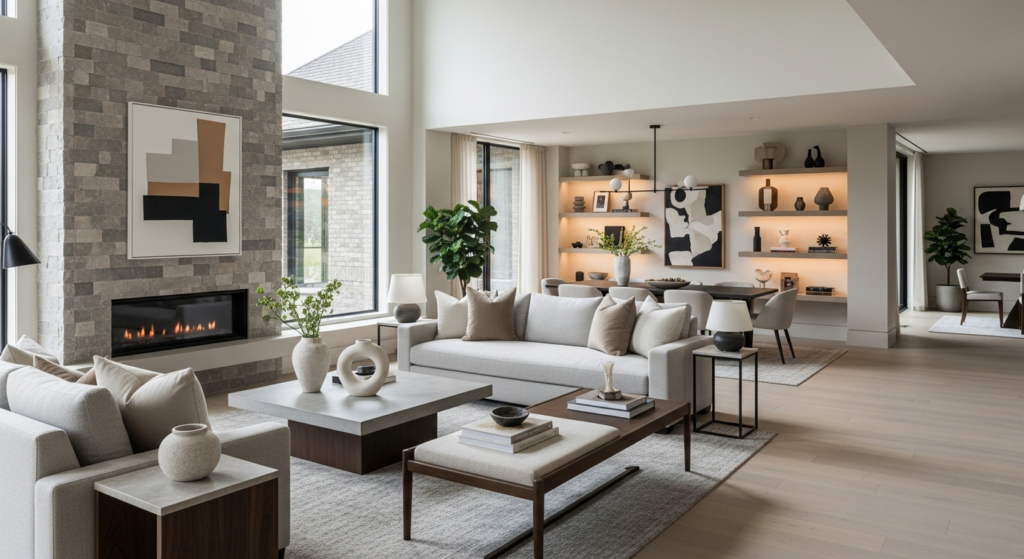
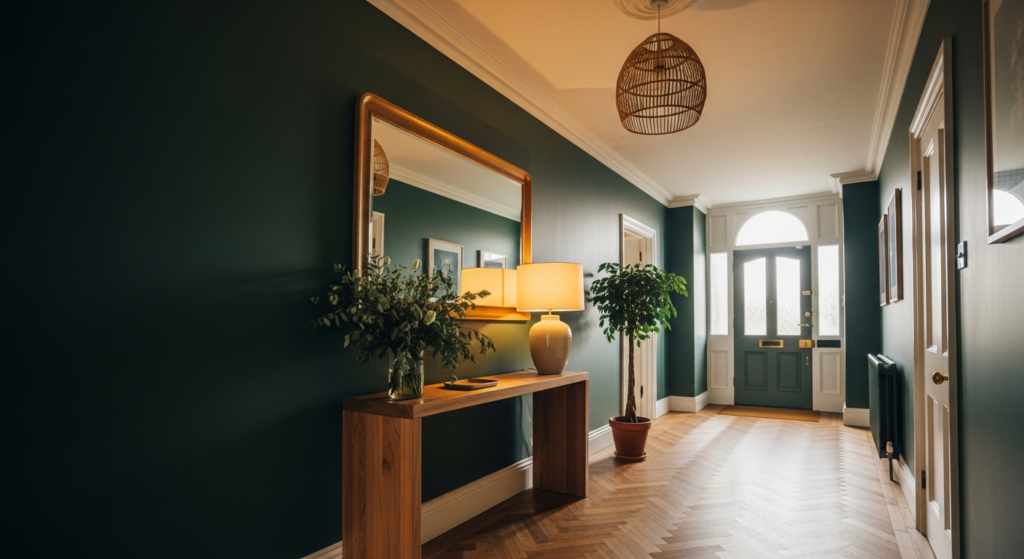
Introduction
The hallway is the first sentence of your home’s story.
Before a guest sees the living room, the kitchen, or the carefully styled spaces beyond, they experience the hall — its light, its colour, its proportions, its warmth, and the immediate, instinctive impression it creates of the home and the people who inhabit it. A beautiful hall interior communicates everything about what lies beyond it — taste, warmth, intentionality, and a genuine love of the space being lived in.
Yet the hallway is the room most consistently overlooked in the interior design process. It is the space treated as purely transitional — a corridor to pass through rather than a room to inhabit — and in that oversight, one of the most powerful design opportunities in the entire home is consistently lost.
In 2025, the most inspiring hall interior ideas are those that treat the entryway as the genuine design statement it has always been — the room that sets the tone, establishes the palette, and tells the visitor, before a single word has been spoken, exactly the kind of home they have been invited into.
These thirteen hall interior ideas will transform the most overlooked room in your home into one of its most beautiful and most considered spaces.
1. Create a Strong Colour Statement in the Hallway
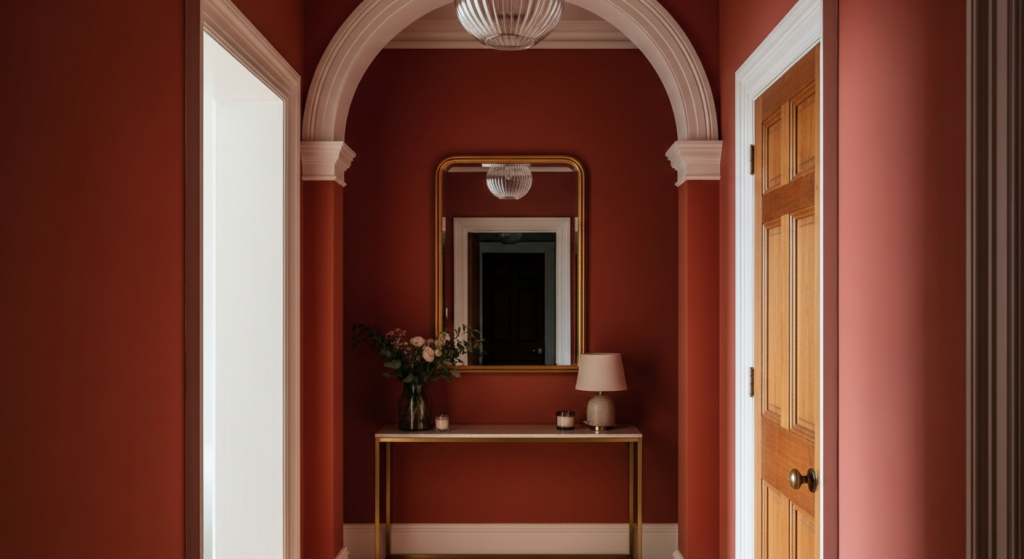
The hallway is one of the most powerful rooms in the home for a genuinely bold colour statement — precisely because it is a transitional space that is experienced briefly rather than inhabited for hours. A dramatic, richly considered wall colour in the hall creates an immediate impact that sets the tone for the entire home without the commitment that the same colour on a living room or bedroom wall would require.
Styling Tip: Consider deep, rich tones for the hall interior — a warm forest green, a rich terracotta, a deep navy, a dramatic charcoal, or a warm rust — that create genuine visual impact upon entry. Pair the statement wall colour with complementary trim in a clean white or warm ivory for architectural definition. Add warm lighting to prevent deep tones from appearing heavy or dark — a quality pendant light and a well-placed mirror that reflects light back into the space are essential companions to a bold hall colour.
A bold hall colour also creates a beautiful transition moment — the drama of the entrance gives way to calmer tones in the rooms beyond, creating a sense of arrival and progression that sophisticated interior design uses deliberately and effectively.
2. Install a Dramatic Statement Light Fixture
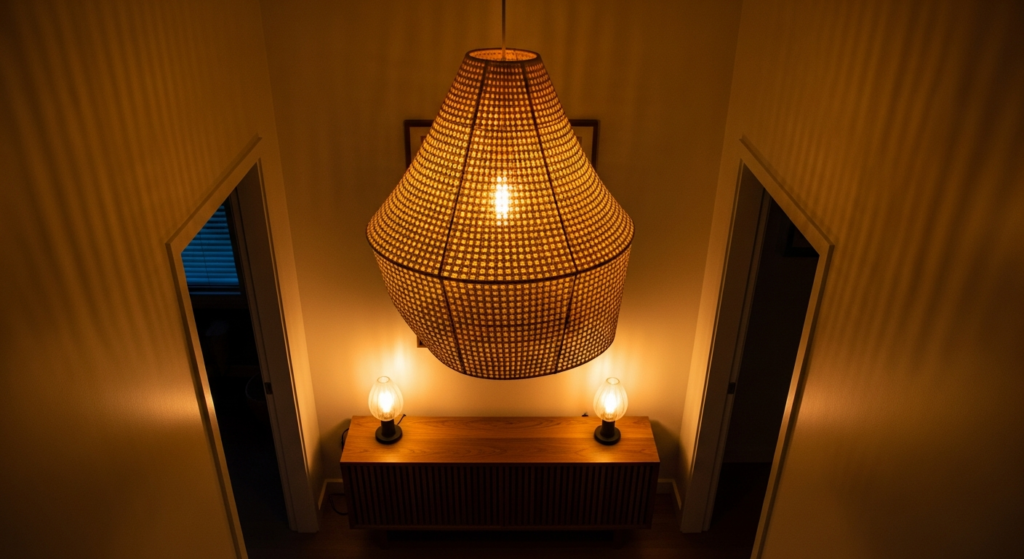
The hall interior light fixture is the first decorative element a visitor encounters — and its quality, its character, and its warmth communicate the design intelligence of the entire home in a single, immediate impression. A genuinely beautiful statement light in the hallway is one of the highest-return interior investments available.
Styling Tip: Choose a hall light fixture that is proportionally generous relative to the space — hallway light fixtures are almost universally chosen too small, creating a tentative, unresolved quality that diminishes the visual authority of the space. In a standard height hall, a pendant or semi-flush fitting that hangs to approximately two metres from the floor creates the most impactful and most welcoming light. In a tall or double-height hall, a dramatic chandelier or elongated pendant becomes a genuine architectural feature of extraordinary visual power.
Always use warm-toned bulbs in hall lighting — 2700K to 3000K — and install a dimmer switch for evening use. The warm, glowing quality of a beautiful hall light at dusk is one of the most welcoming and most deeply atmospheric of all interior design moments.
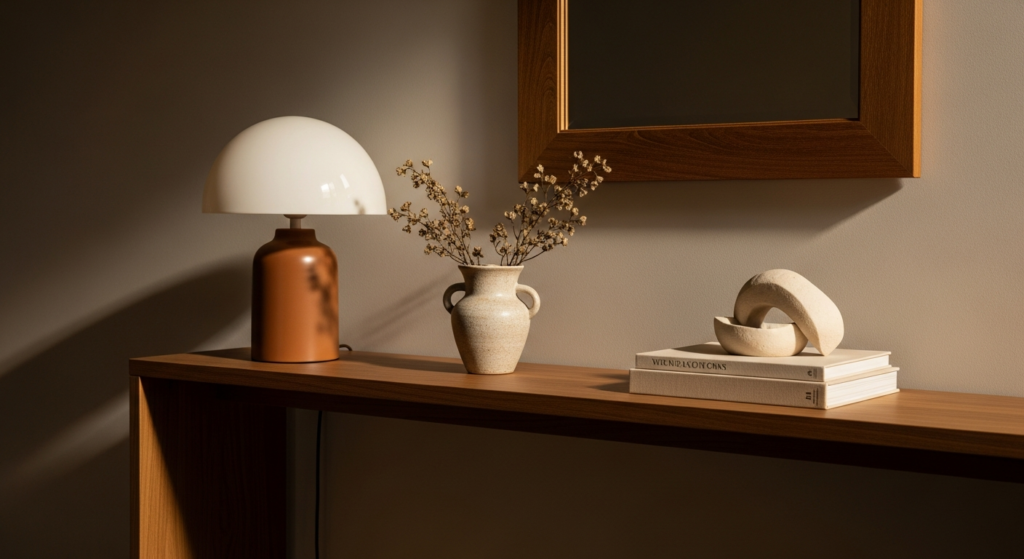
3. Add a Console Table for Style and Function
A quality console table in the hallway is the most versatile and most design-impactful piece of furniture available in the hall interior — simultaneously providing essential functional surface space and creating the room’s primary styling opportunity. A beautifully chosen and beautifully styled console transforms the hallway from a corridor into a considered interior space.
Styling Tip: Choose a console table in a material and style that sets the tone for the interior aesthetic of the entire home — a solid timber console for a warm, organic aesthetic; a marble-topped console for a more luxurious, contemporary quality; a painted console in a complementary colour for a more decorative, personality-driven result. Style the surface with a maximum of five objects — a quality lamp, a small mirror or artwork, a ceramic vessel, a small plant, and one personal or decorative object. Resist the accumulation of practical items — keys, mail, and everyday objects belong in concealed storage, not on the styled console surface.
The console table is also the natural location for a quality mirror — placed above or beside it — that serves the dual practical and design purpose of checking one’s appearance before leaving and reflecting light deeper into the hall.
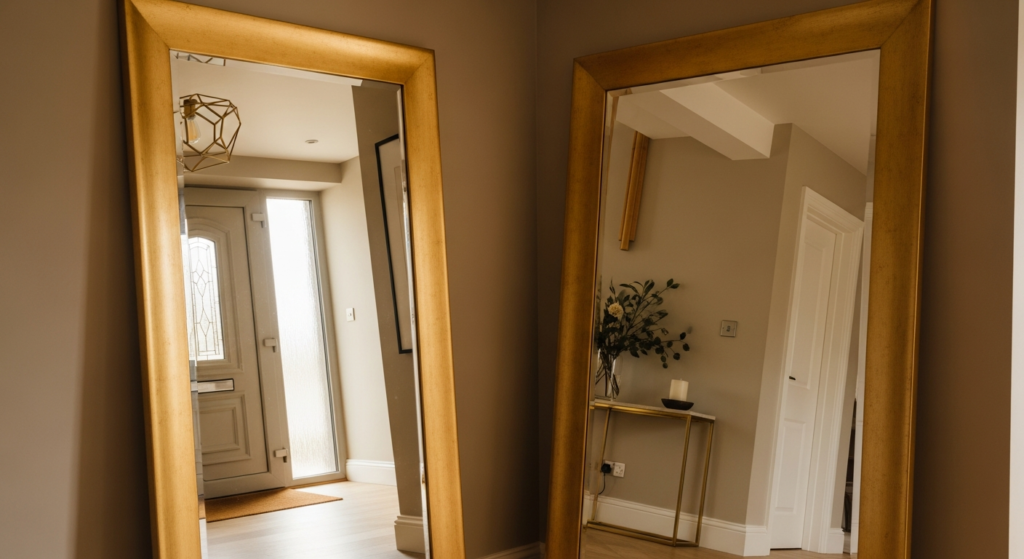
4. Use Mirrors Strategically to Expand Light and Space
A beautifully chosen mirror in the hall interior is the single most impactful and most immediately transformative addition available for any hallway regardless of its size, proportion, or existing design quality. It reflects light, creates the illusion of greater space, adds a decorative focal point, and serves the most fundamentally practical purpose of any hall furnishing — allowing a final appearance check before leaving the house.
Styling Tip: Choose a hall mirror that is generously proportioned relative to the wall space available — a large, substantial mirror always creates a more beautiful and more effective result than a small, tentative one. Position the mirror on the wall opposite or adjacent to the primary light source — a window, a skylight, or a quality pendant — for the most effective light reflection and the most dramatic sense of spatial expansion. Consider the frame as carefully as the mirror itself — a warm gold, natural timber, or sculptural frame becomes a genuine design object as much as a functional one.
A full-length mirror leaned against a hall wall creates an immediately editorial, contemporary aesthetic that works beautifully in both minimal modern and more layered, eclectic hall interior styles.
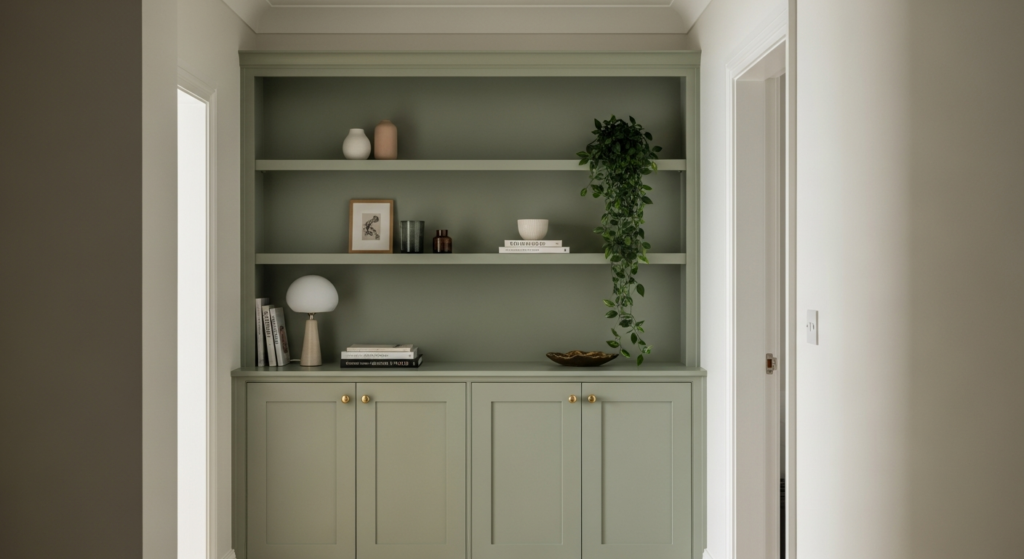
5. Incorporate Practical Built-In Storage
The most beautifully designed hallways are also the most effectively organised ones — because clutter is the single greatest obstacle to the aesthetic quality of any interior, and the hallway is the room most naturally prone to the accumulation of practical daily clutter. Considered, built-in storage that contains this clutter elegantly is therefore as much a design investment as any decorative element.
Styling Tip: Built-in cabinetry along one wall of the hallway — painted in the same tone as the walls for a seamless, architectural quality, or in a complementary accent colour for additional visual interest — provides concealed storage of extraordinary capacity while creating a clean, considered design feature. If built-in cabinetry is not possible, a freestanding bench with integrated storage beneath, a slim console with closed drawers, or a quality coat rack combined with a shoe cupboard all provide practical storage with genuine aesthetic contribution to the hall interior.
The most effective hall storage conceals the majority of its function — hooks, shelves, and open storage should be reserved for the most beautiful and the most curated of the hall’s contents, while everything else is contained and concealed behind closed doors.
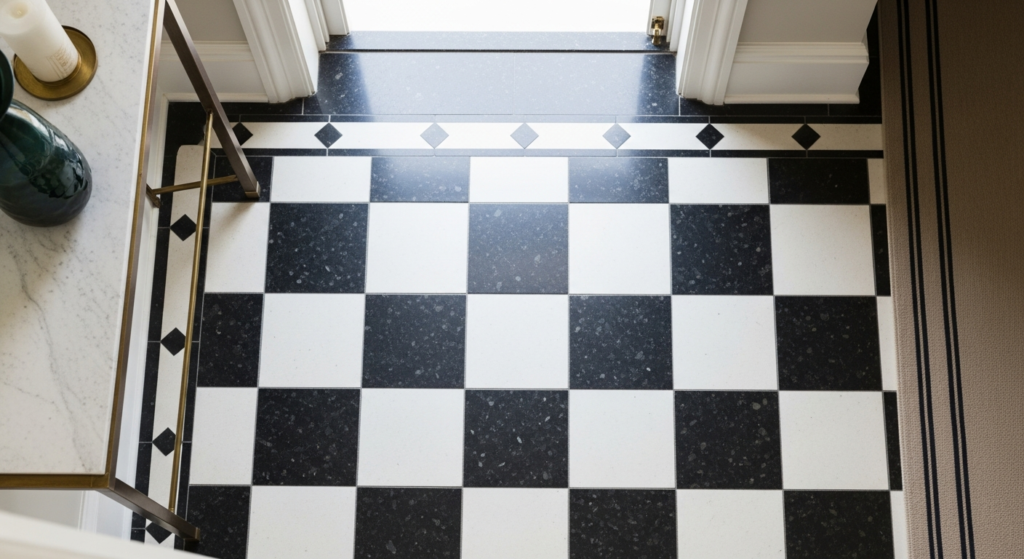
6. Lay Statement Floor Tiles for Immediate Impact
The hall floor is one of the most visible and most impactful design surfaces in the entire home — experienced at eye level upon entry and covering the full footprint of the hallway in a single, continuous visual statement. A beautifully chosen hall floor tile or flooring material communicates design ambition and aesthetic intelligence from the very first moment of arrival.
Styling Tip: Consider statement floor tiles in the hallway that you might not use throughout the rest of the home — a classic black and white checkerboard for timeless elegance, a warm terracotta encaustic tile for Mediterranean warmth and character, a geometric Moroccan-inspired pattern for a more maximalist and personality-driven aesthetic, or a simple large-format pale stone tile for clean, contemporary luxury. The hall floor tile becomes a design signature — a deliberate and beautiful first introduction to the aesthetic of the home.
Ensure the transition between the hall floor material and the flooring of the adjacent rooms is considered and resolved — a quality threshold bar or a deliberate material change line creates a clean, intentional transition that enhances rather than interrupts the flow of the design.
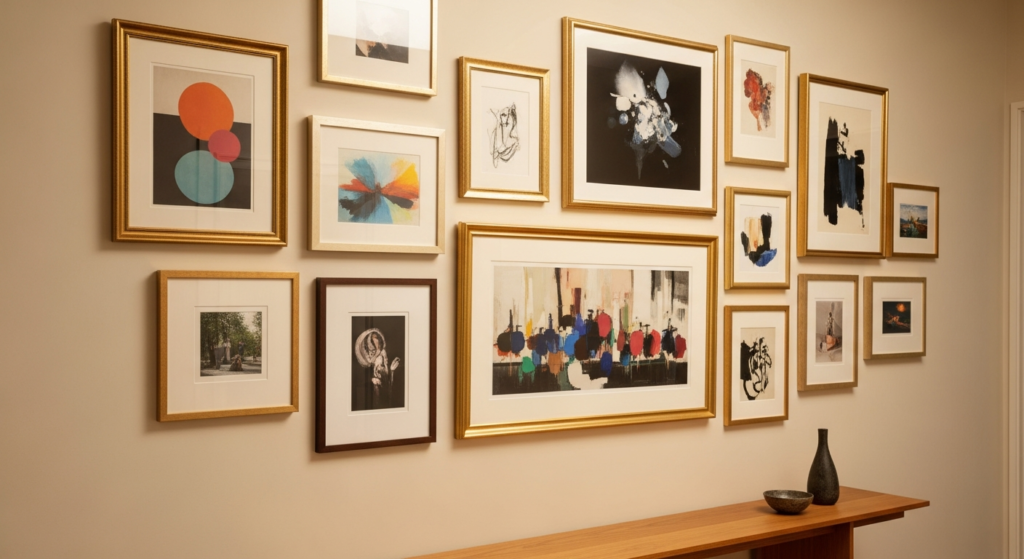
7. Create a Gallery Wall in the Hallway
A curated gallery wall in the hall interior transforms what might otherwise be a plain transitional corridor into a deeply personal and genuinely engaging visual experience — an exhibition of the inhabitant’s taste, history, relationships, and aesthetic values that a visitor encounters and explores from the moment of arrival.
Styling Tip: A hall gallery wall is most beautiful when it is genuinely curated — edited from a larger collection of images and objects to include only those with genuine aesthetic or personal significance. Mix frame sizes and orientations — portrait and landscape, large and small — while keeping the frame tone consistent throughout the arrangement. All black frames, all natural timber, or all warm gold creates a cohesive quality that prevents the gallery wall from appearing accumulated rather than designed. Layout the complete arrangement on the floor before committing a single nail to the wall.
A hall gallery wall looks most beautiful with consistent mat sizing and border widths within individual frames — this small detail creates a quality of presentation that transforms a domestic photograph collection into something that approaches the considered quality of a professional gallery exhibition.
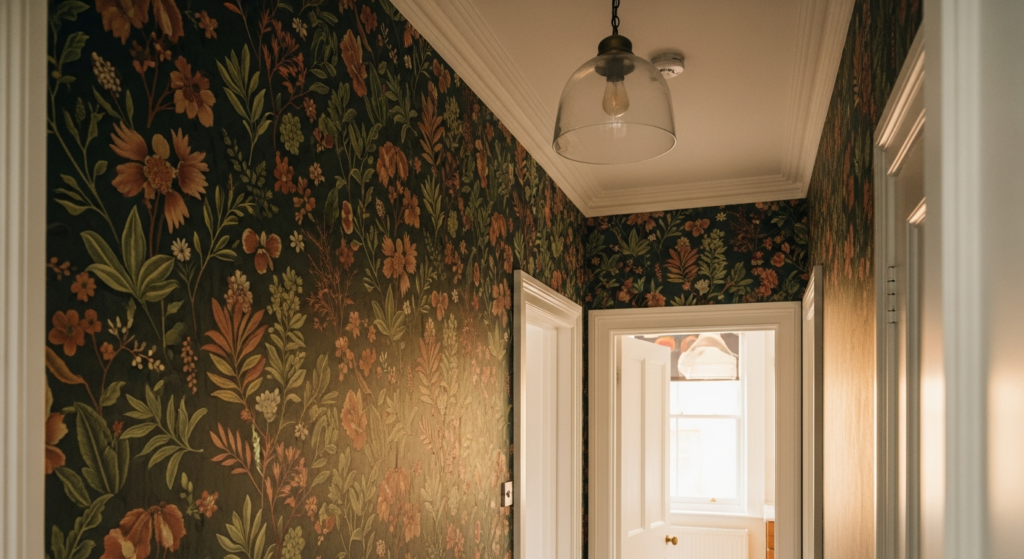
8. Introduce Wallpaper for Personality and Depth
Wallpaper in the hall interior is one of the most immediately impactful and most personality-rich design choices available — and the hallway, as a transitional space experienced briefly rather than continuously, is one of the most appropriate and most rewarding rooms in the home for a genuinely bold, expressive wallpaper selection.
Styling Tip: Choose a wallpaper for the hall that makes the kind of statement you would not necessarily make in a larger, more-used room — a maximalist botanical print, a dramatic geometric repeat, a richly patterned traditional design, or a subtle textured grasscloth that adds warmth and organic depth without pattern complexity. The hallway’s smaller surface area makes wallpaper installation more financially accessible than larger rooms, and the brief visual experience of a dramatic wallpaper upon entry creates precisely the kind of immediate impression that hallway design aspires to achieve.
A wallpapered hall with complementary painted woodwork — doors, skirting, and architraves in a tone drawn directly from the wallpaper’s palette — creates a beautifully resolved and deeply considered hall interior of genuine design ambition.
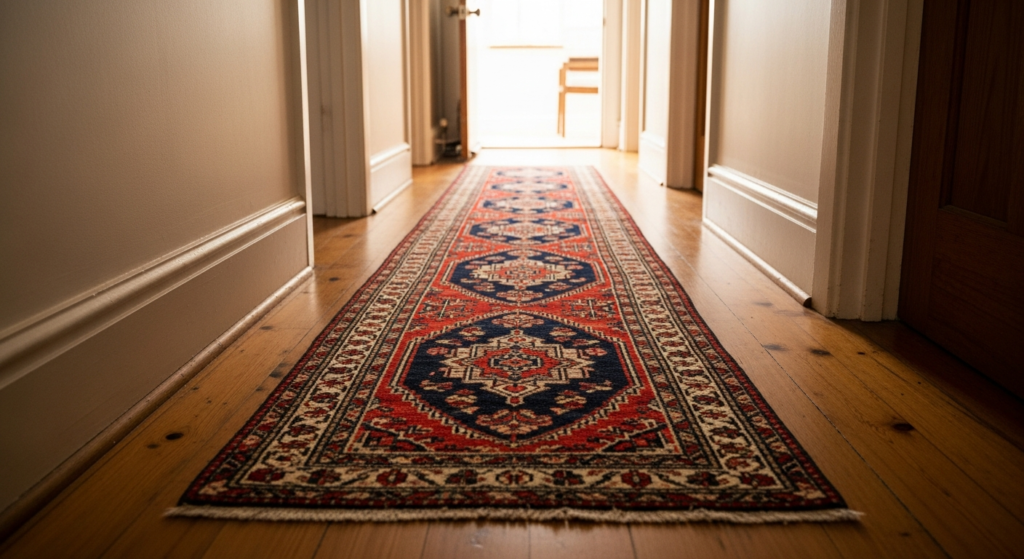
9. Add a Quality Runner or Hall Rug
A quality hall runner — a long, narrow rug that follows the length of the hallway floor — is one of the most transformative and most immediately warming additions to any hall interior. It introduces colour, pattern, texture, and warmth underfoot in a single design choice that simultaneously serves acoustic, practical, and purely aesthetic purposes.
Styling Tip: Choose a hall runner in a quality natural fibre — wool, jute, or a wool-cotton blend — in a colour and pattern that either complements the hall’s existing palette or introduces the first note of the home’s broader colour story. A vintage-inspired Persian or Oushak-style runner adds immediate warmth, character, and layered visual richness; a simple striped runner in natural tones creates a clean, graphic quality; a plain textured runner in a quality neutral provides the most versatile and most universally complementary result.
Secure the runner properly with a quality non-slip underlay — both for safety and for the aesthetic quality of a runner that lies perfectly flat and straight along the full length of the hall floor.
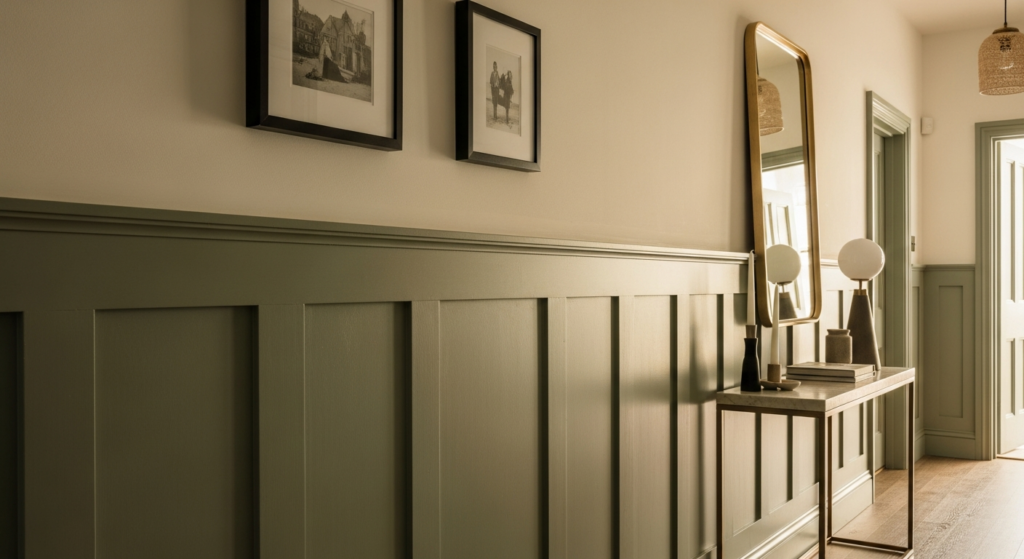
10. Use Wall Panelling for Architectural Character
Wall panelling in the hall interior — whether classic tongue-and-groove below a picture rail, contemporary flat-panel wainscoting, or a modern geometric grid of applied mouldings — is one of the most architecturally enriching and most immediately character-creating additions available to a hallway of any age or style.
Styling Tip: Panelling applied to the lower half of the hall wall — below a picture rail or dado rail — creates the most versatile and most universally beautiful result. Paint the panelling in a slightly deeper or contrasting tone to the upper wall for definition and depth, or in exactly the same tone for a more seamless, contemporary quality. In older homes, panelling restores period character that may have been lost in previous renovations. In newer homes, it adds the architectural richness and material quality that contemporary construction sometimes lacks.
Panelled hall walls also provide a beautifully architectural backdrop for console tables, mirrors, and artwork — the geometry of the panelling creates a natural frame and context for every decorative element placed against it.
11. Incorporate a Bench or Seat for Practical Elegance
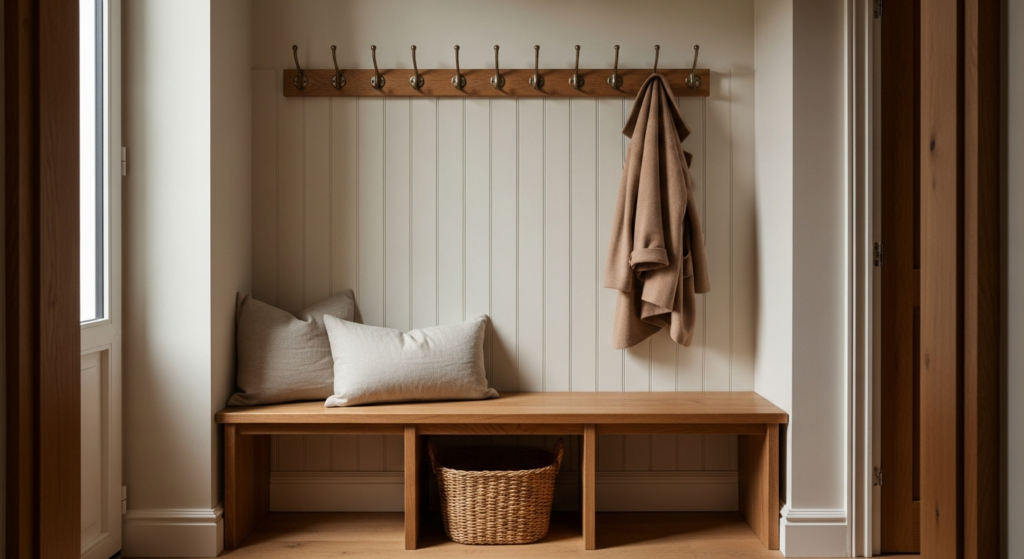
A hall bench — practical for sitting while removing shoes, and visually anchoring for the overall composition of the hall interior — is the furniture piece that most immediately communicates a consideration for the daily lived experience of the people who use the home. It is both a design choice and an act of genuine hospitality.
Styling Tip: Choose a hall bench in a quality material that withstands daily use — a solid timber bench with or without upholstered seat, a painted bench with a cushioned top in a durable fabric, or a stone or concrete bench for a more contemporary and more architecturally resolved aesthetic. Pair the bench with hooks above for coats and bags and storage beneath for shoes. Style the bench surface with a simple, beautiful cushion and perhaps a small basket or woven tray beside it — the small styling detail transforms a purely functional piece into a genuinely designed element of the hall interior.
The bench is most effective when it defines a specific zone within the hall — a dedicated arrival and departure point that creates a sense of ritual and considered organisation within the transitional space.
12. Plant and Botanical Styling in the Hallway
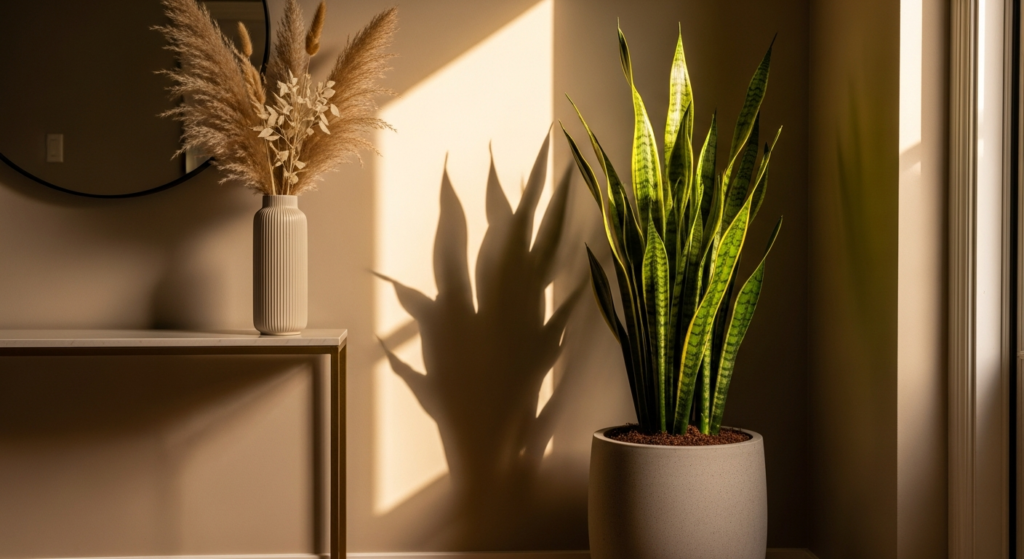
Living plants and botanical elements in the hall interior bring a quality that no designed object can replicate — a sense of life, growth, and organic warmth that makes the first impression of the home feel genuinely alive and genuinely welcoming rather than simply decorated and arranged.
Styling Tip: Choose plants for the hallway that are appropriately suited to the light conditions of the specific space — many hallways receive limited natural light, making low-light tolerant species such as cast iron plants, snake plants, or ZZ plants the most practical and most beautiful choices. A single tall, architectural plant in a quality ceramic or terracotta pot in the corner of the hall creates an immediate and powerful organic focal point. Dried botanicals — pampas grass, eucalyptus, cotton stems — in slim ceramic or glass vases on the console table provide year-round botanical beauty with zero maintenance requirements.
The organic quality of plants and botanicals in a hallway creates a subconscious sense of welcome that no purely decorative element fully replicates — they communicate a home that is genuinely cared for and genuinely loved.
13. Edit the Hall with Intention and Keep it Beautifully Uncluttered
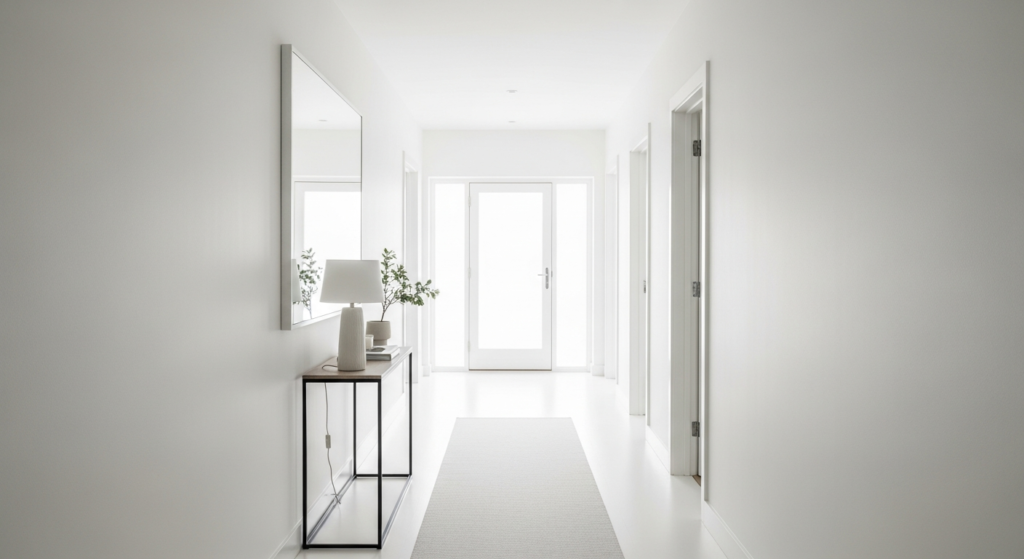
The final and most fundamental hall interior principle is the one that underpins every other idea on this list — the commitment to keeping the hallway genuinely, consistently, and beautifully uncluttered. Clutter in the hall is the single greatest obstacle to its aesthetic quality and its welcoming warmth, and the discipline of editing it is the most important ongoing design investment the hall demands.
Styling Tip: Establish a system for every practical item that the hallway must accommodate — hooks with a maximum number of coats and bags, a shoe cupboard or rack with a defined capacity, a key hook and a small tray for daily essentials. Everything that does not have a defined home leaves the hallway entirely. Maintain the console surface with the same editorial discipline as a gallery — remove anything that has arrived without being deliberately placed, and resist the tendency to use the hallway as a temporary storage solution for items in transit through the home.
A beautifully uncluttered hall is the most immediate and most powerful design statement available — the visual calm and the sense of considered organisation it communicates create a first impression of genuine quality that no amount of decorative investment can achieve if the space beneath the styling is chaotic and unresolved.
Conclusion
The hallway is not a room to pass through on the way to the spaces that matter — it is the room that makes every other space matter more by the quality of the first impression it creates. A beautifully designed hall interior sets a tone, establishes a palette, communicates a design philosophy, and extends a genuine welcome that the best of hospitality has always understood.
The thirteen hall interior ideas explored here cover the full range of what this extraordinary design opportunity makes possible — from the immediate impact of a bold colour statement and a dramatic light fixture to the quiet, lasting beauty of considered storage, organic botanical styling, and the disciplined editorial practice that keeps the hallway at its best every day.
Your hallway is the opening line of your home’s story. These ideas will help you write it beautifully.
FAQs
Q1: What are the most impactful hall interior ideas for a small hallway? The most impactful design strategies for a small hall interior include using a large mirror to create the illusion of greater space and reflect light, mounting floor-to-ceiling hooks and slim console storage rather than bulky furniture, choosing light, warm neutral wall tones that open the space visually, installing a statement light fixture that draws the eye upward, and maintaining strict editorial discipline to prevent clutter accumulation. A quality runner on the floor adds warmth and character without consuming valuable floor space.
Q2: What colours work best for a hall interior? Both neutral and bold colours can work beautifully in a hall interior depending on the design intention. Warm neutrals — warm white, soft cream, warm greige — create the most universally welcoming and most spatially generous hall interiors. Rich, deep tones — forest green, deep navy, terracotta, charcoal — create dramatic, personality-rich hall interiors that make a powerful first impression. The key consideration is always lighting — deep tones require quality lighting support to prevent the space from appearing dark or oppressive.
Q3: How do I add storage to a hallway without making it look cluttered? The most effective approach to hall storage that maintains visual order is to maximise concealed storage — built-in cabinetry with closed doors, a bench with storage beneath, or a slim console with drawers — while keeping open storage minimal and curated. What is visible should be beautiful — a few coat hooks, a styled console surface, a quality plant. What is practical — shoes, bags, mail, keys — should be contained and concealed. The combination of sufficient concealed storage and disciplined editorial practice is what creates the beautifully ordered hall interior.
Q4: What flooring works best for a hall interior? The most practical and most aesthetically successful hall flooring options include natural stone or large-format porcelain tiles for contemporary interiors, classic black and white checkerboard tiles for traditional or period properties, quality hardwood or engineered timber for warm, organic hall interiors, and encaustic or cement tiles for maximalist, character-driven aesthetic approaches. The hall floor should be chosen for both aesthetic impact and genuine durability — it is the most heavily trafficked floor surface in the home and must withstand daily footfall, wet footwear, and the full range of seasonal conditions.
Q5: How do I make a narrow hallway look wider and more elegant? The most effective strategies for visually widening a narrow hall interior include painting the walls and ceiling in the same light, warm tone to remove the visual boundary between them, using a large mirror on one wall to reflect space and light, choosing a floor runner rather than wall-to-wall carpet to create a defined central line that implies greater width on either side, keeping furniture to a minimum and choosing slim console tables rather than bulkier alternatives, and ensuring the lighting is warm, even, and generous enough to illuminate the full width of the space without creating areas of shadow that visually compress the corridor.