Introduction
The entryway is where every story of home begins. It is the space that greets you when you return from the world — the first breath of domestic calm after the noise and pace of outside life — and it is the space that introduces every visitor to the quality of the home that lies beyond it. In those first few seconds of arrival, the entryway either communicates a quality of considered warmth and welcome or it fails to communicate anything meaningful at all.
Entryway ideas that genuinely work are those that resolve two demands simultaneously: the practical demand of an organised, functional transition space that handles the daily accumulation of coats, bags, keys, shoes, and the general paraphernalia of modern life — and the aesthetic demand of a room that is beautiful enough to be the first impression of a home designed with genuine care. These two demands are not in competition. The most beautiful entryways are almost always the most organised, and the most functional entryways, when their organisation is achieved with beautiful materials and considered design, are almost always among the most beautiful rooms in the home.
This collection of 10 entryway ideas represents the full range of design approaches available for every entryway scale and every home aesthetic — from a compact apartment foyer that must perform extraordinary functional efficiency in a minimal footprint, to a generous entrance hall that can accommodate the full architectural vocabulary of a considered, generous welcome. Each idea is practical, beautiful, and immediately applicable.
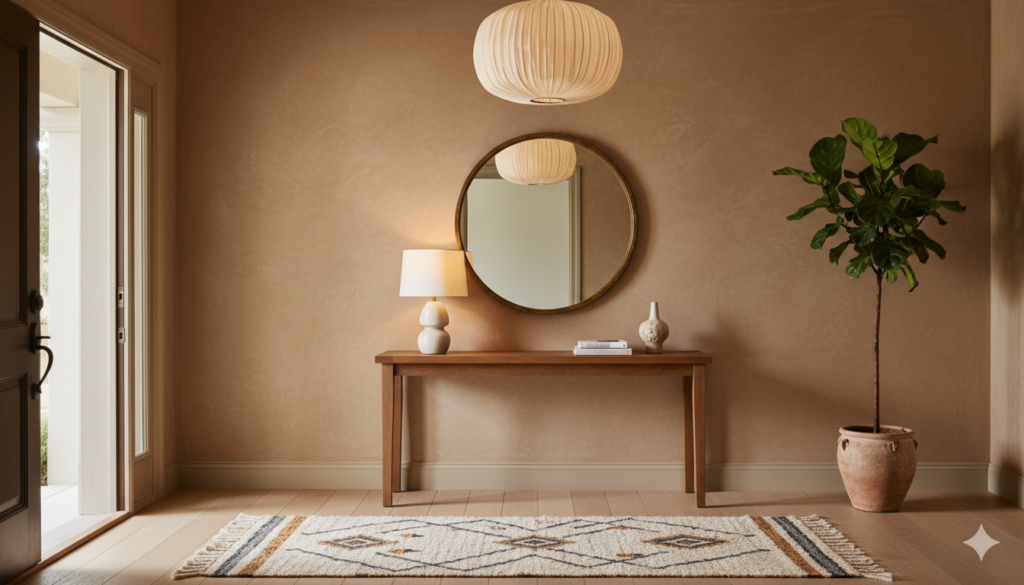
Here are the top 10 entryway ideas for stunning home inspiration — each one a complete design concept with the practical guidance to make your entrance the most welcoming and most beautiful room in your home.
1. The Console Table Statement Entryway
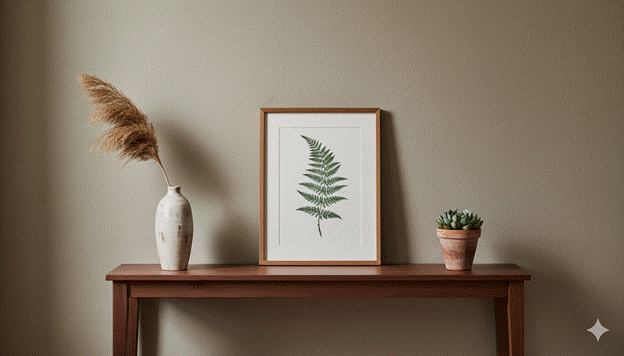
A beautifully chosen console table is the most impactful single piece of furniture available for transforming any entryway into a genuinely designed space — it establishes the room’s aesthetic identity immediately, creates a surface for both functional and decorative purposes, and anchors the wall behind it as a gallery zone that can accommodate a mirror, artwork, or a wall sconce. The console table is the entryway’s equivalent of a sofa in a living room: the piece around which everything else is organised.
Choose a console in a quality material that references the home’s broader interior design language: solid timber in a warm oak or walnut finish for a natural, warm-toned interior; a brushed metal or raw concrete console for a more contemporary, industrial aesthetic; a painted console in a rich lacquer colour for a bold, statement-driven entryway that announces the home’s design confidence from the first moment of arrival.
Styling Tip: Style the console table as a thoughtfully composed vignette of three elements at three different heights: a tall object at one end (a slim floor vase, a sculptural table lamp, or a tall decorative bottle), a medium object in the centre (a quality framed print, a stack of books with a small object on top, or a ceramic bowl), and a small object at the other end (a tiny succulent in a terracotta pot, a small carved decorative piece, or a single candle in a quality holder). Generous negative space between each element and a completely clear surface between the objects creates the curated, gallery-quality result. Hide keys, post, and practical necessities in a beautiful small tray or a drawer beneath the console surface.
2. The Functional Mudroom-Style Entryway
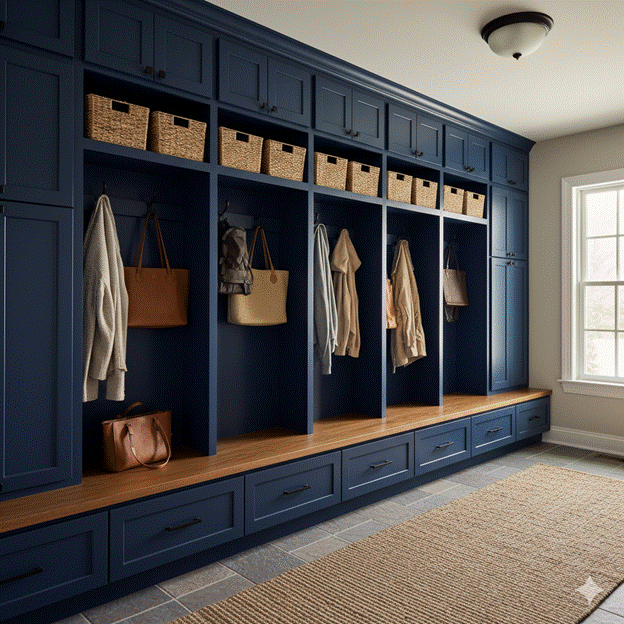
The functional mudroom-style entryway prioritises the organisational demands of daily family life while ensuring that the design quality of the space remains fully equal to the rest of the home — because a mudroom-style entryway that functions brilliantly but looks like a utility room fails at its most fundamental aesthetic responsibility. The challenge and the opportunity is to create a space that manages boots, bags, coats, sports equipment, and daily essentials with complete efficiency and genuine beauty simultaneously.
The visual backbone of a functional mudroom-style entryway is the bespoke or semi-bespoke storage system: a bank of individual lockers or hooks, a built-in bench with storage beneath, open cubbies for basket organisation above, and a clean, uninterrupted row of hardware-quality hooks along the wall at the correct height for the household’s occupants. When this storage system is built in quality materials — painted timber cabinetry, solid oak shelving, quality hook hardware in aged brass or matte black — it creates an entryway of genuine interior design quality rather than simply a well-organised utility zone.
Styling Tip: The most beautiful functional mudroom-style entryways are those in which the practical storage infrastructure is designed with the same care as the purely decorative elements. Choose cabinet paint in a deep, rich tone — deep navy, forest green, warm charcoal, or dusty sage — that makes the storage system a genuine design statement rather than a neutral backdrop. Add a quality runner rug in a durable, easy-clean material along the length of the mudroom zone, a single piece of framed art or a mirror above the bench, and consistent baskets or storage vessels across all open shelving for a coherent, finished visual result.
3. The Grand Mirror Entryway
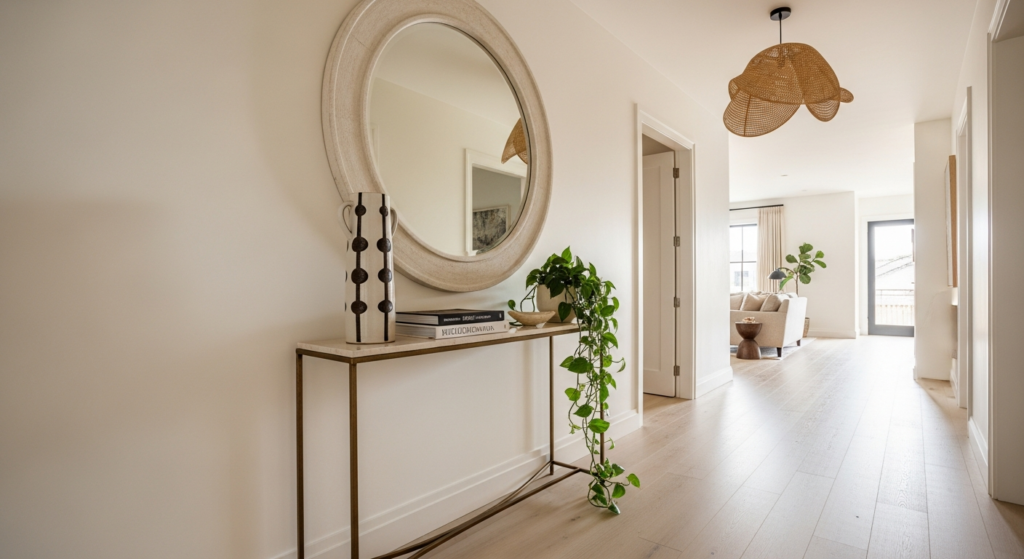
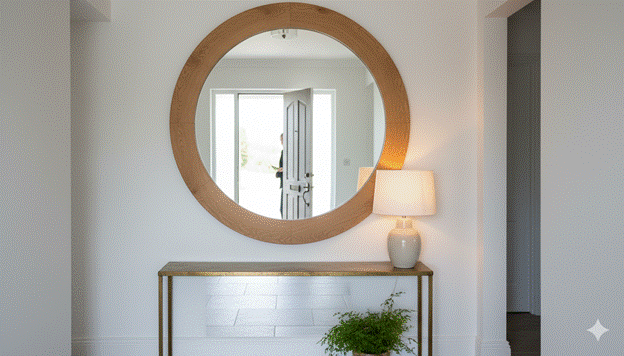
A grand mirror is one of the most powerful single design interventions available for any entryway — a piece that simultaneously adds visual depth, doubles the apparent volume of the space, reflects and amplifies available light, provides a practical grooming function at the moment of departure, and creates a genuine design statement of considerable impact. In a small or narrow entryway, a well-chosen large mirror can be the single element that transforms the space from confined and dark to open and luminous.
The scale and framing of the mirror are its two most critical design qualities. Oversized is almost always better than undersized in an entryway context — a mirror that spans 70-80% of the wall width it occupies creates a quality of spatial expansion and visual drama that a smaller mirror cannot achieve. The frame should reflect the home’s material palette: aged timber for a warm, organic aesthetic; raw brass or antique gold for a more glamorous result; slim matte black for a clean, contemporary statement; or unframed with a polished edge for the most minimal, most architecturally pure interpretation.
Styling Tip: A large entryway mirror creates its greatest spatial and luminous impact when positioned on the wall directly opposite the front door — in this position, it reflects the entrance itself, the natural light entering through the door, and the arriving visitor, creating the most expansive and most welcoming visual effect. If the door alignment prevents this placement, position the mirror on the wall perpendicular to the primary light source for the second most effective light-doubling placement. Lean a very large mirror against the wall at a slight angle rather than hanging it if the visual effect of scale and informality suits the home’s design character — this placement adds a quality of relaxed confidence to the entryway aesthetic.
4. The Warm Lighting Entryway
Lighting is the entryway element that most immediately and most powerfully communicates the quality of welcome extended to anyone who arrives at the home — and the entryway’s lighting design therefore deserves the same level of care and intention applied to any other room in the home. An entryway lit poorly — by a single overhead ceiling fitting with a cool white bulb, or by the absence of any dedicated lighting at all — creates a first impression of institutional indifference regardless of the quality of the furniture and decoration around it.
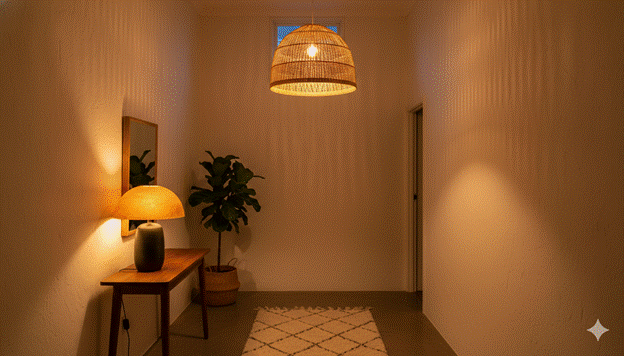
A beautifully lit entryway layers multiple warm light sources at multiple heights: a pendant or flush ceiling fixture as the primary ambient source; a wall sconce or a table lamp on the console as the secondary warm accent; and potentially a small picture light or a battery-powered shelf light illuminating an artwork or a styled shelf zone. All light sources should use warm-toned bulbs — 2700K colour temperature — that create the amber, intimate quality of domestic warmth rather than the cooler, more neutral light of a commercial or institutional space.
Styling Tip: A statement pendant light in the entryway is the most immediately design-impactful lighting choice available for this space — more visible, more architecturally significant, and more personally expressive than any other single lighting element. Choose a pendant that creates a strong design statement: a large rattan dome for a warm, organic aesthetic; an aged brass globe pendant for a glamorous, classic quality; a sculptural ceramic pendant for an artisanal, considered character; or a contemporary geometric pendant for a clean, modern statement. The pendant should be the first thing a visitor notices upon entering — and it should tell them, immediately, something true about the aesthetic intelligence of the home they have just entered.
5. The Bold Wallpaper or Paint Entryway
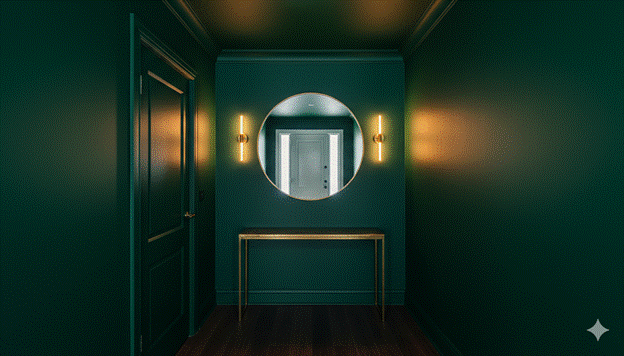
The entryway is one of the home’s best rooms for bold, expressive colour and pattern choices — precisely because its relatively small size and its transitional rather than inhabited quality mean that it can accommodate visual energy and design confidence that would feel overwhelming in a living room or bedroom. A bold entryway wallpaper or a deep, saturated paint colour creates a design statement that announces the home’s aesthetic identity with complete conviction from the very first moment of arrival.
Deep, richly pigmented wall colours — forest green, navy, terracotta, warm burgundy, charcoal — create entryways of extraordinary atmospheric quality, particularly when the colour extends to the ceiling and the trim for an enveloping, architectural effect. A botanical wallpaper in warm tones, a geometric pattern in a contemporary palette, or a classic toile de Jouy in a surprising colourway create entryways of genuine visual personality that make the transition from the outside world into the home feel specifically, deliberately significant.
Styling Tip: When applying a bold colour or pattern to an entryway, carry it as extensively as possible — over the walls, onto the ceiling, and to the back of the front door — for the most powerful, most architecturally immersive result. A bold colour that stops at the picture rail or the door frame creates a contained, wallpaper-sample quality; a bold colour that wraps the entire space creates an architectural environment that is genuinely transportive. Pair the bold entryway colour with a high-gloss finish on woodwork and doors — the reflective surface adds visual complexity and glamour that a matte finish cannot provide in a rich-coloured entryway.
6. The Bench and Storage Entryway
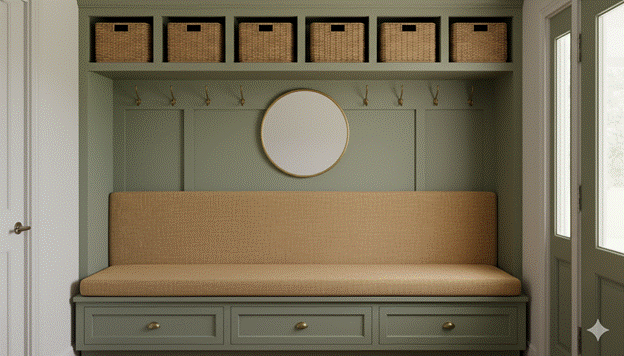
An entryway bench — ideally with integrated storage beneath, in the form of pull-out drawers, a hinged seat lid, or open cubby spaces — is the functional design element that most improves the daily quality of the entryway experience. It provides a surface for sitting while changing shoes, a zone for storing footwear neatly, and a horizontal anchoring element beneath a hook or coat rail that creates the visual and functional completion of the wall’s full height.
A quality entryway bench communicates considerable design intelligence in a small footprint. In a solid timber construction with a upholstered or naturally finished seat, it is simultaneously a piece of furniture, a storage solution, a practical convenience, and a design object. The upholstery fabric, if chosen thoughtfully — a durable woven in a warm neutral, a velvet in a deep accent colour — becomes the entryway’s textile accent in the same way that a sofa cushion functions in a living room.
Styling Tip: The entryway bench creates its greatest design impact when it is installed as a built-in element rather than as a freestanding piece of furniture — a bench that runs the full width of a wall, built from the same material as the surrounding cabinetry or wall panelling, creates a quality of architectural integration that no freestanding piece can replicate. Above the built-in bench, a row of quality hooks in a warm metal finish — aged brass, unlacquered brass, or matte black — at the correct height for the household’s tallest and shortest occupants, with a shelf above the hooks for bags and hats, creates a complete, designed wall system of considerable functional beauty.
7. The Plant and Botanical Entryway
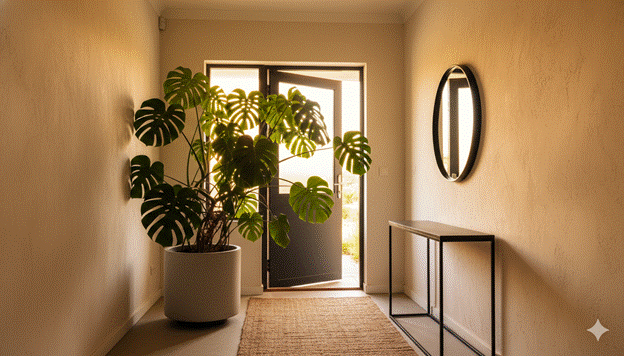
A well-chosen plant in the entryway introduces the qualities of natural vitality, organic warmth, and living beauty into the home’s transition space with an immediacy and an impact that is entirely unique to the presence of living things. A beautifully chosen and beautifully positioned entryway plant communicates a quality of welcome and care that inanimate decoration cannot quite replicate — it says, unmistakably, that this is a home that nurtures living things.
The most visually impactful entryway plant choices are those with strong, architectural forms that create a striking silhouette in the entryway’s relatively compact space: a tall, slender Fiddle Leaf Fig that reaches toward the ceiling; a graphic, sculptural Monstera deliciosa; a cascade of trailing Pothos from a high shelf; or — for the most specific, architectural quality — a small Olive tree in a large woven basket planter that creates the impression of a Mediterranean courtyard brought indoors.
Styling Tip: Position the entryway plant in the corner diagonally opposite the front door — the far corner from the arrival point — so that it is visible immediately upon entering and draws the eye into the space in a way that creates an impression of greater depth. This diagonal placement creates the most visually effective use of the entryway plant as a spatial device. Choose a planter that functions as a design object in its own right: a large hand-thrown ceramic in a warm earthy glaze, a smooth pale concrete cylinder, or a quality woven seagrass basket create material accents that contribute to the entryway’s palette independently of the plant they contain.
8. The Gallery Wall Entryway
A gallery wall in the entryway is the home interior design statement that most directly and most personally communicates the aesthetic identity, interests, and values of the people who live behind the door. It transforms a blank wall into a curated exhibition of what matters — and it does so in the room where every visitor’s first impression of the home is formed, making it the most publicly expressive gallery wall in the entire house.
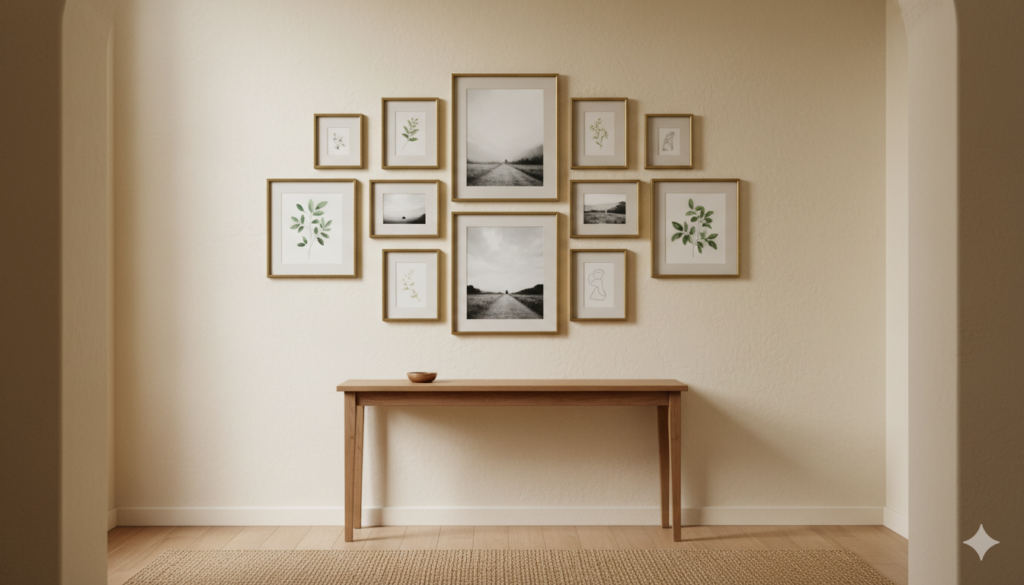
An entryway gallery wall can be assembled from a wide range of image types — framed art prints, family photographs printed in quality black and white, collected postcards in matching frames, small sculptural pieces mounted on the wall, vintage botanical illustrations, architectural drawings, or a single large-format photograph — but its success depends more on the consistency of the framing system and the coherence of the spatial arrangement than on the specific content of the individual pieces.
Styling Tip: Choose a single frame style and finish for the entire entryway gallery wall — all thin black, all aged brass, all raw oak, or all wide white — and vary only the sizes of the frames rather than their style. This consistency creates the visual unity that makes a gallery wall read as a single, composed design element rather than a random collection of differently framed images. Map the gallery wall arrangement on paper or on the floor before hanging a single nail — lay out the full composition and adjust until the arrangement is balanced, with the visual centre of gravity of the entire group at eye level, before committing to the wall.
9. The Rug-Anchored Entryway
A well-chosen entryway rug is the design element that most immediately and most warmly creates a sense of invitation and arrival — it defines the transition zone between the exterior and the interior, provides a visual anchor for the space’s furnishings, introduces warmth and texture at the floor level where arrivals first experience the home, and adds a layer of colour, pattern, or material richness that elevates the entire entryway aesthetic.
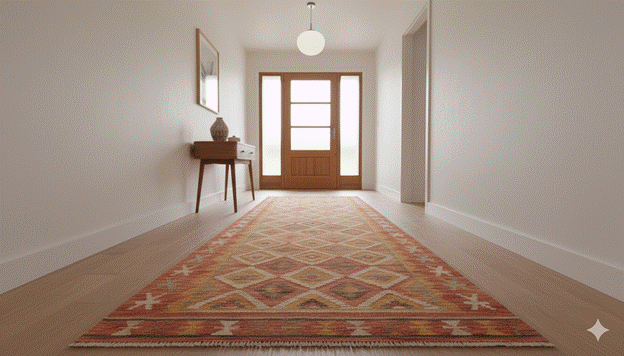
The entryway rug’s practical demands — durability, easy cleaning, resistance to moisture and dirt — are considerable, but they need not compromise its aesthetic quality. Natural fibre rugs in jute, sisal, or seagrass offer the most durable and the most naturalistically beautiful option for a high-traffic entryway. A quality flat-weave cotton or wool runner in a bold geometric or classic striped pattern creates a visual statement of considerable energy in the long, narrow format most appropriate to a hallway or entrance corridor.
Styling Tip: Size the entryway rug so that it covers the transition zone from the front door to the first interior wall or furniture piece — a rug that ends awkwardly short of the primary furniture or the first interior threshold creates a spatially unresolved quality. In a narrow hallway, choose a runner of at least 60-70cm width that allows comfortable bilateral movement without the rug appearing undersized relative to the corridor. Layer an anti-slip mat beneath the rug for both safety and to prevent the rug from shifting under foot traffic. Choose a pattern or texture that provides visual interest — this is one of the few places in the home where a bold geometric, a heritage stripe, or an intensely patterned traditional rug can be used to full effect without overwhelming the space.
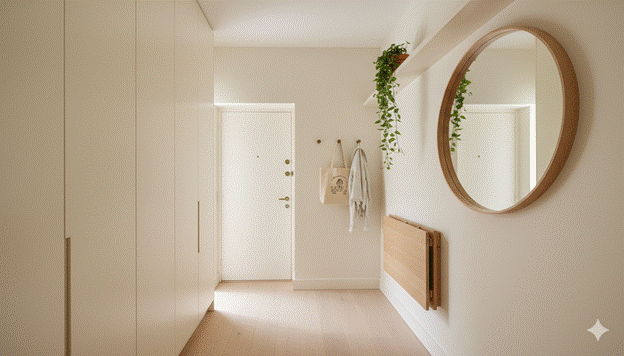
10. The Maximised Small Entryway
A small or compact entryway is not a design limitation but one of interior design’s most rewarding spatial challenges — a constrained footprint that rewards intelligent thinking with extraordinary results of efficiency and beauty. The principles governing a well-designed small entryway are essentially the same as those governing any well-designed compact space: every centimetre of wall, floor, and vertical space should be considered and allocated with precision, every piece of furniture must serve multiple purposes, and visual continuity of palette and material creates an impression of greater spatial generosity than the physical dimensions alone would suggest.
The most effective small entryway design strategies include: floor-to-ceiling built-in storage that activates the full wall height; a fold-down wall-mounted bench that creates seating when needed without occupying permanent floor space; a large mirror on the primary wall that visually doubles the entryway’s apparent depth; hooks at two heights for both long and short garments; and a cohesive palette — walls, ceiling, and built-ins in the same light warm neutral — that removes all visual interruption and allows the space’s dimensions to feel as generous as possible.
Styling Tip: The most impactful investment for a small entryway is the installation of a floor-to-ceiling built-in unit in the same paint colour as the surrounding walls — this creates storage of considerable depth and volume while the colour consistency prevents it from visually advancing into the space as a separate, space-consuming object. A push-to-open mechanism rather than external handles maintains the seamless, wall-like quality of the built-in and prevents hardware from creating visual clutter. One quality pendant light at the room’s centre, one large round mirror, and one small-scale plant complete the small entryway design without adding bulk to a space that must remain spatially generous above all other aesthetic priorities.
Conclusion
The entryway deserves far more design attention than it typically receives — it is, without question, one of the most important rooms in any home. It is the first space experienced on return and the first space shared with every visitor. Its design quality sets the expectation for the entire home that follows. Its functional quality determines whether daily domestic life is managed with ease or with friction at the point of every arrival and departure.
The 10 entryway ideas in this collection prove that this space — whatever its scale, whatever its current condition — is capable of transformation into something genuinely beautiful and genuinely welcoming. Whether the intervention is a bold paint colour that announces the home’s aesthetic confidence, a console table vignette styled with the care of a gallery installation, or a comprehensive built-in storage system that resolves the chaos of daily family life, each idea produces a result that improves the quality of every homecoming.
Invest in your entryway with the same intention and the same quality of care you bring to every other room in your home — and enjoy the daily reward of a homecoming that begins, from the very first moment, with beauty.
FAQs
FAQ 1: What should I include in a functional entryway?
A functional entryway should resolve every practical demand of the daily arrival and departure ritual: dedicated coat and bag storage — hooks, a rail, or built-in lockers — at the correct height for every occupant; a surface for placing keys, post, and small everyday items; seated space for changing shoes; shoe storage of sufficient capacity for the household’s daily footwear rotation; and a mirror for departure grooming. Beyond these functional essentials, a beautifully designed entryway also includes a quality light source, a floor covering that handles the transition from outside to inside with both visual warmth and practical durability, and at least one deliberately chosen design element — a plant, a piece of art, a beautifully styled console vignette — that communicates the aesthetic quality of the home beyond it.
FAQ 2: How do I make a narrow hallway entryway look bigger?
Making a narrow entryway look bigger requires a coordinated set of visual and spatial strategies applied simultaneously. Paint all surfaces — walls, ceiling, and trim — in the same light warm neutral to remove the visual interruptions of colour breaks that make a narrow space feel even more constrained. Install a large mirror on the longest wall to visually double the corridor’s apparent depth. Use recessed wall lighting rather than ceiling-mounted pendants to preserve ceiling height visually. Choose furniture with slim profiles — a console rather than a cabinet, wall-mounted hooks rather than a freestanding coat stand — to maximise the clear floor path. Remove all non-essential objects from floor and surface level. And install a runner rug that extends the full visible length of the corridor to create a visual extension of the floor plane.
FAQ 3: What colours work best in an entryway?
Entryway colours fall into two distinct and equally valid design approaches. Light, warm neutrals — warm white, pale stone, warm cream — maximise the entryway’s apparent space and create an atmosphere of openness and welcome that is appropriate for any style of home and any scale of entryway. Deep, saturated colours — forest green, navy, warm terracotta, rich burgundy, warm charcoal — create entryways of atmospheric character and confident design identity that communicate a quality of design intention from the first moment of arrival. The choice between the two approaches depends on the entryway’s scale — small or dark entryways generally benefit more from light neutrals; generous, well-lit entryways can support bold, saturated tones with considerable success.
FAQ 4: How do I style a small entryway with no space?
Styling a very small entryway effectively requires the strict application of vertical thinking and multi-function furniture principles. Use the full wall height for storage — hooks at two heights, a slim wall-mounted shelf above for hats and bags, and a fold-down bench that stores flat when not in use below. Choose a mirror that occupies the maximum proportion of the primary wall to visually expand the space. Use one quality pendant or wall sconce for warm, intimate illumination rather than a ceiling-mounted fixture that draws attention to the limited floor area. Keep the palette completely consistent — walls, ceiling, and any built-in elements in the same tone — to create the visual seamlessness that makes small spaces feel generous. Edit rigorously: remove everything that does not actively contribute to the entryway’s beauty or function, and maintain this edited state through a dedicated organisational routine.
FAQ 5: What furniture is essential for an entryway?
The entryway furniture hierarchy from most to least essential is as follows. A coat hook system or rail is the single most functionally necessary entryway furniture element — without it, the coats and bags of daily life have nowhere to go except the floor or the nearest chair in the adjacent room. A console table or a built-in bench provides the surface and the seated space that complete the entryway’s functional brief. A mirror is the third most essential piece — both for its practical grooming function and for the significant spatial and luminous impact it creates. A shoe storage solution — a dedicated shoe rack, built-in cubbies, or a storage bench with internal shoe compartments — completes the functional requirements of a well-designed entryway. Beyond these four essential elements, a quality rug, a single plant, and one carefully chosen lighting fixture provide the aesthetic completeness that transforms a functional entryway into a genuinely designed one.