Introduction
Small square footage is not a design problem. It is a design invitation.
The one bedroom small apartment is one of the most common living situations in the world — and one of the most creatively rewarding to design. When every square meter counts, when the relationship between spaces must be thought through with genuine intelligence, the result is often something far more considered and beautiful than a larger home ever demands.
The floor plan is where that intelligence begins. Before the furniture, before the color palette, before a single throw pillow is chosen — the floor plan determines how a space will feel to live in. A well-designed one bedroom apartment floor plan creates distinct zones for sleeping, living, dining, and working without physical walls. It channels natural light. It creates the impression of space where little exists. It makes every morning easier and every evening more restful.
This guide presents 11 of the most compelling floor plan ideas for one bedroom small apartments — each one a distinct spatial philosophy, each one supported by practical design guidance on layout, furniture, lighting, and the finishing details that make the difference between a small apartment that functions and one that genuinely delights.
1. The Open-Plan Layout — Expansive by Design
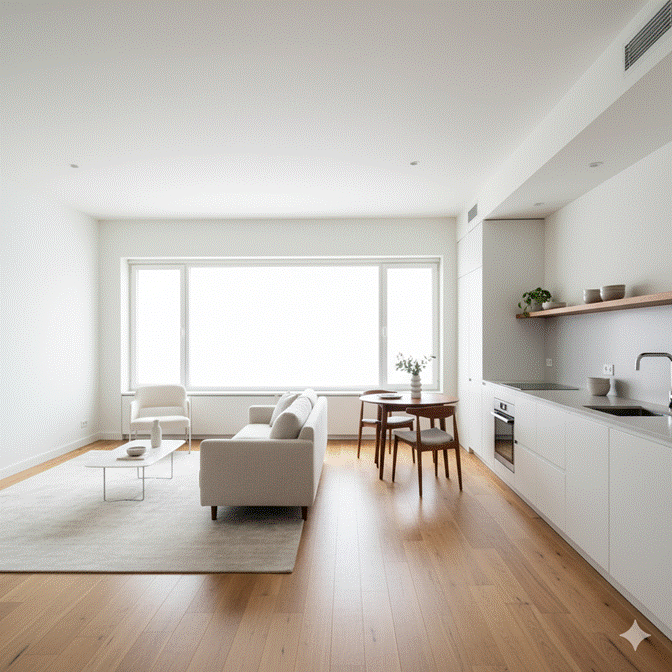
The open-plan layout is the foundational approach to small apartment living — and for good reason. By removing interior walls between the kitchen, dining, and living areas, the open plan creates a single generous volume that feels dramatically larger than its measured square footage suggests. Air moves freely, light travels unobstructed from window to wall, and the eye has room to settle and breathe.
In a one bedroom apartment, the bedroom is typically the only enclosed room in an open-plan layout. The bedroom door, when closed, provides the privacy and quiet the sleeping space requires. Everything else — living, dining, kitchen — flows together in a continuous, well-zoned expanse that rewards thoughtful furniture placement and a cohesive color palette.
✦ Design Tip: Use a large area rug to define the living zone within an open-plan layout. The rug acts as a visual room-within-a-room — anchoring the sofa and coffee table into a clearly defined living area while leaving the dining and kitchen zones visually distinct. This zoning technique is the foundation of successful open-plan small apartment living.
2. The Studio Conversion Floor Plan — Maximizing a Single Room
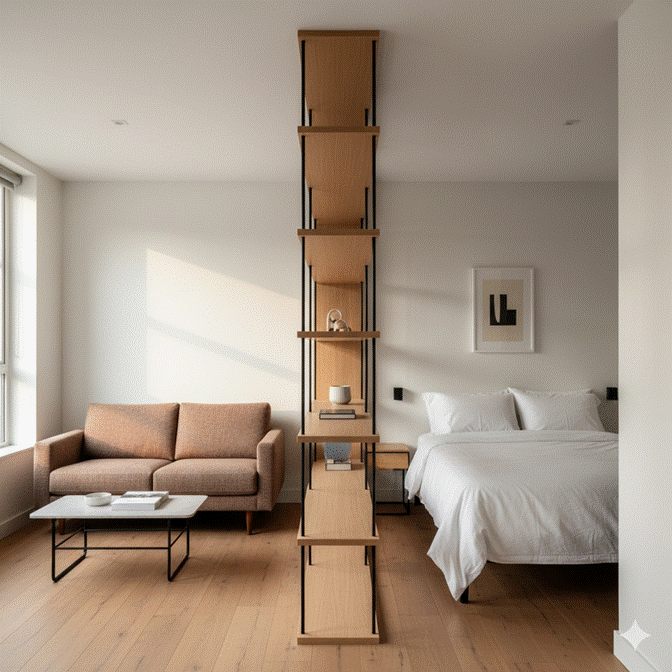
The studio conversion approach takes what might originally be a studio apartment and introduces thoughtful spatial division to create distinct bedroom and living zones without constructing full walls. The result is a floor plan that functions like a one bedroom apartment while remaining technically a single continuous space.
Spatial dividers — bookshelves used as room dividers, curtain panels hung from ceiling tracks, architectural screens, or even a thoughtfully placed sofa turned at a slight angle — create enough visual separation between the sleeping and living areas to establish psychological privacy without sacrificing the openness that makes small spaces feel larger.
✦ Design Tip: A bookshelf placed perpendicular to the wall and oriented to face the living area acts as both storage and spatial divider simultaneously. Position it at a height that allows light to pass above it — typically stopping 30 to 40 centimetres below the ceiling — so the space retains its openness while gaining the sense of separation that makes a bedroom feel genuinely private.
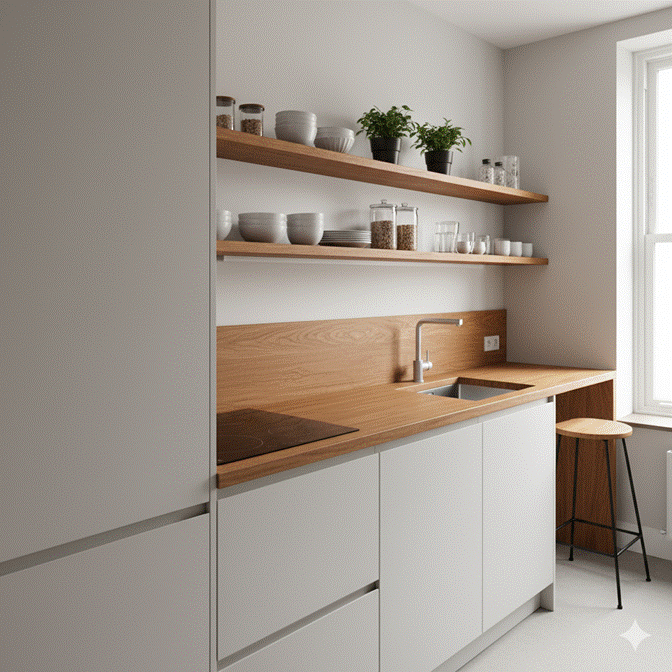
3. The Galley Kitchen Floor Plan — Linear Efficiency at Its Best
Named for the compact, highly efficient kitchens of sailing vessels, the galley kitchen layout places all kitchen functions along one or two parallel walls, creating a clear, linear workflow that is both ergonomically sound and spatially minimal. In a small apartment, the galley kitchen frees the remaining floor space for living and dining use.
A single-wall galley kitchen is the most space-efficient option — countertop, sink, hob, and refrigerator arranged in a continuous line along one wall, with the open floor space in front available for a dining table, an island, or simply unobstructed movement. The double-wall galley places elements on two facing walls, creating a corridor that is efficient for cooking but requires careful proportioning in very small apartments.
✦ Design Tip: Install open shelving above a galley kitchen rather than upper cabinets. Open shelves maintain the visual lightness of the kitchen wall, make the space feel taller, and create an opportunity for considered styling — stacked ceramic dishes, glass jars, small plants, and frequently used items arranged with visual intention rather than concealed behind doors.
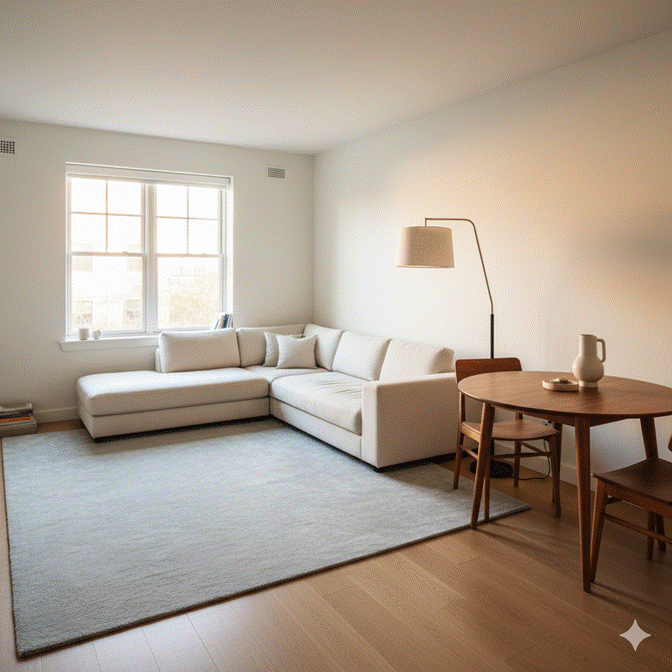
4. The L-Shaped Living and Dining Floor Plan — Curve Space Into Zones
The L-shaped floor plan organizes living and dining into an L-configuration — typically with the sofa and living area occupying one arm of the L and the dining table and kitchen occupying the other. The corner of the L becomes the spatial hinge that connects but also distinguishes the two zones.
In small apartments, the L-shaped arrangement is particularly effective because it uses the corners — often the most difficult areas of a rectangular floor plan — as connecting anchors rather than wasted space. The sofa placed at a slight angle to complete the L introduces a dynamic quality to the layout that straight-wall arrangements cannot achieve.
✦ Design Tip: Place a floor lamp or a dramatic pendant light in the interior corner of an L-shaped layout. This corner, which naturally recedes in any room, is brought forward and made active by a light source. It also serves as a visual bridge between the living and dining zones, reinforcing the coherence of the L-shaped arrangement.
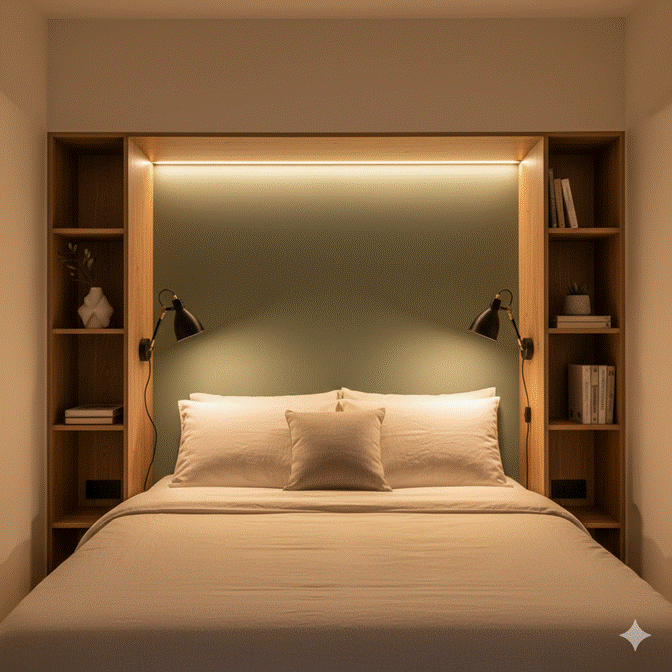
5. The Bedroom Alcove Floor Plan — Privacy Without a Full Wall
The bedroom alcove is one of the most elegant spatial solutions available in small apartment design. Rather than placing the bed against a wall in a conventionally enclosed room, the alcove approach positions the sleeping area within a recessed or partitioned niche — often created by a half-height wall, a curtain system, or a lowered ceiling section — that provides intimacy and visual separation without consuming the light and openness of a fully walled room.
Alcoves created by partial walls or built-in storage units around the bed head can incorporate reading lights, shelving, and even a small dresser within their footprint, concentrating all bedroom functions into a single compact zone that leaves the rest of the apartment free for living. The transition from alcove sleeping space to living space becomes one of the most satisfying spatial experiences in small apartment design.
✦ Design Tip: Line the alcove ceiling with warm-toned LED strip lighting directed downward onto the bed. This creates a pool of warm, intimate light within the sleeping niche that feels entirely separate from the main living area’s lighting, reinforcing the psychological separation between rest and activity even in the absence of a physical door.
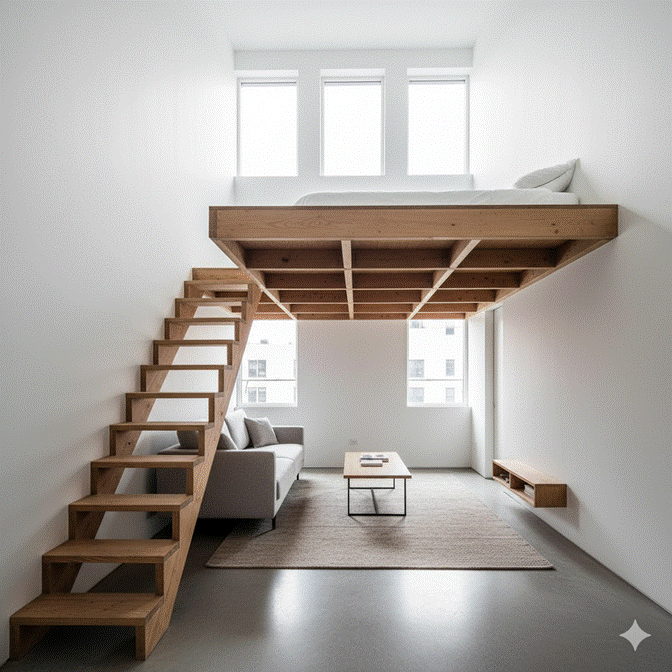
6. The Loft-Style Floor Plan — Vertical Living as a Design Philosophy
In apartments with higher than average ceiling heights, the loft-style floor plan takes advantage of vertical space by creating a sleeping platform — accessed by stairs or a ladder — above the main living area. The bedroom exists on a raised level, the living space flows freely beneath it, and the overall floor plan makes extraordinary use of a volume that most apartments leave entirely unused.
The loft floor plan is arguably the most dramatic spatial solution available to small apartment dwellers — it literally doubles the functional square footage of the apartment by stacking functions vertically. The sleeping area above, the living area below, and the interplay of levels, light, and visual connection between them creates an apartment that feels genuinely architectural.
✦ Design Tip: Design the stairs or ladder access to the loft sleeping area to serve a double function. Staircase risers can be hollow to provide deep storage drawers. A library ladder can be decorative as well as functional. Even the space beneath the raised platform — the area that would otherwise be lost — can serve as a home office nook, a reading corner, or additional storage.
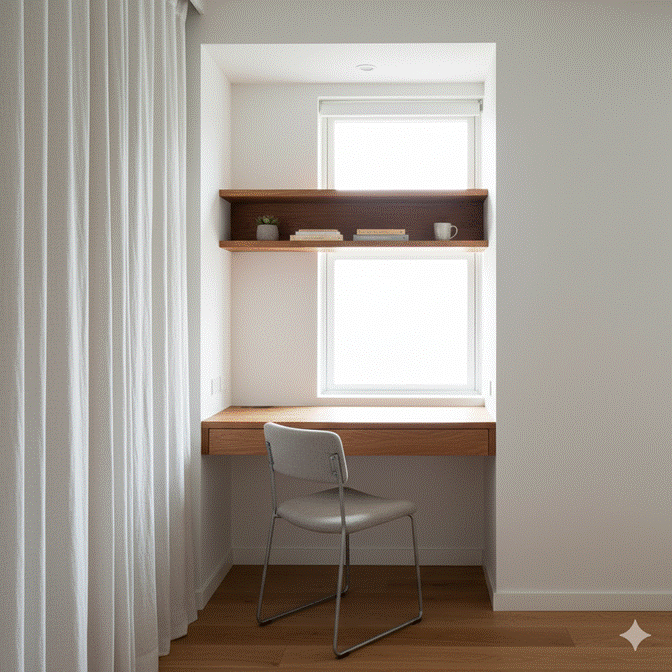
7. The Compact Home Office Integration Floor Plan — Work and Live in the Same Space
The post-pandemic reality has made the home office an essential consideration in any floor plan — even the most compact one. The challenge in a one bedroom small apartment is integrating a functional work zone that does not encroach on the living space’s restfulness or the bedroom’s privacy. Done well, it becomes one of the most thoughtfully designed elements of the floor plan.
The most successful small apartment home office integrations are those where the work zone has a clear, dedicated location that can be psychologically ‘closed’ at the end of the working day. A fold-down desk in an alcove behind full-length curtains, a built-in desk within a deep wardrobe whose doors close over the workspace, or a designated corner zone separated by a partial bookshelf all achieve this closure without requiring a dedicated room.
✦ Design Tip: Position the home office zone to receive the best natural light in the apartment — ideally facing a window rather than a wall. Natural daylight at a desk improves focus, reduces eye strain, and creates a more psychologically healthy work environment. A window view, however small, also provides the mental breaks that sustained focus requires.
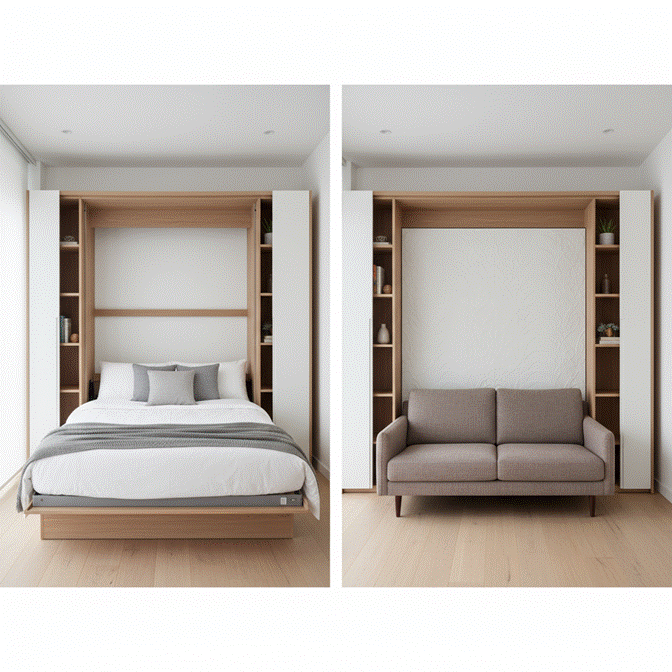
8. The Murphy Bed Floor Plan — The Living Room That Becomes a Bedroom
The Murphy bed — a wall-integrated fold-down bed system — is the definitive small apartment floor plan solution for spaces where the bedroom and living area must, by necessity, occupy the same zone at different times of day. When closed, the Murphy bed is invisible behind panels that can double as a sofa back, a home office surface, or a decorative wall. When open, it transforms the living room into a fully functional sleeping space in seconds.
Contemporary Murphy bed designs have evolved far beyond the utilitarian fold-downs of previous generations. Today’s systems incorporate built-in lighting, bedside shelving, integrated sofas that lower with the bed, and cabinetry that completes the room on both sides of the mechanism. They are genuine furniture investments that, in the right apartment, genuinely double the functional use of the available square footage.
✦ Design Tip: Choose a Murphy bed system with a sofa integrated into the same cabinet unit — when the bed is up, the sofa faces the room. When the bed is down, the sofa pivots with the mechanism to provide easy bed access. This combined sofa-bed system is the most space-efficient furniture solution available for a one-room apartment with minimal compromise on either the living or sleeping function.
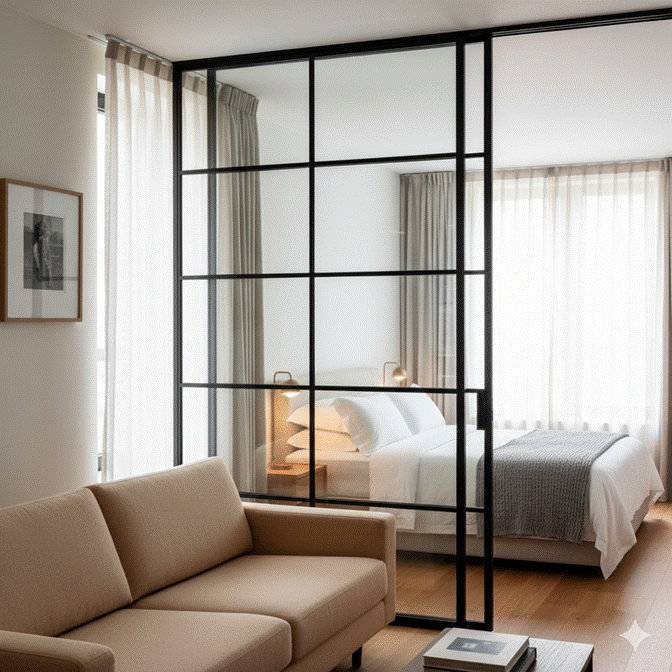
9. The Open Bedroom with Glass Partition Floor Plan — Light and Privacy Together
The glass partition approach to bedroom separation is one of the most architecturally sophisticated solutions available in small apartment design. A floor-to-ceiling glass panel or a steel-framed glass wall between the bedroom and living area preserves the visual connection and light-sharing quality of an open plan while creating genuine acoustic and psychological separation between the two zones.
The result is a floor plan that feels larger than a fully walled bedroom layout, brighter than an enclosed sleeping space, and more private than a completely open studio. Natural light from the bedroom window travels through the glass partition into the living area — particularly transformative in apartments where the living room has limited direct window access.
✦ Design Tip: Install a ceiling-mounted curtain track on the bedroom side of the glass partition to allow privacy when needed. Sheer linen curtains drawn across the glass create diffused, glowing privacy without blocking light. A blackout curtain layered behind can be drawn for complete darkness during sleep. This layered curtain system gives a glass-partitioned bedroom every privacy option it requires.
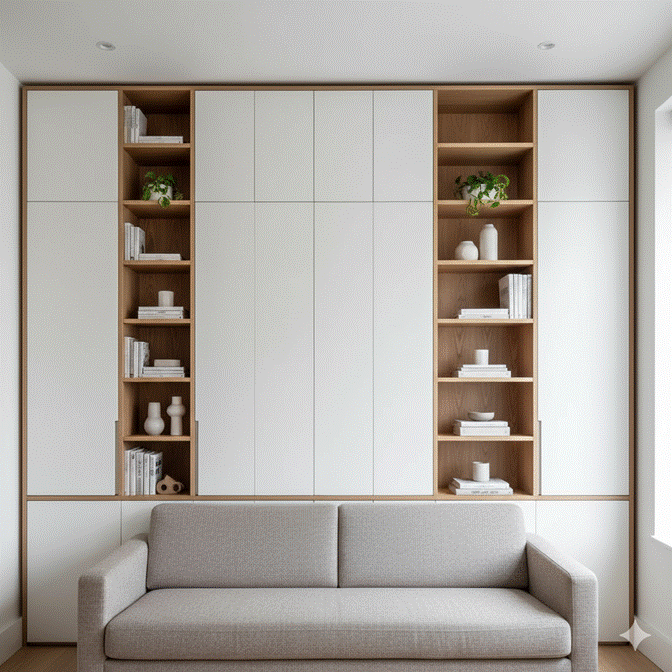
10. The Built-In Storage Floor Plan — Walls That Work
In a one bedroom small apartment, every wall is potential storage — and the built-in storage floor plan treats them exactly that way. Floor-to-ceiling built-in cabinetry, shelving systems, and wardrobes that are designed as part of the architectural plan rather than added as furniture afterthoughts transform the walls themselves into functional, space-creating elements of the design.
Built-in storage along one full wall of the living area creates the impression of a larger, more resolved space by eliminating the visual fragmentation of multiple freestanding furniture pieces. A single continuous built-in unit that incorporates a wardrobe, display shelving, media storage, and hidden filing and cleaning supply storage is the work of a few hundred centimetres of wall — but it replaces half a room’s worth of furniture.
✦ Design Tip: Design built-in cabinetry with a combination of open and closed storage in approximately a 40:60 ratio. Open shelves display books, plants, and curated objects — the decorative layer that makes a built-in feel personal rather than institutional. Closed cabinets behind flush-front doors conceal everything else, maintaining the visual calm that makes small spaces feel larger.
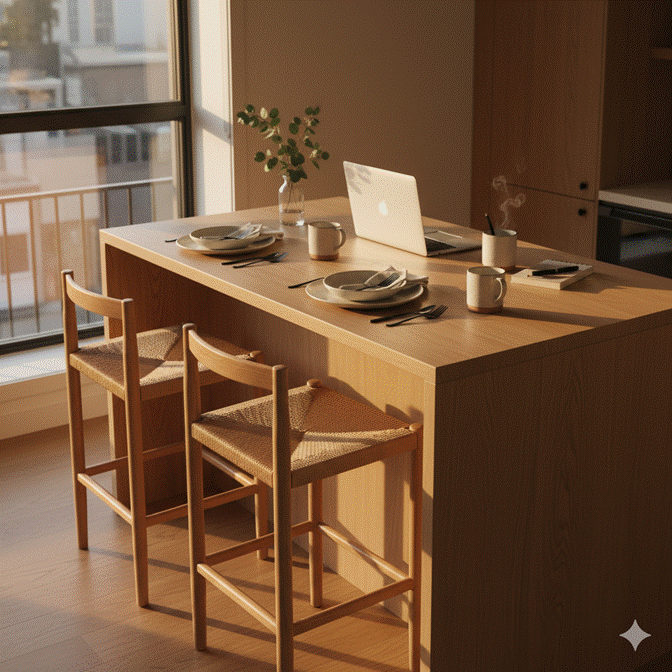
11. The Multipurpose Dining Floor Plan — One Table, Many Functions
In the smallest one bedroom apartments, a dedicated dining table that serves only the function of eating is a spatial luxury that the floor plan often cannot afford. The multipurpose dining floor plan acknowledges this reality and designs around it — choosing a dining surface that also serves as a desk, a kitchen prep extension, a creative workspace, or an entertaining surface depending on the hour.
A wall-mounted fold-down dining table, a kitchen island with bar stools, a round dining table that functions as a work surface when cleared, or an extendable dining table that seats two for daily use and eight for entertaining — each approach brings a different form of flexibility to the floor plan that a conventionally placed dining table simply cannot provide.
✦ Design Tip: Invest in bar-height stools rather than standard dining chairs for a kitchen island or counter-height dining surface. Bar stools store completely under the counter when not in use, entirely clearing the floor plan of their footprint. Standard dining chairs, even pushed in, always project slightly from the table edge and consume floor space that, in a small apartment, is among the most valuable square footage in the room.
Conclusion — The Small Apartment as a Design Masterclass
The one bedroom small apartment floor plan is, in many ways, the purest test of design thinking available. Every decision matters. Every piece of furniture must justify its presence. Every wall, corner, and ceiling is a resource. And the result, when the decisions are made well, is a home that feels not like a compromise with space but like a masterclass in spatial intelligence.
The 11 floor plan ideas in this guide represent 11 distinct approaches to the same fundamental challenge — and the beauty is that most of them can be combined, adapted, and layered to suit the specific dimensions, orientation, and character of any given apartment. Start with the layout principle that resonates most, add the storage intelligence that your life requires, bring in the light that your windows allow, and watch the space become something genuinely worth coming home to.
Frequently Asked Questions
Q: What is the best floor plan for a one bedroom small apartment?
A: The best floor plan depends on your lifestyle priorities. For maximizing perceived space and natural light, an open-plan layout with the bedroom as the only enclosed room is the most universally effective approach. For those who need a home office, the integrated workspace floor plan prioritizes that function. For the smallest apartments, the Murphy bed system or the loft-style floor plan with a raised sleeping platform can literally double the usable square footage by separating functions in time or vertical space.
Q: How do I make a one bedroom apartment feel larger?
A: The most impactful strategies for making a small apartment feel larger are: removing interior walls where possible to create an open plan, maximizing natural light with sheer or light-filtering window treatments, using a consistent light color palette on all walls and the ceiling, choosing furniture that is scaled to the room rather than oversized, using mirrors to double visual space, incorporating vertical storage to keep floors clear, and defining zones with rugs rather than walls. Each of these strategies costs relatively little but delivers significant perceived spatial returns.
Q: How do you separate a bedroom from a living room in a small apartment?
A: There are several elegant, non-permanent methods for separating sleeping and living zones without building full walls. A bookshelf positioned perpendicular to the wall creates a visual and psychological barrier while providing storage on both sides. A curtain system hung from a ceiling track allows complete flexibility — open for an expansive feel, closed for privacy. A glass partition preserves light while creating acoustic separation. A half-height wall or a change in floor material can define zones without enclosing them. Each approach offers a different balance of separation, light preservation, and flexibility.
Q: What furniture works best in a one bedroom small apartment?
A: The best furniture for small apartments is scaled appropriately, multifunctional, and elevated off the floor where possible. A sofa on legs rather than a platform sofa allows light to pass beneath it and visually expands the floor area. A dining table with fold-down leaves expands for guests and collapses for daily life. A platform bed with built-in storage drawers beneath eliminates the need for a separate dresser. Ottoman coffee tables that open for storage replace both a coffee table and a storage unit. The principle is always the same: every piece of furniture should serve at least two purposes in a small apartment.
Q: How do I design a functional home office in a one bedroom apartment?
A: The most successful small apartment home offices are those with a designated, clearly bounded zone that can be visually closed at the end of the working day. A fold-down desk behind a curtain, a built-in desk within a deep wardrobe, or a desk alcove defined by a partial bookshelf all achieve this. Position the workspace near the best natural light source. Use vertical storage — wall-mounted shelves above the desk — rather than surface storage to keep the desk itself clear. A good task lamp, proper monitor height, and an ergonomic chair are non-negotiable investments that transform any corner into a functional workspace.