Introduction
Your bedroom is the one room in your home that belongs entirely to you.
It is the first thing you see when you open your eyes in the morning and the last space that holds you at night. And yet, so many bedrooms are treated as afterthoughts — functional but uninspired, comfortable but never truly beautiful.
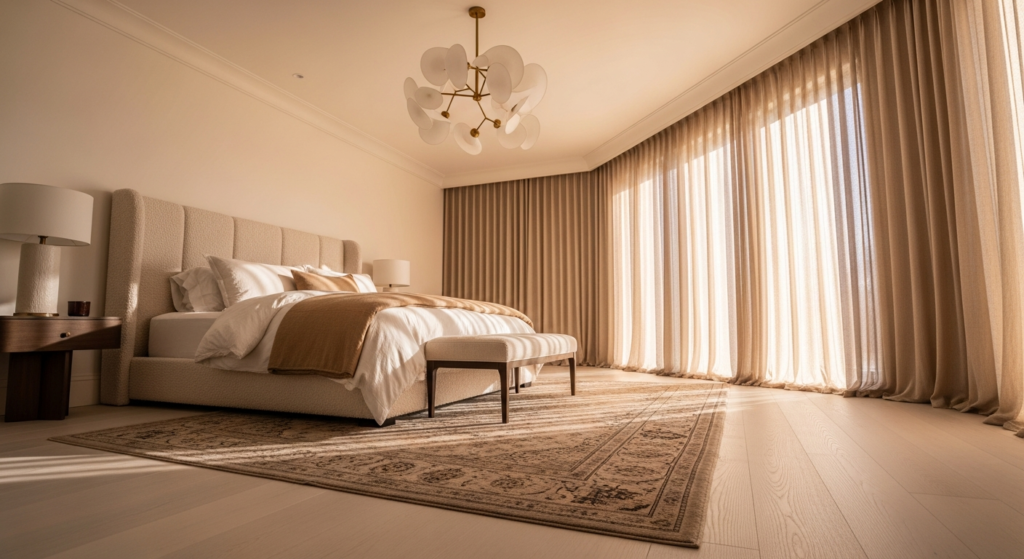
Luxury bedroom interior design is not about extravagant budgets or imported marble floors. It is about intention. It is about understanding how light moves through a room, how texture creates warmth, how a considered color palette transforms sleep into ceremony. It is about building a space that feels as elevated as it feels personal.
This collection of the top 13 luxury bedroom interior design ideas will give you the language, the inspiration, and the practical direction to create a bedroom that doesn’t just look beautiful in photographs — it feels extraordinary every single day.
1. The Statement Upholstered Headboard — Architecture for the Bed
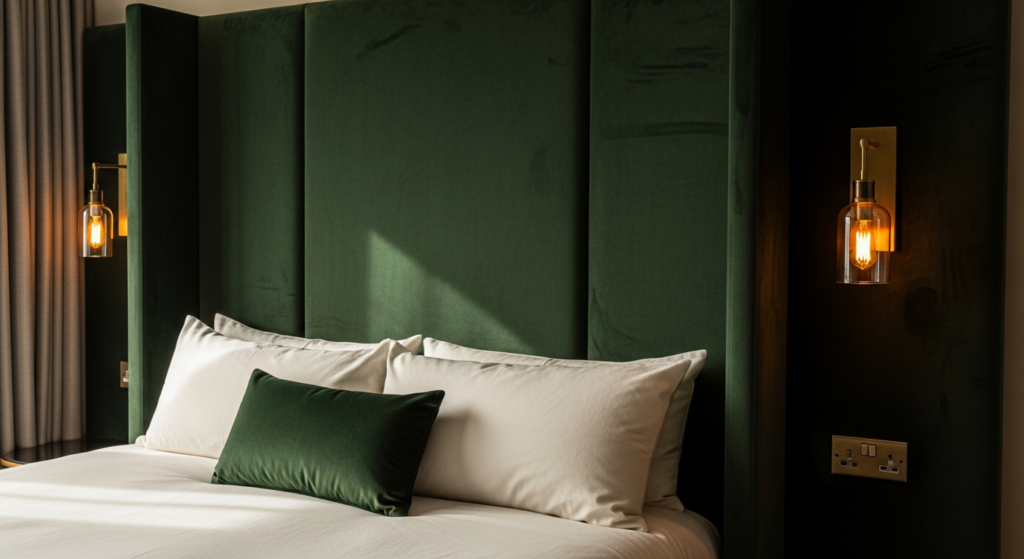
No single piece of furniture transforms a bedroom more completely than a beautifully chosen upholstered headboard. It is the anchor of the entire room — the element everything else is designed around.
Luxury bedroom interior design consistently centers on oversized, floor-to-ceiling, or dramatically scaled headboards upholstered in rich fabric: deep velvet in forest green or dusty rose, bouclé in warm cream, linen in soft dove grey, or leather in cognac or midnight black. The headboard immediately communicates the bedroom’s design language and sets the standard for every other decision that follows.
A headboard that extends to the ceiling draws the eye upward and creates the impression of greater ceiling height — one of the oldest and most effective tricks in the luxury interior designer’s toolkit.
Styling tip: When choosing headboard fabric, prioritize tactile richness over visual complexity. A simple panel in exceptional velvet or bouclé will always outperform a heavily patterned fabric in a similar shape. The texture should invite touch — it should look as good as it feels. Pair a deep-toned headboard with crisp white or ivory bedding to create maximum contrast and visual drama.
2. The Layered Bedding Approach — Texture as Luxury
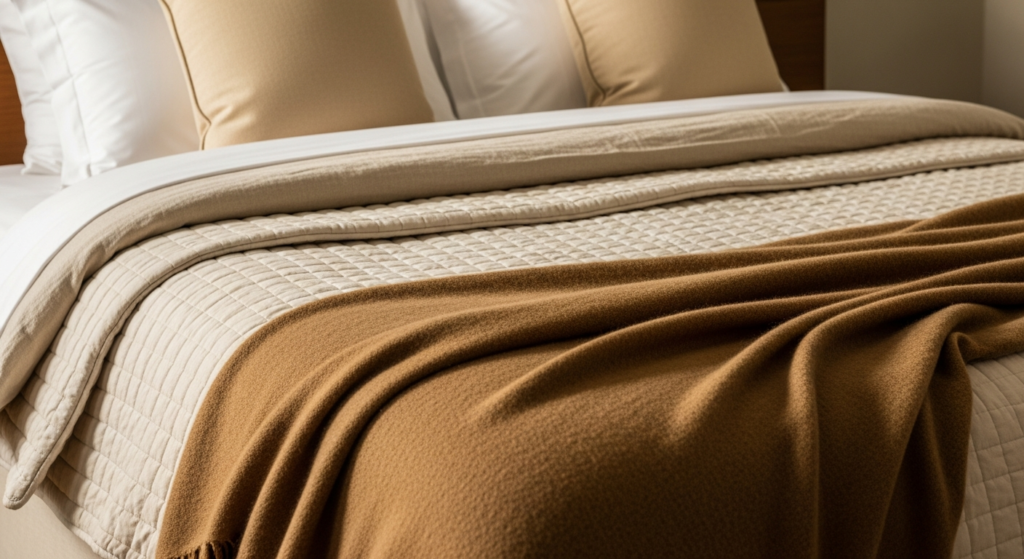
In luxury hotel design — the gold standard of bedroom aesthetics — bedding is never a single layer. It is a considered composition of textures, weights, and tones that invites the eye before it invites the body.
The layered bedding formula for a luxury bedroom begins with a fitted sheet in the finest thread count you can invest in (look for long-staple cotton percale or sateen with a 400 to 800 thread count). Above that, a flat sheet in a complementary tone. Then a duvet or coverlet in a textural fabric — quilted cotton, silk-blend, or a heavy linen. Finally, a throw blanket draped across the foot of the bed in a contrasting texture: faux fur, chunky knit, or cashmere.
The final layer — the throw — is what separates a made bed from a designed bed.
Styling tip: Build your bedding palette in three tones maximum: a dominant neutral, a complementary secondary, and a single textural accent in a deeper or contrasting shade. Too many colors in bedding reads as busy and disrupts the calm that luxury bedroom design is specifically engineered to create. Think ivory, warm linen, and a single touch of deep camel or dusty sage.
3. The Warm Neutral Color Palette — Timeless and Transformative
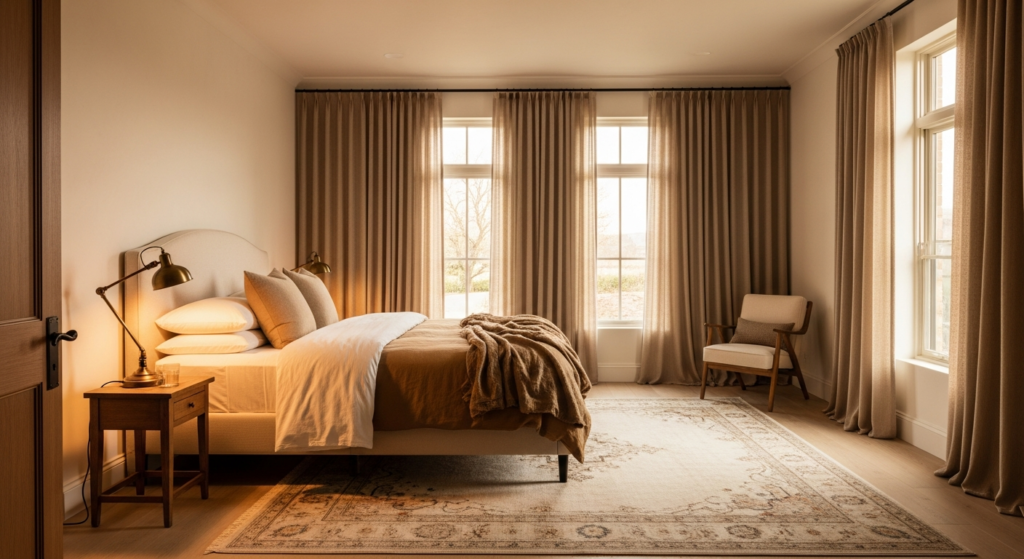
Color is the single most powerful design decision you will make in a bedroom — and luxury interior design has spoken clearly on this subject for decades. Warm neutrals are the language of the elevated bedroom.
Warm neutrals in the luxury bedroom context are not beige in its uninspired, default form. They are considered, specific, and layered: warm white with a faint yellow undertone on the walls, raw linen window treatments, camel and wheat in the upholstery, and aged brass in the hardware. Together, these tones create a warmth that is enveloping rather than cold, restful rather than sterile.
The most enduring luxury bedrooms — those that appear in Architectural Digest, Elle Decor, and the portfolios of the world’s most celebrated interior designers — are almost always built on warm neutral foundations.
Styling tip: To test whether your warm neutral palette is reading correctly, photograph the room in the late afternoon light. Warm neutrals should appear rich, glowing, and dimensional in golden hour light. If the room photographs flat or cold, introduce warmer undertones through additional textile layers — a deeper camel throw, a warm amber bedside lamp shade, or a jute or sisal area rug beneath the bed.
4. The Luxury Lighting Design — Layered, Warm, and Architectural
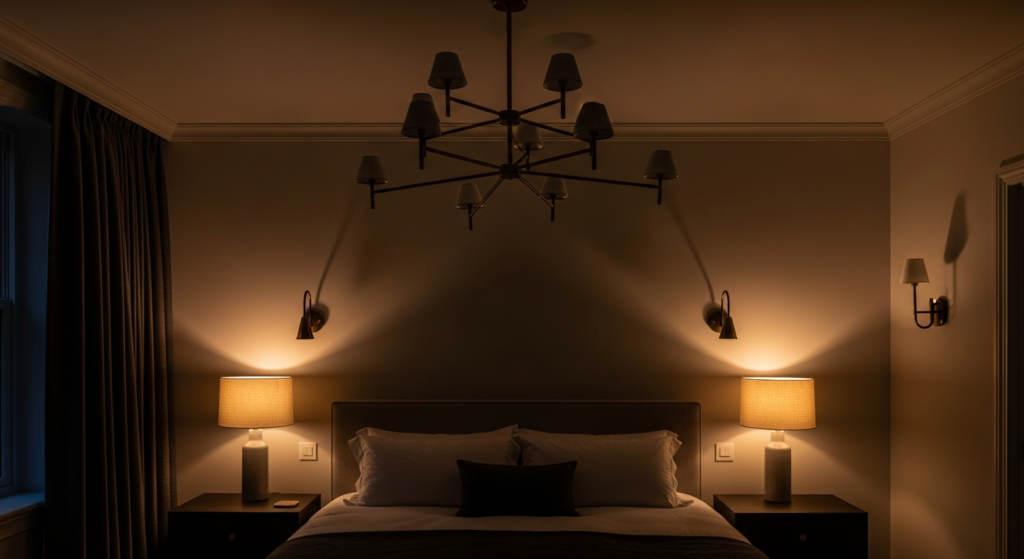
Lighting in a luxury bedroom is never a single overhead fixture. It is an architecture of light — layered sources at different heights and intensities that can be adjusted independently to create mood, atmosphere, and function as needed.
The luxury bedroom lighting scheme typically includes: an overhead fixture (a sculptural pendant, a low-profile chandelier, or recessed downlights with dimmer control), bedside table lamps with warm-toned bulbs (2700K or lower), wall-mounted sconces above or beside the bedside tables for reading light, and occasionally a floor lamp in a reading corner for additional warmth and ambient fill.
Every light source in a luxury bedroom should be on a dimmer. The ability to move between bright and functional and dim and atmospheric is the fundamental requirement of truly considered bedroom lighting.
Styling tip: Choose lamp shades in warm tones — cream, amber, linen — rather than white. A white lampshade produces a cool, clinical light that undermines the warmth of the most carefully designed bedroom. A warm linen shade diffuses light into a golden glow that flatters every surface, every fabric, and every person in the room.
5. The Bespoke Dressing Area — Where Function Meets Elegance
A luxury bedroom is not merely a sleeping space — it is a suite of living, and the dressing area is as important as the bed itself.
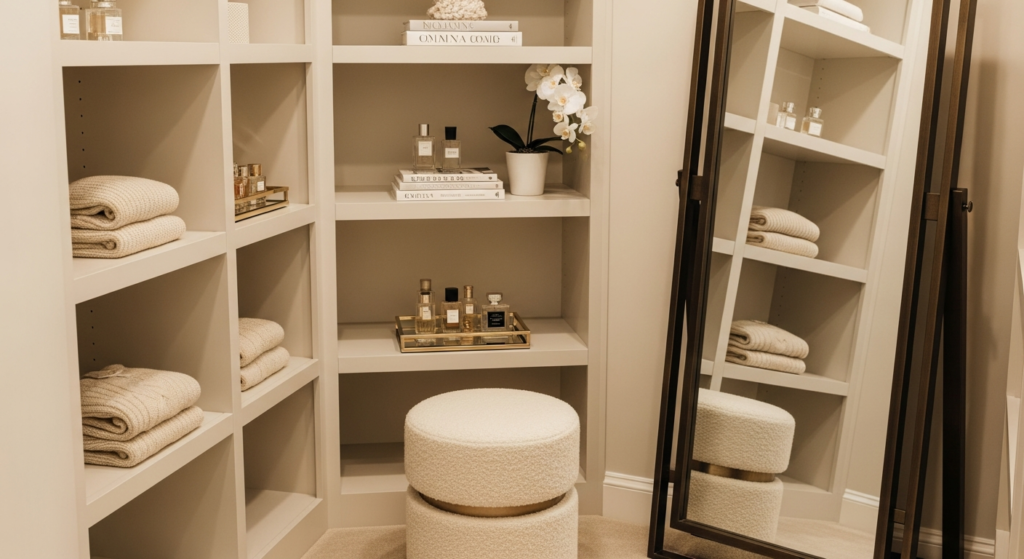
Whether you have the space for a full walk-in wardrobe or simply a beautifully curated corner of the bedroom, the luxury dressing area is defined by its intentionality. Open shelving in polished lacquer or warm timber for folded cashmere. Velvet-lined drawers for jewelry and small accessories. A full-length mirror in a sculptural brass or dark bronze frame. A small upholstered stool or bench for sitting while dressing — a detail that elevates the experience from functional to ritualistic.
The lighting in the dressing area deserves equal attention. A lighted mirror or a pair of wall sconces flanking a full-length mirror creates a flattering, even illumination that no overhead light can replicate.
Styling tip: Decant your most beautiful items — a perfume collection, a stack of design books, a single sculptural object — onto an open shelf or tray within the dressing area. These curated displays transform the functional space into something that feels genuinely considered and personally editorial. The dressing area should feel like a small, private luxury boutique.
6. The Statement Ceiling — The Forgotten Fifth Wall
Interior designers often refer to the ceiling as the “fifth wall” — and in luxury bedroom design, it is treated with exactly that level of consideration.
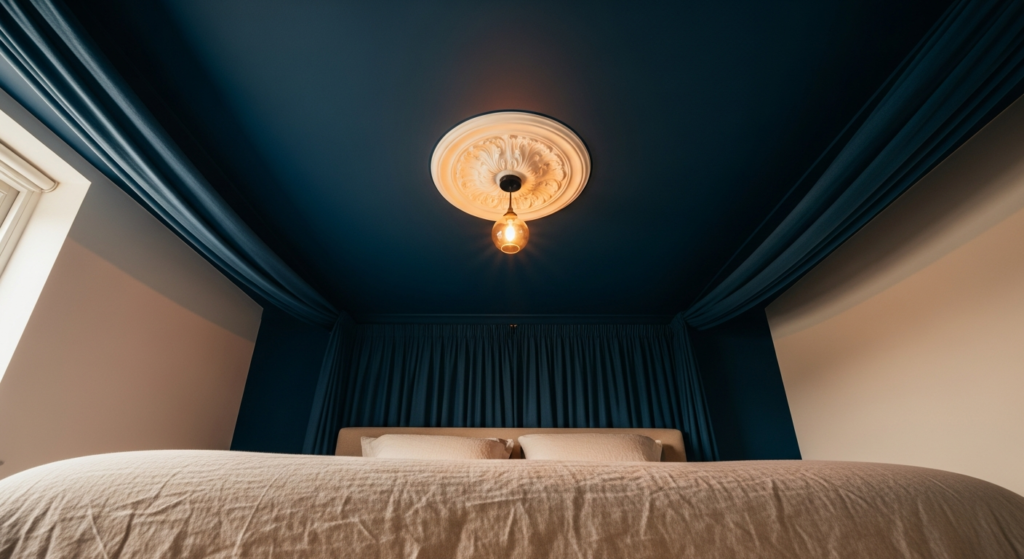
A statement ceiling in the bedroom context might mean: hand-applied limewash paint in a warm plaster tone that adds depth and texture without pattern, dark-painted ceilings in deep navy or charcoal that create a canopy-like intimacy perfect for sleep, timber or reclaimed wood beams that add warmth and architectural character, or a simple ceiling rose and plaster molding detail that references classical design language.
The ceiling is the one surface that is genuinely visible from the most-used position in the bedroom — lying in bed — and yet it is consistently the most under-designed surface in domestic interiors.
Styling tip: If a full ceiling treatment feels too committed, begin with a dark or textured paint on the ceiling and wall directly behind the headboard only — treating these two surfaces as a single architectural element. This “cocooning” effect creates the same sense of intimacy and enclosure as a full four-poster canopy without the structural complexity.
7. The Luxury Area Rug — Softness, Scale, and Visual Grounding
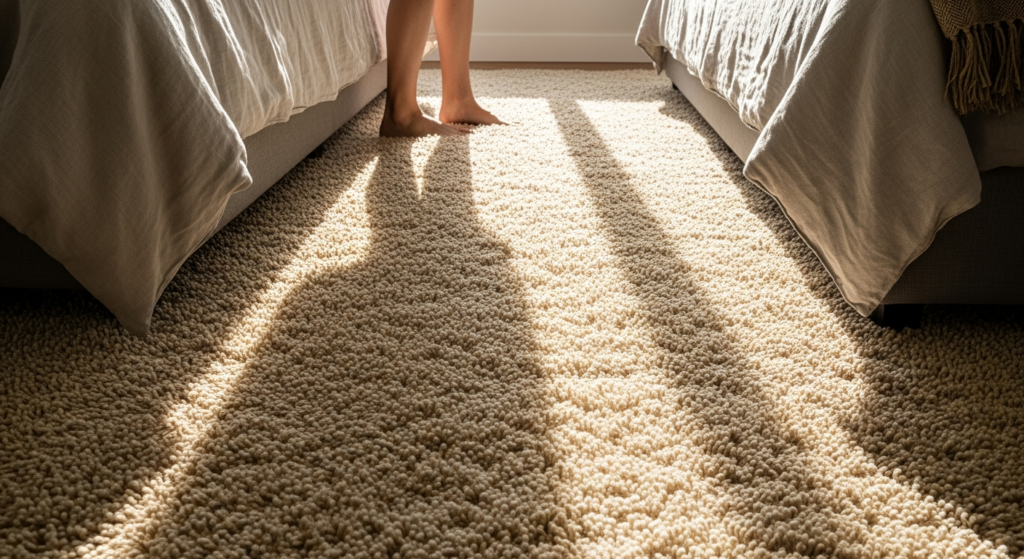
A bedroom without a rug is a bedroom that has not yet been finished. The rug is the element that grounds the bed within the room, defines the sleeping zone as a distinct space within the larger floor plan, and introduces the most important tactile experience the room offers — the feeling underfoot when stepping out of bed.
In luxury bedroom interior design, the rug is always larger than instinct suggests. A rug that extends at least 60cm beyond the sides and foot of the bed is the standard — anything smaller reads as an afterthought and disrupts the proportional balance of the room.
Material and pile depth matter as much as size. A high-pile wool or a flat-weave silk blend delivers the most luxurious underfoot experience. Natural fibres — jute, sisal, and seagrass — work beautifully in more relaxed luxury aesthetics.
Styling tip: In bedrooms with a warm neutral palette, a rug with a subtle organic texture — an abstract low-pile pattern in tonal shades, or a faded antique-style flat weave — adds visual complexity without disrupting the cohesion of the color story. The rug should be the second most layered textural surface in the room, after the bed itself.
8. The Sculptural Bedside Table — Functional Art
The bedside table is the most underestimated piece of furniture in the bedroom — and in luxury interior design, it is treated as a sculptural object in its own right rather than a purely functional surface.
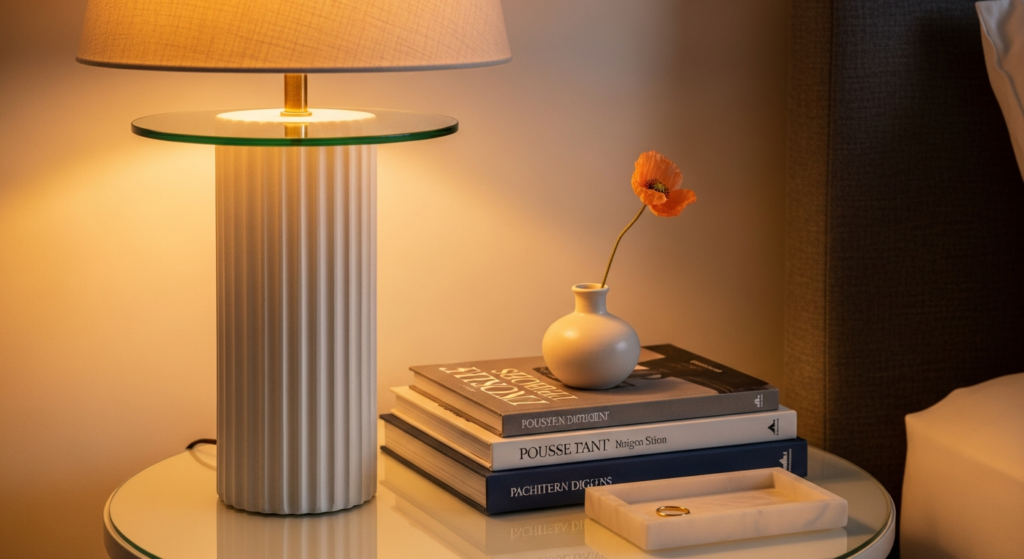
Sculptural bedside tables in luxury bedrooms take many forms: an oversized ceramic table lamp sitting on a simple plinth, a curved stone or concrete side table, a fluted plaster column topped with a glass surface, a rattan pedestal supporting a stack of design books and a single candle. The common thread is that the bedside area is considered as a vignette — a small, intentional composition that is beautiful to look at and functional to live with.
The bedside vignette should include: a lamp with a warm shade, one or two books, a small tray or dish for essentials, a single stem in a bud vase, and nothing else.
Styling tip: Asymmetry in bedside styling is the mark of genuine design confidence. Allow each side of the bed to have a slightly different but complementary aesthetic rather than a perfectly mirrored arrangement. One side might have a taller lamp and a stacked book tower; the other a lower pendant light and a small trailing plant. The slight variation feels lived-in and genuinely editorial.
9. The Floor-to-Ceiling Curtains — Drama, Softness, and Scale
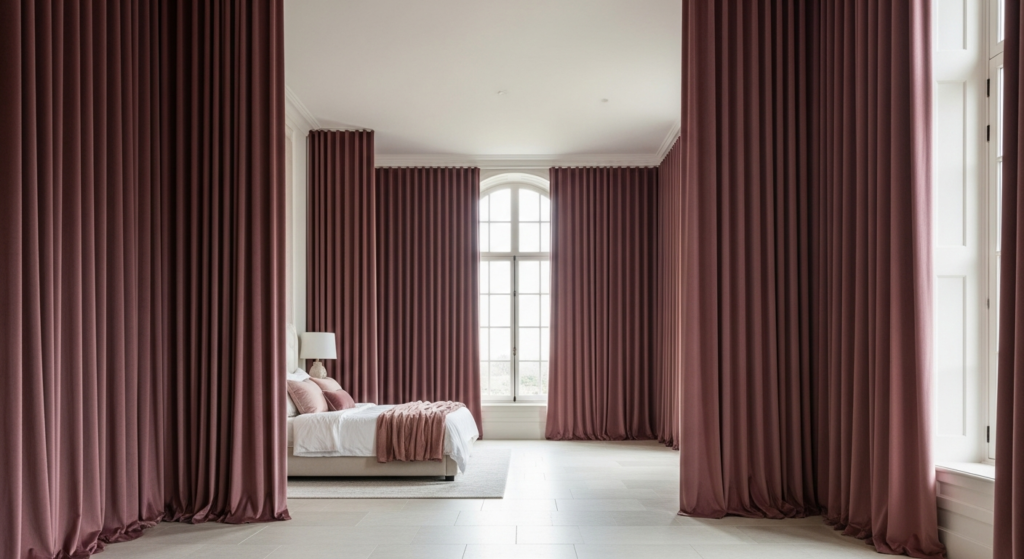
Nothing makes a bedroom feel more luxurious — and more immediately so — than floor-to-ceiling curtains in a beautiful, generously weighted fabric.
The key words in that sentence are floor-to-ceiling and generous. Curtains that hang anywhere other than from the highest point of the wall (ideally ceiling-mounted) to the floor make a room feel smaller and the windows feel shorter. A curtain that pools slightly on the floor reads as intentionally luxurious and brings a softness and scale that transforms even a modestly proportioned bedroom into something that feels genuinely grand.
The most elegant curtain fabrics for luxury bedrooms include: heavy linen in warm white or natural flax, velvet in deep jewel tones or forest green, silk-blend sheer panels layered behind heavier drapes for daytime softness, and bouclé or wool-blend in warm neutral tones.
Styling tip: Hang curtain rods as close to the ceiling as possible — ideally within 5cm of the ceiling line or directly ceiling-mounted. The extra height of rod placement adds perceived ceiling height and allows the full length of the curtain to be read as a continuous architectural element rather than a window treatment. This single installation decision delivers more visual luxury per dollar than almost any other bedroom styling choice.
10. The Monochromatic Bedroom — One Tone, Infinite Depth
The monochromatic bedroom — built entirely from a single color in multiple shades, tones, and textures — is one of the most refined and technically demanding approaches in luxury interior design. When it is done well, it is also one of the most transcendently beautiful.
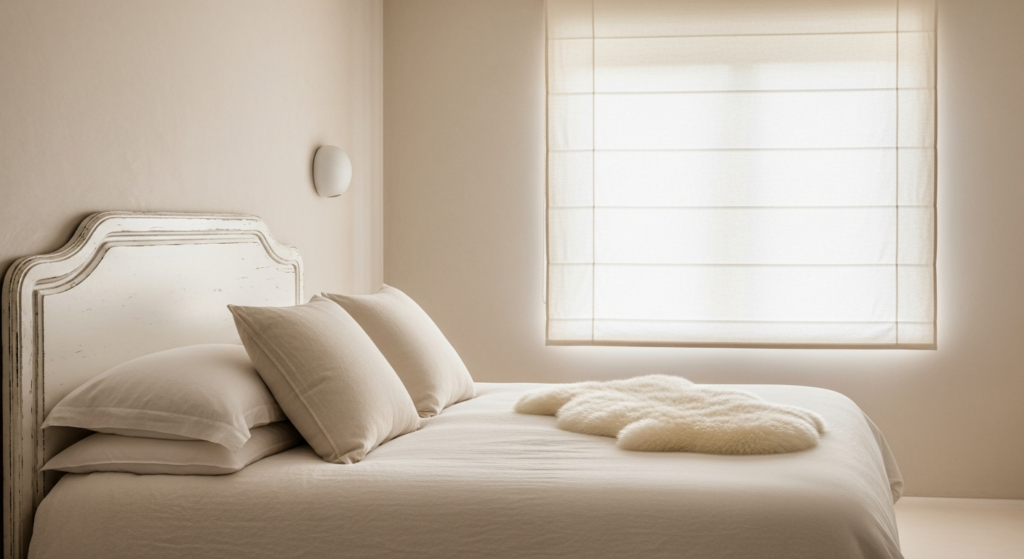
A monochromatic white bedroom uses twenty different shades of white: the cool plaster white of the walls, the warm ivory of the linen duvet, the bright white of the cotton pillowcases, the soft cream of the sheepskin throw, the natural white of the linen roman blind, and the antique white of the painted headboard. The eye moves across these shades and registers not sameness but depth — a visual richness that no multi-color scheme can replicate in the same way.
The approach works equally well in all-grey, all-cream, all-sage green, and all-deep navy.
Styling tip: The success of a monochromatic bedroom depends entirely on texture variation. If every surface is the same shade and the same material, the look will read as flat and institutional. The rule is: the more tonal the palette, the more varied the textures must be. Smooth plaster, woven linen, polished lacquer, rough natural fiber, cut velvet, and burnished metal can all coexist within a single color story and create extraordinary visual richness.
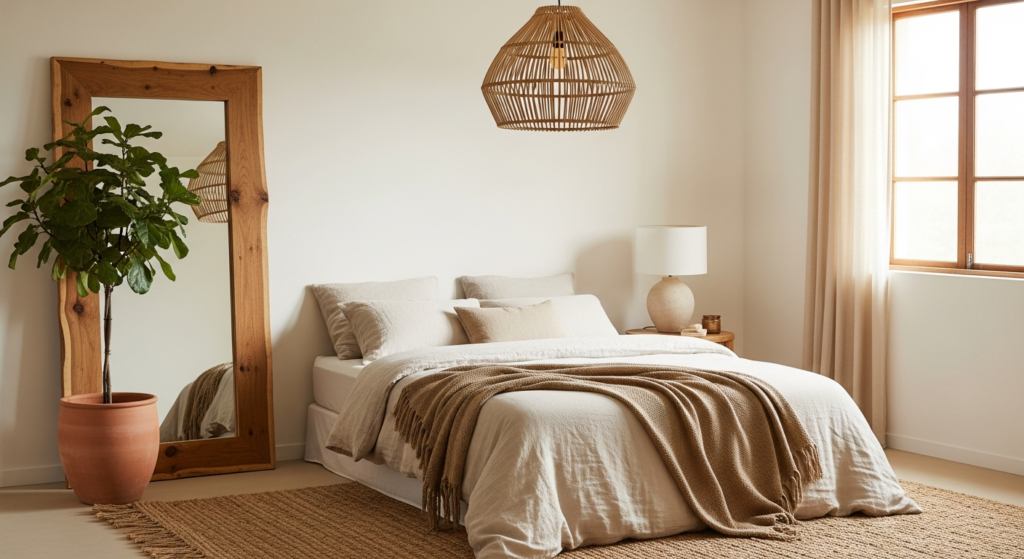
11. The Organic and Natural Material Palette — Warmth Rooted in Nature
The most compelling direction in contemporary luxury bedroom design is the deliberate turn toward natural, organic materials — those that carry the warmth, imperfection, and tactile richness of the natural world.
Natural materials in the luxury bedroom include: exposed timber with a natural oil or wax finish, raw linen and undyed cotton in the textiles, hand-formed ceramic vessels as decorative objects, woven rattan or seagrass in the furniture and accessories, natural stone in the flooring or as sculptural surfaces, and living plants that bring genuine organic life into the space.
The appeal of the organic material palette lies in its inherent warmth and its visual authenticity. These materials do not look manufactured — they look found, chosen, and honored.
Styling tip: Introduce natural materials in layers and at varying heights throughout the bedroom. A timber-framed mirror at standing height, a woven rattan pendant light overhead, a ceramic lamp on the bedside table, and a jute rug underfoot creates a vertical dialogue between natural materials that feels cohesive and richly considered. The eye travels from floor to ceiling and finds beauty at every level.
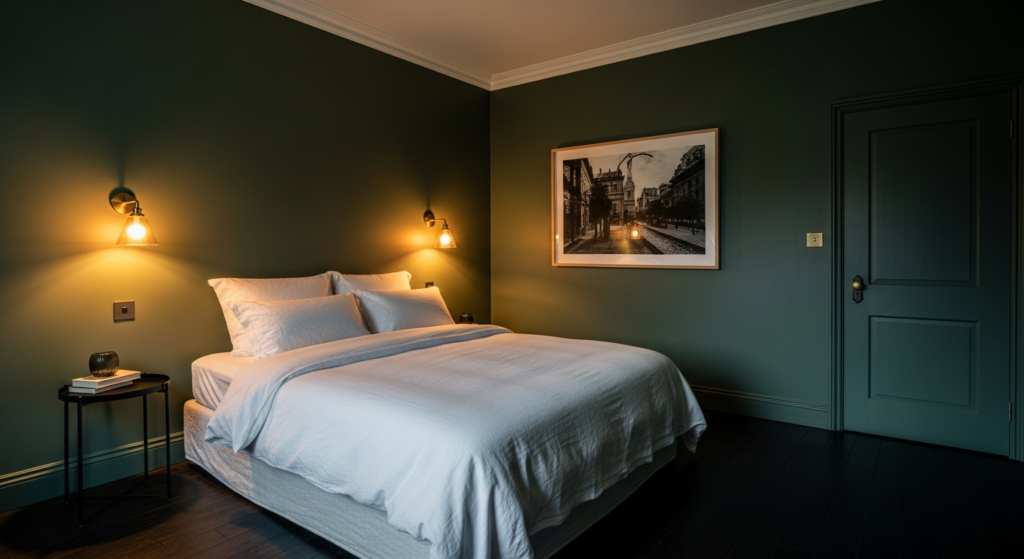
12. The Dark and Dramatic Bedroom — Moody Luxury at Its Most Powerful
The dark bedroom is no longer an unconventional choice — it has become one of the most aspirational and sought-after aesthetics in luxury interior design, and for genuinely compelling reasons.
Deep, saturated wall colors — charcoal, midnight navy, forest green, rich plum, warm dark chocolate — create a cocoon-like quality in the bedroom that directly promotes rest. The brain associates darkness with safety and sleep, and a bedroom built around a deep, enveloping color creates an atmosphere that is simultaneously dramatic and profoundly calming.
Dark bedrooms photograph exceptionally well — the rich pigment on the walls creates depth in images, and the contrast between the dark architecture and light textiles reads as deeply glamorous.
Styling tip: In a dark bedroom, lighting becomes the primary tool for preventing the space from reading as oppressive. Layer multiple warm light sources — wall sconces, table lamps, a low-hanging pendant — so the room fills with pools of warm amber light rather than relying on a single overhead source. The interplay between dark walls and warm, glowing light sources creates the most beautiful and atmospheric version of the dark bedroom aesthetic.
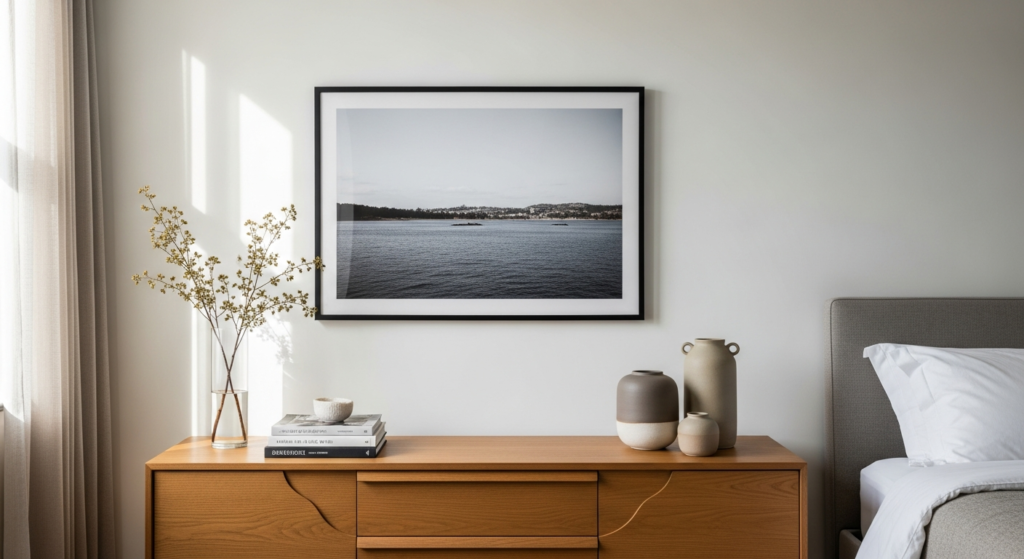
13. The Curated Art and Object Display — Personal Luxury
The final element that distinguishes a truly luxury bedroom from a beautifully furnished room is the presence of carefully curated art, objects, and personal collections that make the space feel genuinely inhabited by a specific, thoughtful person.
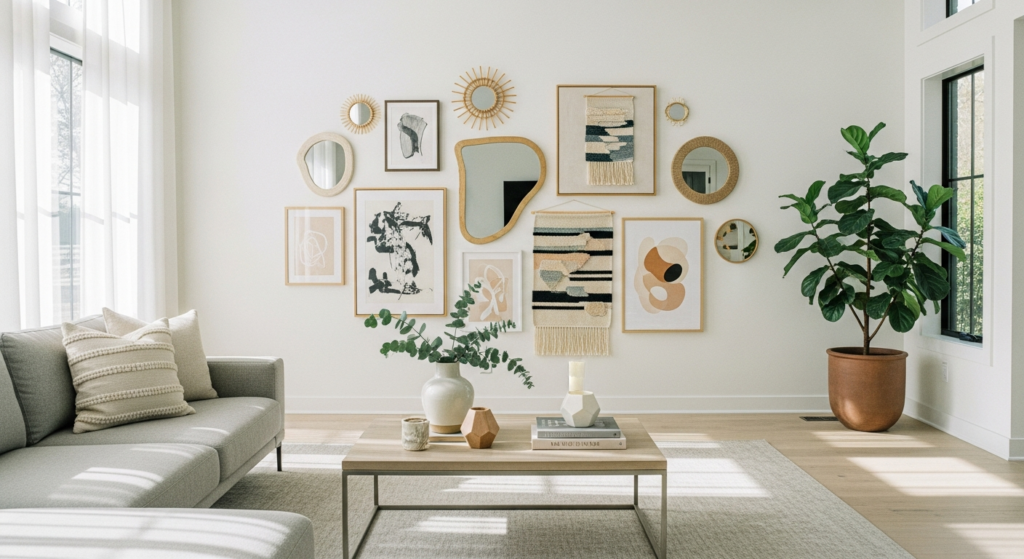
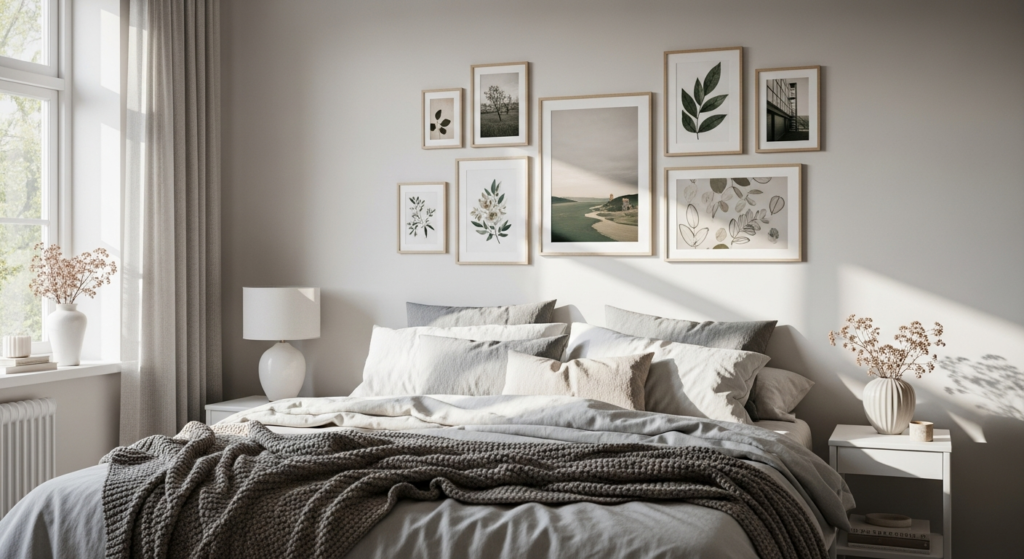
Luxury bedroom interior design is not a showroom — it is a lived-in sanctuary. A single large-format artwork above the bed (or a gallery wall of smaller works arranged with purpose), a sculptural object on the bedside table, a small collection of meaningful books on an open shelf, a single extraordinary ceramic piece on the dresser — these are the details that make a room feel irreplaceable.
The objects you display in your bedroom should be chosen with the same care as the furniture and textiles. Each piece should be beautiful, personally meaningful, or both.
Styling tip: When hanging bedroom artwork, position the center of the piece at eye level from a standing position — typically 145cm to 150cm from the floor to the artwork’s center. Above the headboard, scale is the most important consideration: choose a single work that is at least two-thirds the width of the headboard to maintain proper visual proportion. Too small and the artwork looks misplaced; correctly scaled and it becomes the room’s defining visual statement.
Conclusion
Luxury bedroom interior design is, at its heart, the practice of paying close and deliberate attention to the space where you are most yourself.
Each of these thirteen ideas — from the drama of a floor-to-ceiling velvet headboard to the quiet sophistication of a monochromatic linen palette, from the warmth of layered bedside lighting to the grounded beauty of natural materials — represents a different path to the same destination: a bedroom that is genuinely extraordinary to live in.
You do not need to implement all thirteen. You need to implement the ones that speak to how you want to feel when you close the door and the world goes quiet. Begin there. Build slowly and intentionally. The most beautiful rooms are never rushed — they are cultivated.
FAQs
Q1: What are the key elements of luxury bedroom interior design? The key elements of luxury bedroom interior design include a statement upholstered headboard, layered high-quality bedding, a warm neutral or dramatic color palette, thoughtfully layered lighting on dimmers, floor-to-ceiling curtains in quality fabric, a generously sized area rug, and carefully curated art and objects. The defining quality of truly luxurious bedroom design is intentionality — every element is chosen with purpose and placed with care.
Q2: How can I make my bedroom look luxurious on a budget? The highest-impact, most budget-conscious changes you can make to create a luxury bedroom aesthetic include: repainting the walls in a warm, considered color (this single change transforms the atmosphere completely), hanging curtains from ceiling height rather than window height, layering your existing bedding with a quality throw blanket, replacing light switch covers and door hardware with brushed brass or matte black alternatives, and adding a large mirror to reflect light and create the impression of greater space. These five changes require minimal investment and deliver significant visual impact.
Q3: What colors are best for a luxury bedroom interior design? The most enduring and universally elegant color choices for luxury bedroom interior design are warm neutrals (warm white, ivory, camel, warm linen, soft taupe), deep jewel tones (midnight navy, forest green, rich plum, warm charcoal), and monochromatic palettes built on any single color in multiple shades. The most important consideration is warmth — cool, grey-toned neutrals and bright whites consistently read as less luxurious than their warmer counterparts in bedroom environments.
Q4: What lighting works best in a luxury bedroom? Luxury bedroom lighting should always be layered — multiple sources at different heights and intensities, all on dimmer switches. The ideal scheme includes bedside table lamps with warm-toned shades (2700K or lower bulbs), wall sconces for reading light, a ceiling fixture for ambient light (on a dimmer), and potentially a floor lamp for a reading or dressing corner. Warm light sources create the atmospheric, enveloping quality that defines the most beautiful and restful luxury bedrooms.
Q5: How important is texture in luxury bedroom interior design? Texture is arguably the single most important element in luxury bedroom interior design — more than color, more than furniture, and more than artwork. Texture is what creates the tactile richness and visual depth that reads as genuinely luxurious. A bedroom built from a single color in multiple textures — smooth plaster, woven linen, cut velvet, brushed metal, natural wool — will always feel more refined and dimensional than a bedroom with beautiful colors but flat, uniform surfaces. Invest in texture at every layer: walls, floor, bed, windows, and accessories.